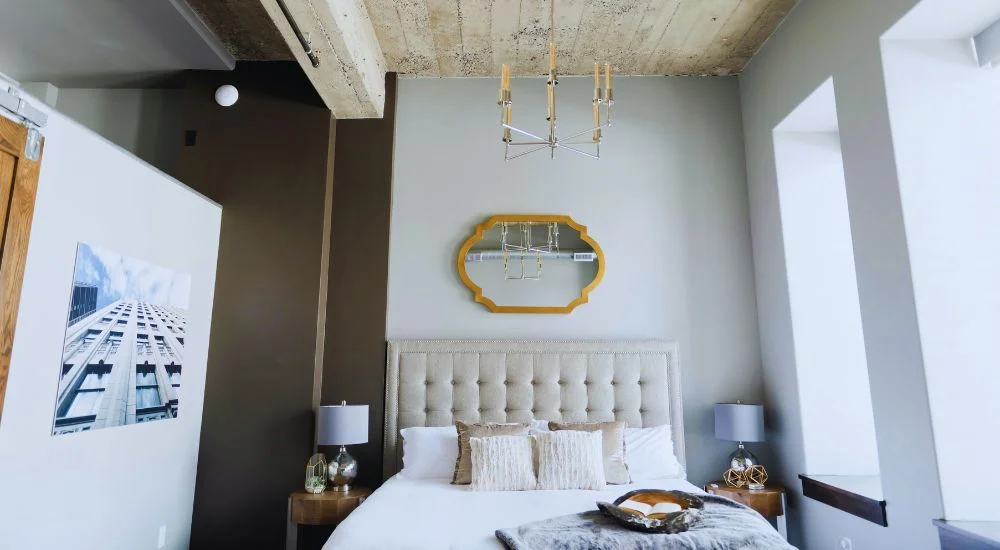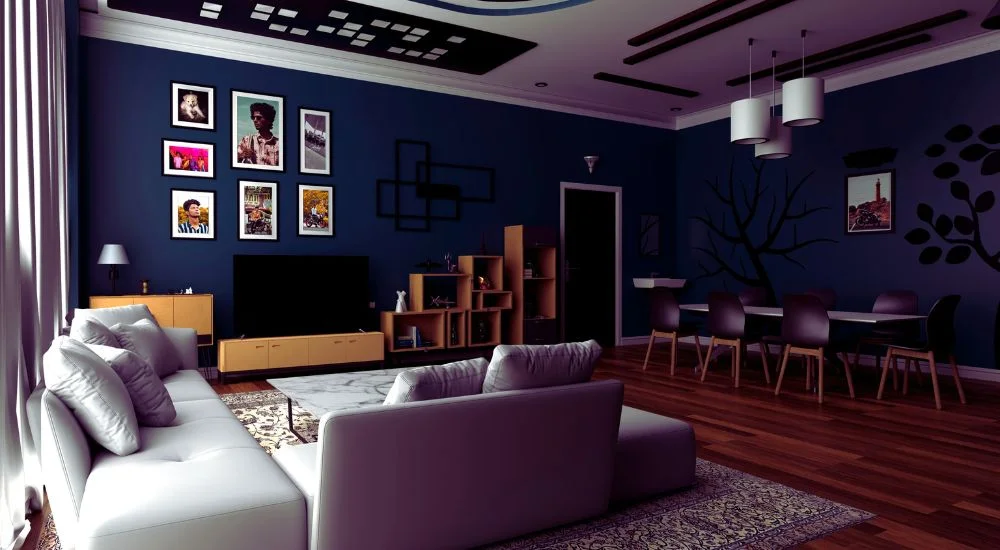

Thinking of giving your bedroom a deeper, moodier makeover? A dark bedroom can feel cozy, restful, romantic, dramatic, or quietly luxurious, depending on how you balance the color, lighting, bedding, and texture.
The secret is not simply painting the room black and hoping it feels elegant. The real magic happens when deep colors like charcoal, navy, forest green, plum, chocolate brown, burgundy, and soft black are paired with warm lamps, layered fabrics, natural wood, art, and a little breathing space.
You do not need a huge room or a designer budget either. Even a small bedroom can carry dark walls beautifully when the palette feels intentional and the lighting is soft enough to make the room glow at night.
Quick Answer: What Makes a Dark Bedroom Work?
A dark bedroom works best when deep wall colors are balanced with soft lighting, layered bedding, warm textures, and a few lighter accents. The best dark bedroom ideas usually use shades like charcoal, black, navy, forest green, chocolate brown, plum, burgundy, or deep gray, then soften them with linen, wood, brass, velvet, rugs, curtains, and warm lamps.
Dark colors can make a bedroom feel cozy and restful, but the room still needs contrast, texture, and enough light for daily use. In small bedrooms, painting walls, trim, or even the ceiling in one deep tone can feel intentional rather than cramped when the bedding and lighting stay soft.
Why Dark Bedrooms Feel So Cozy
A dark bedroom feels cozy because deeper colors reduce visual harshness and make the room feel more enclosed, calm, and cocoon-like. That does not mean the room has to feel gloomy. It simply means the color is doing some of the emotional work for you.
Dark walls also let texture show up more beautifully. Linen bedding, velvet pillows, brass lamps, woven rugs, wood nightstands, and framed art all feel richer against a deep background. This is why moody bedrooms often look layered even when the furniture is simple.
There is also a practical sleep angle. Light exposure can affect the body’s sleep-wake rhythm, and sleep experts often recommend keeping the bedroom dark at night for a more sleep-friendly environment, according to the Sleep Foundation. That does not mean every bedroom must be painted black, but it does support the idea that a soft, low-glare bedroom can feel more restful when designed thoughtfully.
Best Dark Bedroom Colors and What They Feel Like
Before choosing a paint color, think about the mood you want when you walk into the room at night. Dark bedroom colors are not all the same. Some feel calm, some feel romantic, and some feel bold and dramatic.
| Dark Color | Best For | How to Soften It |
|---|---|---|
| Soft black | Modern, dramatic, hotel-like bedrooms | Use warm lamps, cream bedding, wood, and matte finishes. |
| Charcoal gray | Calm, mature, minimalist bedrooms | Add ivory sheets, silver or brass accents, and layered textiles. |
| Navy blue | Classic, romantic, coastal, or tailored rooms | Pair with white, taupe, rattan, walnut, or antique brass. |
| Forest green | Nature-inspired, cozy, grounding bedrooms | Bring in plants, warm wood, linen, and cream curtains. |
| Plum or aubergine | Romantic, vintage, feminine, or jewel-toned spaces | Balance with blush, bronze, walnut, or soft gray. |
| Chocolate brown | Earthy, warm, cocoon-like bedrooms | Use caramel, ivory, rust, tan, and natural woven textures. |
| Burgundy | Moody, warm, dramatic bedrooms | Keep bedding simple and add aged brass or dark wood. |
Paint brands often group dark palettes around shades like black, charcoal, deep green, navy, brown, and jewel tones. Benjamin Moore highlights dark glamour palettes through deep, saturated colors, while Sherwin-Williams notes that dark hues can create depth and drama when balanced with lighter elements.
10 Dark Bedroom Ideas That Feel Cozy, Not Heavy
These dark bedroom ideas are not about making your room look dramatic for a photo only. They are about creating a space that feels restful, personal, and easy to live with every night.
1. Try a Soft Black Bedroom with Warm Contrast
Black can look stunning in a bedroom, but the most livable black bedrooms are rarely flat black from top to bottom. They usually have warmth somewhere, such as oak nightstands, cream bedding, brass lighting, a textured rug, or soft curtains.
If you are nervous about going fully dark, start with the wall behind the bed. A black or near-black feature wall can frame the bed beautifully without overwhelming the whole room. For a more wrapped-in feeling, paint the walls and trim in the same soft black, then keep the ceiling slightly lighter.
The goal is not darkness for the sake of darkness. It is depth. A black bedroom works when it feels layered, not empty. Black also becomes easier to live with when the room has contrast, which is why black and white bedroom ideas can help you see how much lightness a dark room still needs.
2. Use Velvet, Plum, and Brass for a Softer Glam Bedroom
If you love a bedroom that feels dramatic but still soft, try deep plum, aubergine, wine, or muted berry tones. These colors bring that moody richness without feeling as sharp as pure black.
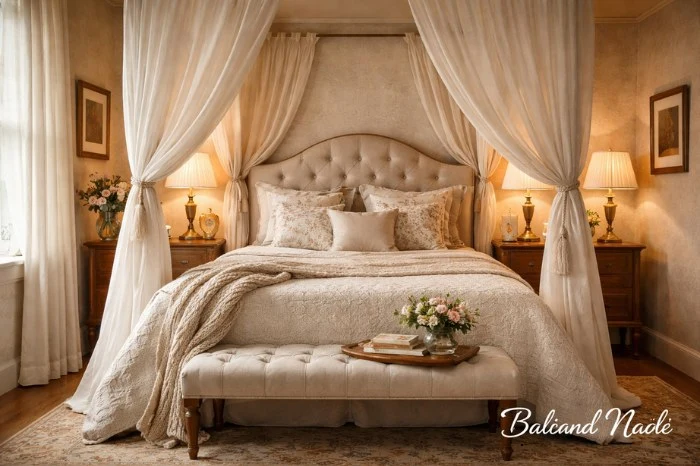
Velvet works beautifully here because it catches light in a gentle way. A velvet headboard, throw pillow, or bench can make the room feel richer without needing too much decor. Add brushed brass, antique bronze, or matte black hardware for a polished finish.
To keep the look grown-up, avoid making every piece glossy or overly decorated. A deep wall color, one velvet moment, simple bedding, and warm lighting are usually enough.
3. Create a Romantic Dark Bedroom for Couples
A romantic dark bedroom does not need to feel overly fancy. It only needs to feel private, warm, and personal. Deep navy, charcoal, plum, burgundy, or chocolate brown can all create that intimate feeling around the bed.
Start with lighting before adding more decor. Use lamps, sconces, dimmable bulbs, or shaded fixtures instead of one harsh ceiling light. If you use candles, keep them in safe holders and away from curtains, bedding, dried flowers, and open shelves.
Then add the personal details slowly: framed photos, a soft rug underfoot, a linen duvet, meaningful art, or a small chair in the corner. The room should feel like a shared retreat, not a showroom.
The same warm, personal feeling also appears in softer bedroom ideas for couples, where lighting, bedding, and shared details matter more than expensive furniture.
4. Make a Small Dark Bedroom Feel Intentional
A small bedroom can absolutely handle dark color. In fact, dark walls can sometimes blur the edges of a tight room and make it feel more like a cozy little cocoon than a cramped box.
The trick is to reduce visual clutter. Choose one strong wall color, keep the bedding soft, use closed storage where possible, and avoid too many tiny decorative pieces. A mirror can help bounce light, but it should be placed where it reflects something pretty, such as a lamp, window, artwork, or clean bedding.
If your room is very small, try painting the wall, trim, and closet doors in the same deep shade. That continuous color can feel calmer than chopping the room into too many light and dark blocks. In a small room, color placement matters just as much as the color itself.
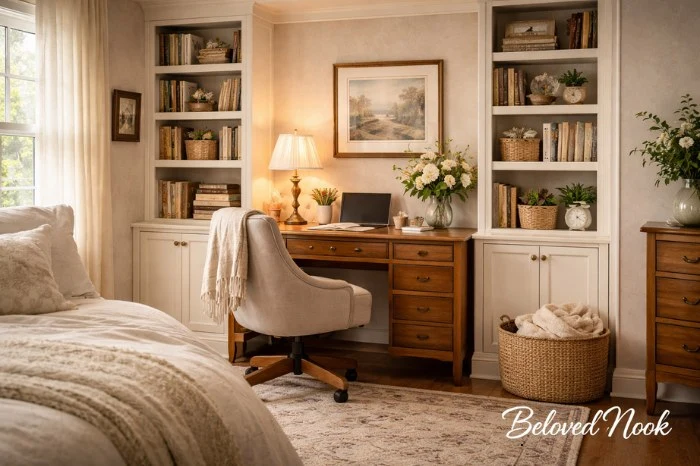
5. Design a Moody Bedroom Office That Still Feels Restful
A bedroom office can become tricky because the room has to support two very different moods: focus during the day and rest at night. Dark colors can help if you use them with care.
Place the desk where task lighting is easy, then keep the bed area softer and less work-focused. A charcoal, navy, or forest green wall behind the desk can create a focused backdrop, while warm lamps near the bed help the room shift back into rest mode after work.
Try to avoid leaving paperwork, laptop cables, and office supplies visible from bed. In a dark bedroom, clutter can feel heavier, so a small drawer, basket, or closed cabinet makes a bigger difference than you might expect.
A bedroom office needs task light during the day and visual calm at night, especially when the bed and workspace sit in the same small room.
6. Paint the Ceiling for a Cocoon Effect
If your bedroom already has dark walls, the ceiling can decide whether the room feels finished or slightly unfinished. A white ceiling can create contrast, which is useful in some rooms, but a deep ceiling can make the whole space feel wrapped and cozy.
This works especially well with navy, charcoal, olive, chocolate brown, or soft black. If you are nervous, choose a ceiling color one or two shades softer than the wall color. The effect still feels moody, but not too heavy.
This is also a lovely trick for bedrooms with tall ceilings that feel a little too open at night. A deeper ceiling visually lowers the space and makes the bed feel more grounded.
7. Layer Bedding So the Room Does Not Feel Flat
Dark bedrooms need texture even more than light bedrooms do. Without texture, deep colors can look flat at night.
Layer cotton sheets, linen duvets, waffle throws, velvet cushions, wool blankets, or a quilt at the end of the bed. You do not need all of them at once. Two or three textures are enough to make the bed feel soft and dimensional.
If your walls are very dark, try bedding in cream, taupe, oatmeal, rust, soft gray, muted blue, or warm white. These shades brighten the bed without breaking the moody feeling. A gray bedroom can also show how softer neutrals keep a room calm without making it feel plain.
8. Use Dark Green for a Nature-Led Bedroom
Dark green is one of the easiest moody bedroom colors to live with because it feels grounded and natural. Forest green, olive, moss, and deep sage can all make a bedroom feel calm without becoming too dramatic.
Pair green walls with wood furniture, linen curtains, plants, rattan, and warm white bedding. The result feels earthy instead of heavy.
Forest green also works beautifully when you want the room to feel richer than a neutral bedroom but softer than a black one. For a more color-focused approach, dark green bedroom ideas can help you shape the palette around wood, plants, and warm texture.
9. Try Dark Trim with Softer Walls
You do not have to paint every wall dark to get a moody bedroom. Dark trim, dark doors, dark window frames, or dark built-ins can give the room structure while the walls stay softer.
This is a good option if you rent, share the room, or feel unsure about fully dark walls. Charcoal trim with warm white walls, black doors with beige walls, or deep green built-ins with pale gray walls can all create a moody effect without covering the whole room in deep color.
Dark trim can create the same moody outline without covering every wall, especially when the room already has architectural detail. The contrast used in dark trim and light walls works beautifully for bedrooms that need depth but still need softness.
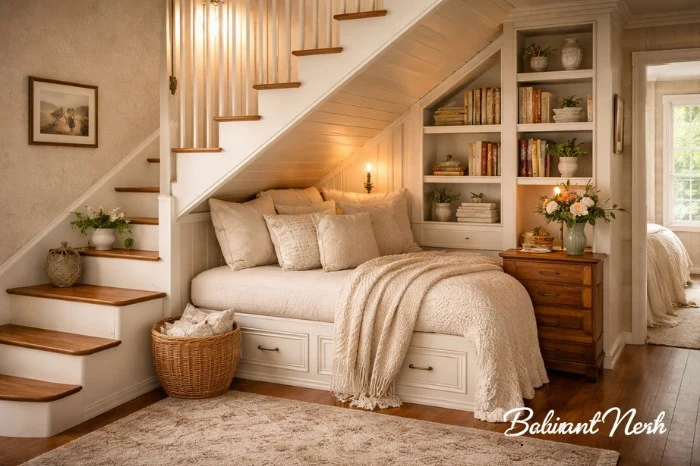
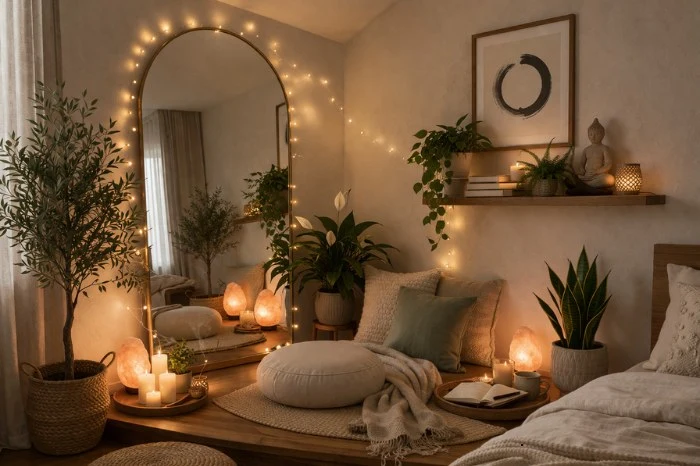
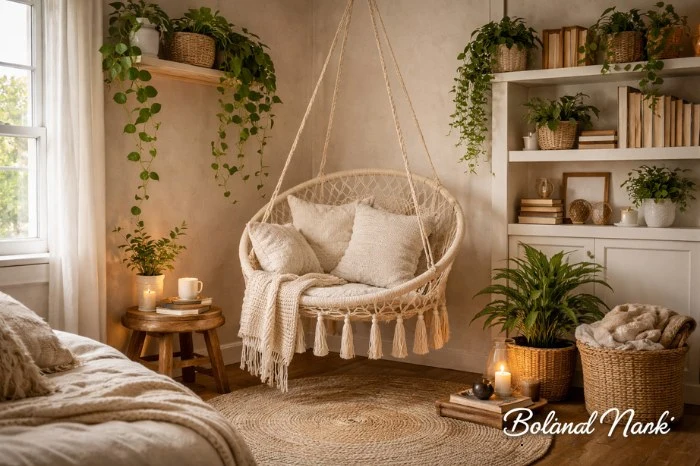
10. Add a Dark Reading Corner or Bedroom Nook
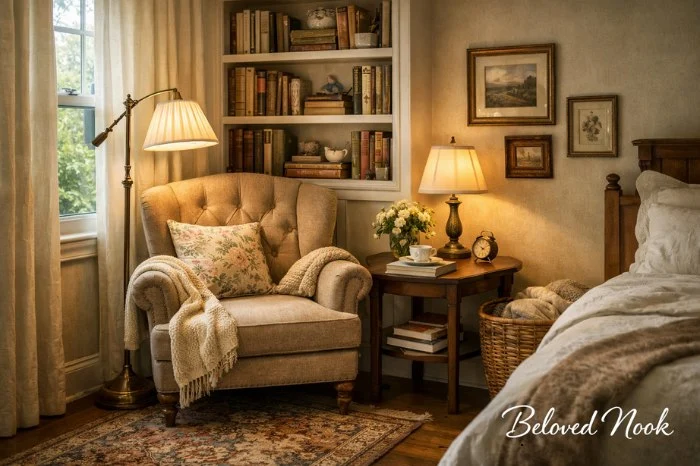
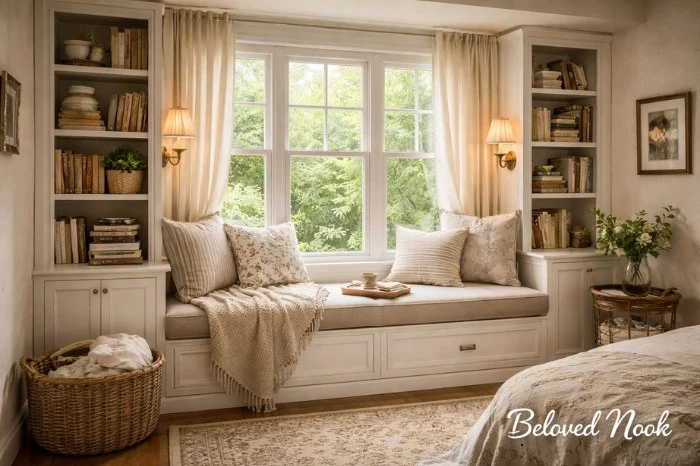
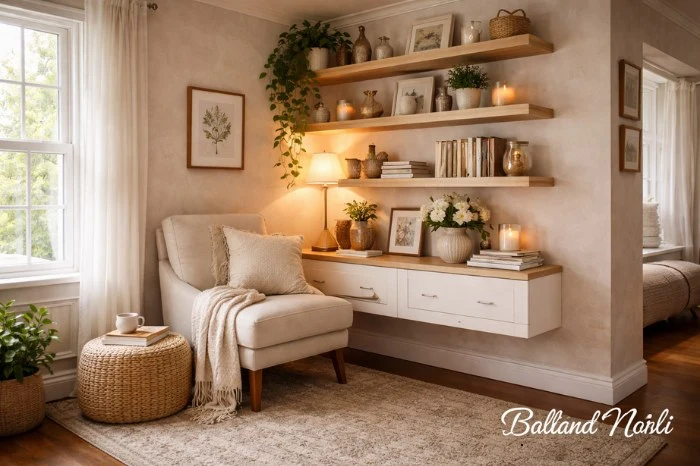
If your bedroom has an empty corner, window seat, or little awkward space, turn that into the moody moment instead of painting the whole room. A dark accent wall, small lamp, soft chair, side table, and textured throw can make the corner feel like a quiet retreat.
This idea works beautifully for introverts, book lovers, artists, and anyone who wants the room to feel personal without changing every surface.
A dark corner can become the softest bedroom nook in the whole room when it has a lamp, a comfortable seat, and one or two textures that invite you to stay for a while.
How to Keep a Dark Bedroom from Feeling Too Heavy
The most common mistake with dark bedroom ideas is thinking paint will do all the work. Deep color sets the mood, but the room still needs layers to feel beautiful and livable.
- Use warm lighting: one overhead light is not enough. Add lamps, sconces, or accent lighting so the room glows softly at night.
- Bring in texture: linen, velvet, wool, wood, rattan, and woven rugs soften dark paint.
- Keep some contrast: cream bedding, pale artwork, brass, or natural wood keeps the room from feeling flat.
- Test paint first: dark colors shift a lot from morning to night, especially in rooms with low natural light.
- Control clutter: small items stand out more against dark walls, so storage matters.
- Choose the right finish: matte paint feels soft and elegant, while eggshell can be easier to wipe in busier homes.
Common Dark Bedroom Mistakes to Avoid
A moody bedroom should feel calm, not closed-in. These small mistakes are usually what make a dark room feel wrong.
- Using only one light source: dark bedrooms need more than a ceiling fixture.
- Choosing a color without testing it: a shade that looks soft online can look too blue, too green, or too black in your room.
- Forgetting the bedding: dark walls with dark bedding can work, but only if there is enough texture and contrast.
- Overdecorating every surface: deep colors already create drama, so the decor can stay calmer.
- Ignoring natural light: a north-facing room and a bright south-facing room can make the same paint color look completely different.
- Using too many dark colors at once: choose one main deep color, then support it with softer shades.
Best Dark Bedroom Ideas by Room Type
If you are still unsure where to begin, choose the dark bedroom idea that matches the room you actually have.
| Bedroom Type | Best Dark Bedroom Idea | Why It Works |
|---|---|---|
| Small bedroom | Dark walls with soft bedding and closed storage | It makes the room feel intentional instead of cramped. |
| Couple’s bedroom | Navy, plum, burgundy, or chocolate with warm lamps | It creates privacy, softness, and a romantic mood. |
| Bedroom office | Dark desk wall with calmer bedding nearby | It separates work energy from rest energy. |
| Minimal bedroom | Charcoal walls, simple bedding, and one textured rug | It adds depth without needing too much decor. |
| Cozy reading bedroom | Dark nook with a lamp, chair, and soft throw | It creates a personal retreat without changing the whole room. |
FAQs About Dark Bedroom Ideas
Are dark bedrooms a good idea?
Yes, dark bedrooms can be a very good idea if you want a cozy, restful, and intimate space. The key is to balance deep wall colors with warm lighting, soft bedding, texture, and a few lighter accents.
What colors are best for a dark bedroom?
The best dark bedroom colors include charcoal gray, soft black, navy blue, forest green, chocolate brown, burgundy, plum, and deep taupe. Choose navy or green for calm, black or charcoal for drama, and brown or burgundy for warmth.
Do dark colors make a bedroom look smaller?
Not always. Dark colors can make a bedroom feel smaller if the room lacks lighting, contrast, and storage. But when used intentionally, deep colors can blur edges and make a small bedroom feel cozy and finished.
How do you brighten a dark bedroom?
Use layered lighting, cream or warm white bedding, mirrors, pale artwork, light curtains, metallic accents, and natural wood. You do not need to remove the dark color. You only need enough contrast to keep the room balanced.
Should I paint all bedroom walls dark or just one accent wall?
Use one dark accent wall if you want a safer, easier update. Paint all walls dark if you want a cocoon-like look. In small rooms, painting trim and doors the same color can sometimes feel calmer than using one strong contrast wall.
What bedding looks best in a dark bedroom?
Cream, oatmeal, taupe, warm white, rust, muted blue, soft gray, and linen bedding all work well in a dark bedroom. Layering different textures usually matters more than using many colors.
What lighting is best for a dark bedroom?
Warm, layered lighting works best. Use bedside lamps, sconces, dimmable bulbs, picture lights, or soft accent lighting instead of relying only on a bright ceiling fixture.
Final Thoughts on Dark Bedroom Ideas
A dark bedroom is not about making the room feel gloomy. It is about giving the space more depth, softness, and atmosphere.
Whether you choose soft black, charcoal, navy, forest green, plum, burgundy, or chocolate brown, the best results come from balance. Let the walls create the mood, then let the bedding, lighting, wood, art, rugs, and personal pieces make the room feel like yours.
Start small if you need to. Paint one wall, darken the trim, refresh your bedding, or create one moody reading corner. Once the room starts to feel warmer and more settled, you can keep layering from there.
The best dark bedroom is not the darkest one. It is the one that feels calm when you walk in, beautiful when the lamps are on, and easy to rest in at the end of the day.