Category

Nook Ideas

Category

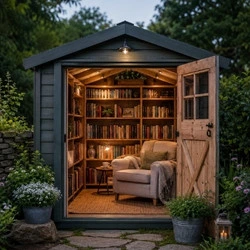
What makes a reading nook ideal? That’s subjective. However, we can all agree that a cramped space with uncomfortable seating and obnoxious lighting is not the image we’re going for. At the same time, you’re not searching for a five-figure renovation you can’t afford.

You simply need a space that screams your name, that reflects your personality, and that makes you want to live in that little nook for days on end. So, how about we make those so-called dead zones into your new haven on earth?

20 Gorgeous Reading Nook Ideas That Make Every Corner Feel Cozy

For a practical reading corner, my 20 nook design suggestions are:

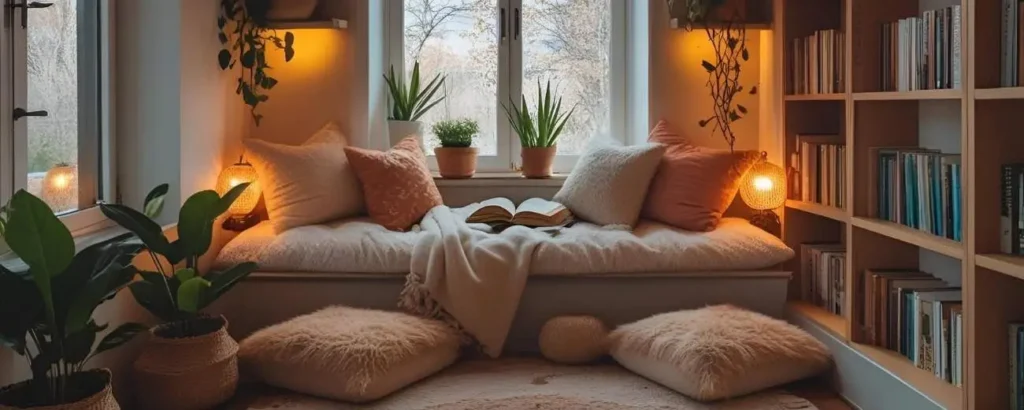
1. Window & Storage Combined

Window and Storage Combined

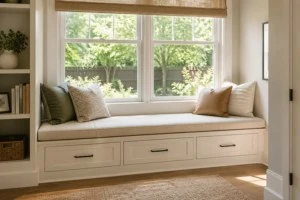
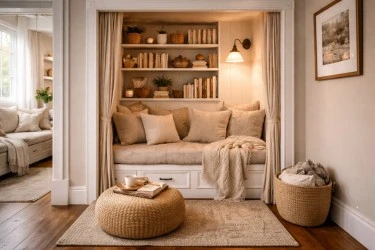
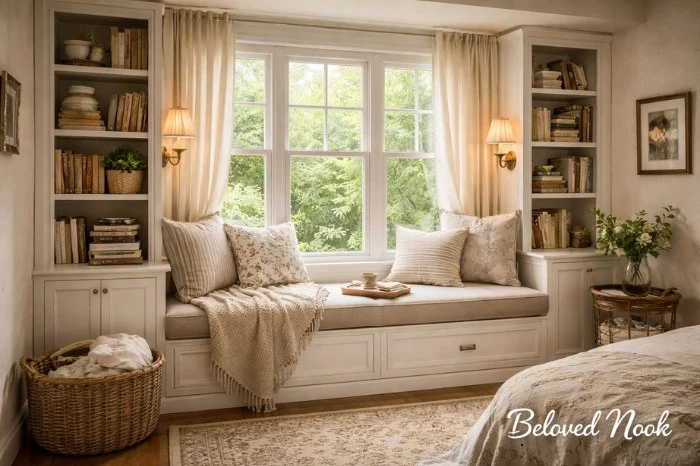
This plain bench with drawers and a good view is my new home. But what’s so impressive about a window reading nook? For starters, studies link natural light with 15-20% better reading retention. And if it didn’t get any better, it has built-in storage.

Take Emily Henderson’s Portland design, for example: it showed how an 18-24-inch-deep seating with drawer bases replaces furniture while boosting perceived space by 15%, emphasizing compact efficiency.

It’s comfy, soothing, and has storage for your snacks and other things; it sounds like a tropical paradise to me.

2. Understairs Secret Spot

Understairs Secret Spot

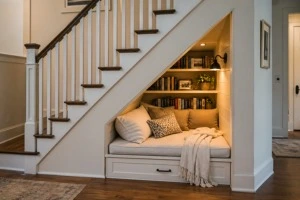
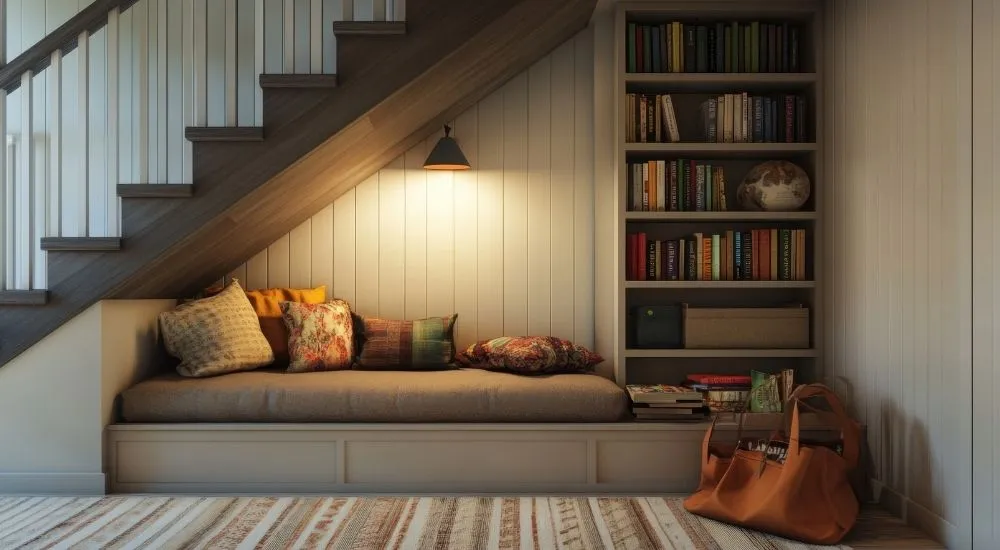
Why neglect that stair void when that unused space could turn useful to hold your fantasy novels?

This triangular space is generally a graveyard for old vacuum cleaners. However, once you take those things out and clean the nook out, it’s a triple-angled space to create that Alice in Wonderland vibe.

Multiple designers claim it has a “compression effect,” creating psychological safety and lowering cortisol. As Nate Berkus says, “Small hidden spaces feel more personal than large rooms.”

All you need is a cushioned bench and some shelves following the stair’s slope. Add soundproofing panels with a small but denty lamp, and you’ve got your own secret clubhouse.

3. The “Inside the Bookshelf” Cubby

The “Inside the Bookshelf” Cubby

I vibe with the idea of sitting inside of your bookshelf like a Japanese person reading their manga.

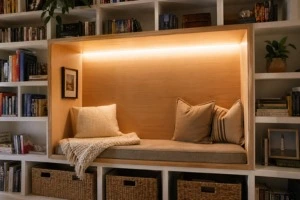
Remove some bottom shelves from the tall bookcase for that soft, cushiony seating area right in the middle of your books, like a rosebud blooming in a thorny library.

This design takes inspiration from the Japanese architectural human cubby system. Take Shinichi Ogawa’s Library House, where homey seats were snug in a floor-to-ceiling shelving unit. It is also noted that books reduce noise up to 30%, enhancing focus while reading. In other words, this is a simple, creative, and practical use of empty bookshelves, catching dust and cobwebs.

4. Classic Armchair Retreat

Classic Armchair Retreat

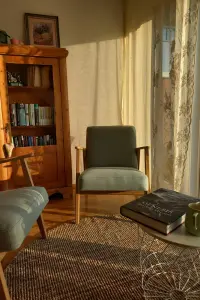
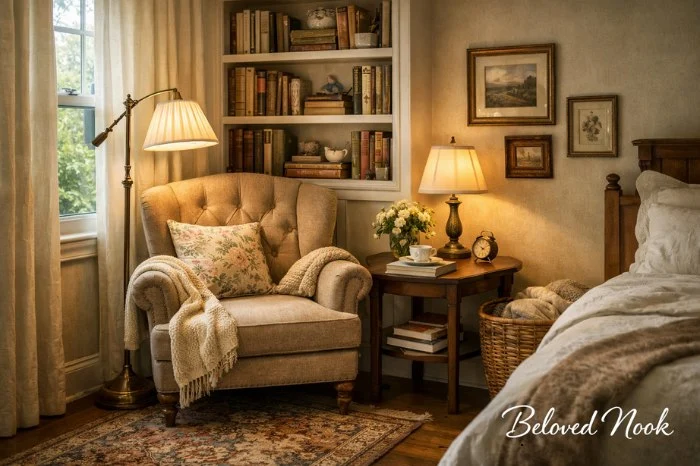
Armchairs are the epitome of cozy sanctuary, especially if it’s a deep-cushioned rocking chair with a high back support.

Kelly Wearstler states that a chair defines the ritual of stillness. This aligns with ergonomic studies, stating that a rocking chair in your late 20s or mid 30s actually reduces 40% of lumber pressure with a 15-20° recline.

Now, place that chair next to a window for natural light and a scenic view, along with a small bookshelf in the corner, a lamp to your left, and a C-shaped side table to your right.

Congratulations! You’ve got the seat, scenery, and sunlight that invite that long, screen-free reading experience you’re longing for.

5. Bedroom Sanctuary

Bedroom Sanctuary

This is my favorite reading nook idea. As an adult, this idea helps you complete a whole chapter before you sleep.

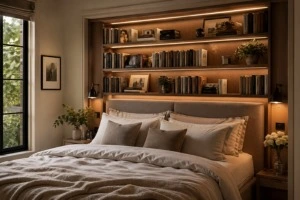
The best way to store your books near your bed is to replace your headboard with a bookshelf storage and use the wasted space, as shown in the Design Cafe projects.

Take inspiration from Noz Nozawa’s Lake Tahoe nook, how it blends storage, seating, and sleep for that splendor feel. In addition, behavioral data shows 18% better reading retention with active posture, protecting sleep hygiene, and reducing insomnia.

Also Read: Bedroom Nook Ideas for a Dreamy and Cozy Corner

6. Nature Lover’s Dream

Nature Lover’s Dream

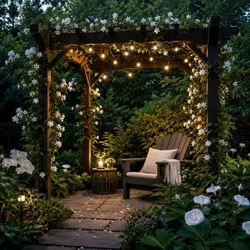
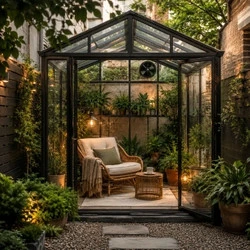
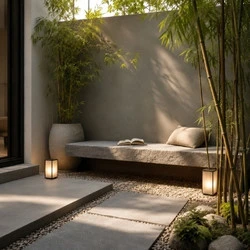
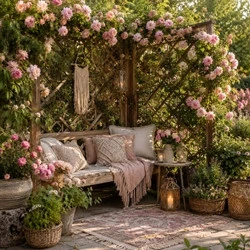
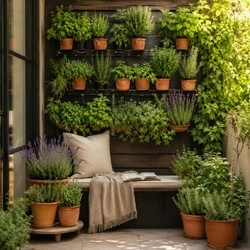
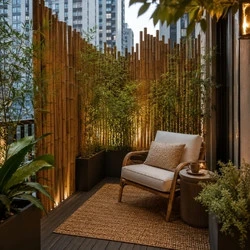
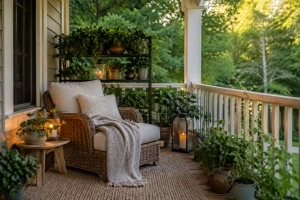
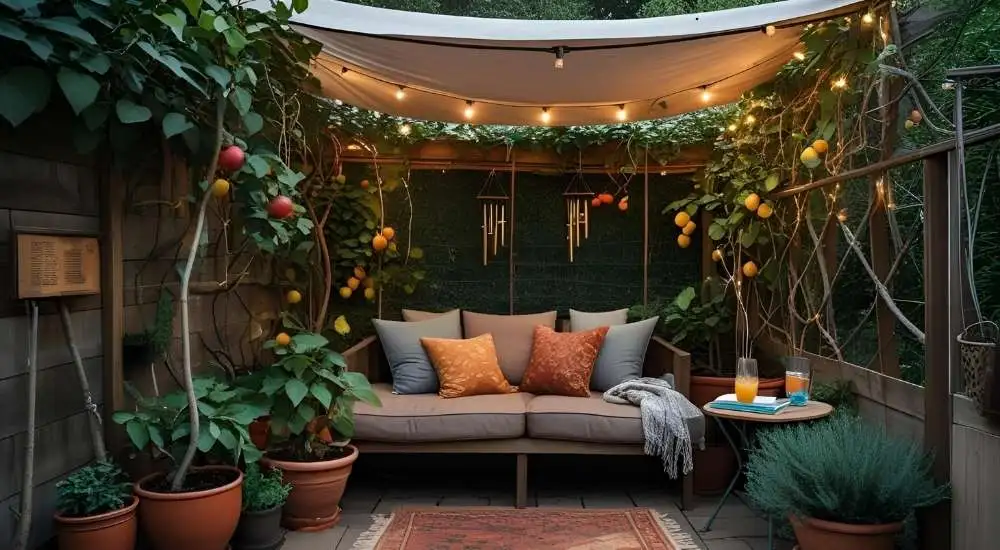
An outdoor reading nook is a curated, biophilic-driven sanctuary that optimizes natural elements to foster mental rejuvenation.

In simple terms, this is a personal meditation space to “be one with nature.” Set your little nook on your balcony, or your back porch, place your chair, and immerse yourself in the land of stories and imagination as designer Shade Degges suggests, “Dissolve interior-exterior barriers when lost in a book.”

This outdoor setup elevates your mood and boosts vitamin D in your body. In fact, studies reveal that in just 20 minutes,s you’ll be in a state of inner peace with serotonin rise and cortisol drops. This reading nook resets your focus through the breezes, birdsongs, and bright lights, silently elevating your daily life.

7. Attic/Loft Hideaway

Attic/Loft Hideaway

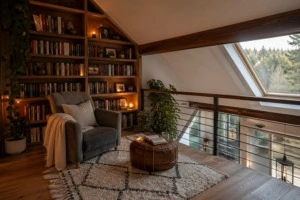
An attic is a “dead space” used to place boxes and old ornaments for storage that slowly accumulate dust. This is your opportunity to transform it into a cocooned loft hideaway.

This space is defined by its ability to turn architectural limitations, such as sloped ceilings, knee walls, and limited headroom, into a haven. Take inspiration from Kathryn Johnson Interiors’ Lake Minnetonka project.

Customize that space, use sloped ceilings to your advantage by adding floating shelves, and add skylights (with UV-filtering glass) that diffuse light to your loft nook. No noise, no cluttered space, just you and your cozy entrapment against the world.

8. The Closet-to-Coziness Flip

The Closet-to-Coziness Flip

The closet nook is a deliberate design choice to foster a more “soulful” atmosphere for oneself through the use of intimate and tactile elements.

As stated in Houzz, “Convert a deep closet into a hideaway space if you don’t need a closet in your room.” This is a masterful example of spatial optimization, as closets are mostly underutilized storage spaces.

Start by ripping the door off its hinges. Install a floating plywood bench with a 4-inch ledge, then vertical shelving to banish claustrophobia, and layer rugs/tapestries for that whimsical feel. Moreover, paint the walls in dark, moody, contrasting colors and hang a velvet portière for a theatrical hideaway. Now stand back and admire your handiwork as you’ve achieved optimum coziness.

9. Peak Minimalism

The Minimalist Floor Nook

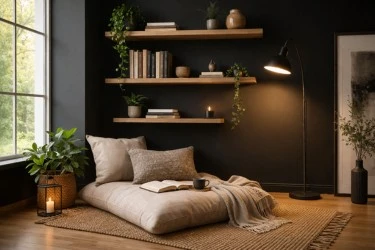
Minimalism is ever-trending, so it’s time to hop on the train! For starters, designers favor Japanese tatami-style floors for that sensory-focused sanctuary that optimizes small spaces through purposeful simplicity, such as Tadao Ando projects, who inspired ryokan interiors.

This type of design pairs layered rugs with zabuton cushions (best for hip mobility improvement, according to physical therapy insights) and a low lamp with slim shelves for your books and storage.

In common small apartment analysis, to add that aesthetic element, a monochromatic scheme with hidden LED shelving is the go-to in recent years. It is indeed a multi-functional sanctuary that fosters focus, humility, and spatial efficiency.

10. The Hybrid Office Escape

The Hybrid Office Escape

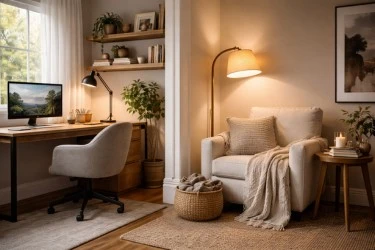
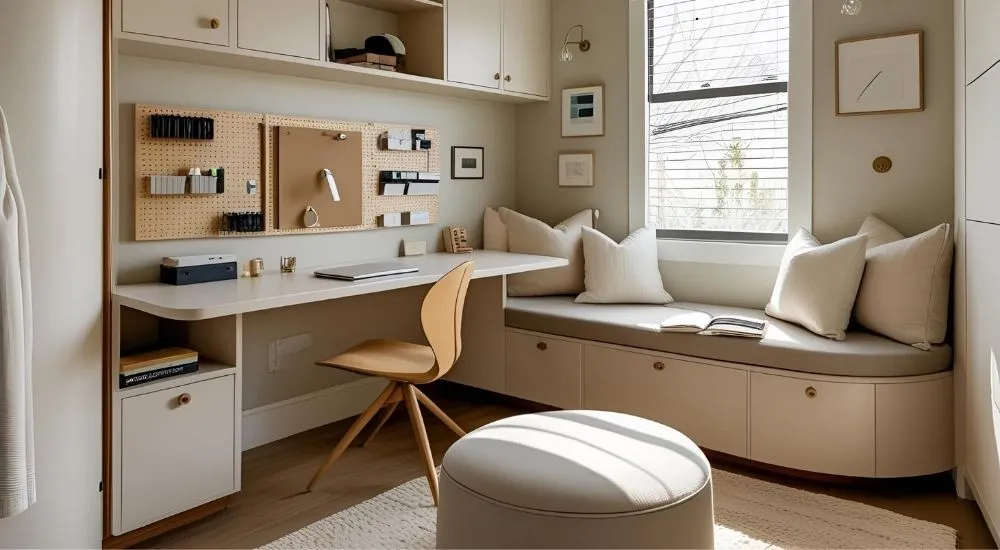
Daytime office, nighttime escape nook. This design bridges the gap between intense collaborative focus and necessary mental decompression. Studies prove that having a small break space in your workstation boosts productivity by 25%. Furthermore, optometrist insights confirm analog reading cuts digital eye strain by refocusing our eyes.

Play with the concept of the office nook ideas in accordance with your preference. Maybe you’d like a day/night switch with multifunctional furniture like an ergonomic chair, or create a retail-style “decompression zone” for yourself with a warm light that’s specifically for your off-hour relaxation with your fictional world. A nice hybrid nook is the perfect way to remind your brain that it’s time to destress from work.

Also Read: Smart and Trendy Bedroom Office Ideas For Home Based Workers

11. Little Tent

Little Tent

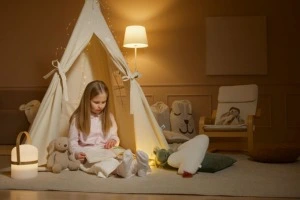
This reading nook idea brings out my inner child. Often styled as a teepee or canopy, it is a brilliant, multifunctional addition in a homey environment.

It has that cozy aesthetic with soft cushions on the ground and is decorated with fairy lights.

This nook is best to foster independence in an individual (especially children), as stated in the Montessori studies, since enclosed spaces boost focus, with research showing up to 40% longer reading time in low-stimulation spaces and deepened immersion (stated by Alicia Ortego).

Expert suggestion: Use sheer canopies over rugs with textured pillows for sensory balance, and the rest is your imagination to create a space that screams your name.

12. The Hidden Room

The Hidden Room

I always admired those unbelievable hidden room videos. Just imagine, you stand in front of a big bookshelf, and suddenly it moves, revealing your ultimate dream escape.

It’s possible to transform a dead space into a private escape. This is pure introvert thrill; this is the threshold experience that signals complete detachment from the real world, to your own little world.

It is the pinnacle of residential escapism, blending architectural ingenuity with sensory, “hygge” comfort. The best part, a hidden room actually boosts listing interest by 25%, making it a profitable investment.

13. Not-So Awkward Space

Not-So Awkward Space

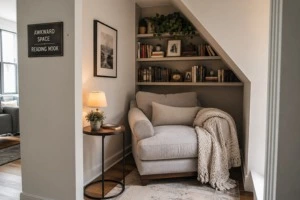
There’s always a wasted awkward space in a house, maybe it’s a small corner, or a questionable architectural construction that scratches your head. It’s time to add that 10% functionality by converting it into your little reading nook.

As Shade Degges says, “Take full advantage of weird layouts.” Use triangular or floating shelves for awkward angles and bump-out window cubbies or custom benches in accordance with the space.

Insert some monochromatic colors for that refined but intriguing ambiance. That awkward space doesn’t look that awkward now, does it?

Aesthetically Themed Reading Nooks

14. Bohemian Cottage Style

Bohemian Cottage Style

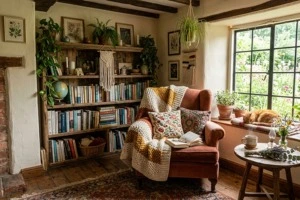
We’re about to merge that 1970s Laurel Canyon with an English cottage-core. “Bohemian design is the antithesis of the showroom,” but how to create that Bohemian aesthetic?

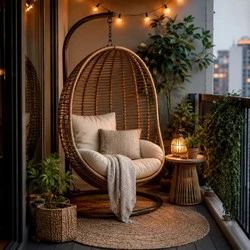
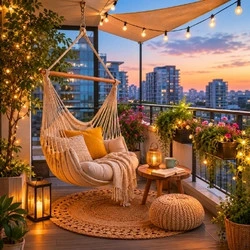
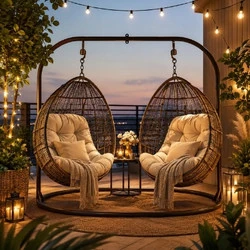
For starters, add a sunlit nook with a rattan hanging chair or a cushioned rocker that uses rhythmic motion shown in vestibular studies to self-soothe. For structural integrity, anchor to ceiling joists using 400lb-rated lag screws.

This “inherited comfort” balances nostalgia with biophilic greenery and layered textiles. By preserving negative space, the nook stays airy, providing the lifestyle benefit of deep neural regulation for long reading sessions.

15. 90s Booth

90s Booth

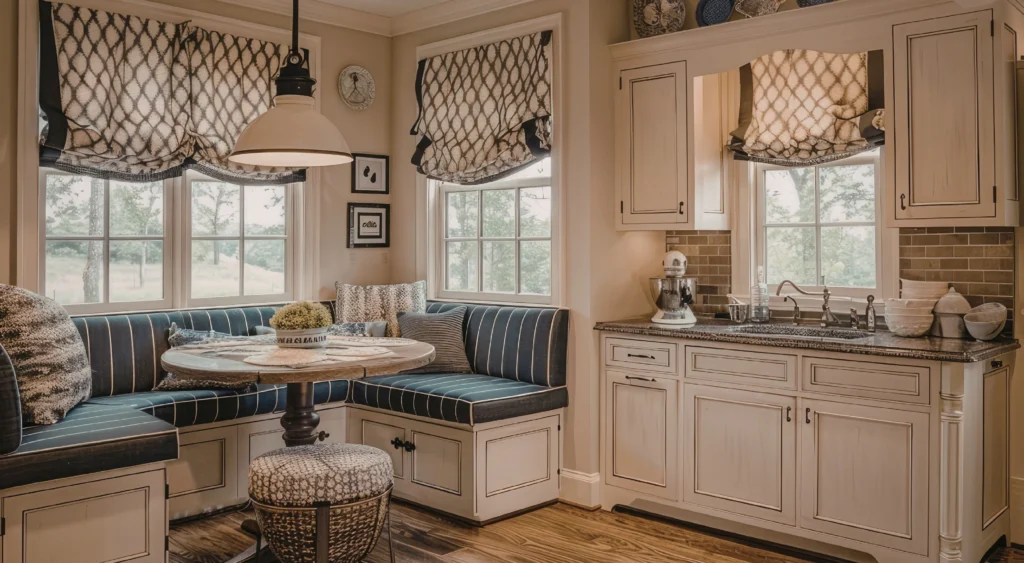
Nostalgia is about making an entrance with the 90s booth nook. This is a very versatile and multi-functional design that goes beyond reading nooks; tea time, storytelling, and lunch with friends and family.

This is the extrovert option for a reading nook, but it is as soothing as the others shown above. Acoustic studies prove high-backed booths reduce ambient noise by up to 50%, enhancing focus.

Apart from the booth aesthetic, it can be a great storage unit with the One Kind Design recessed storage and bench drawers for space efficiency. It may not be a one-man show scenario, but it is a chance to share your quality reading time with your loved ones and bond.

16. Mystical Corner

Mystical reading Corner

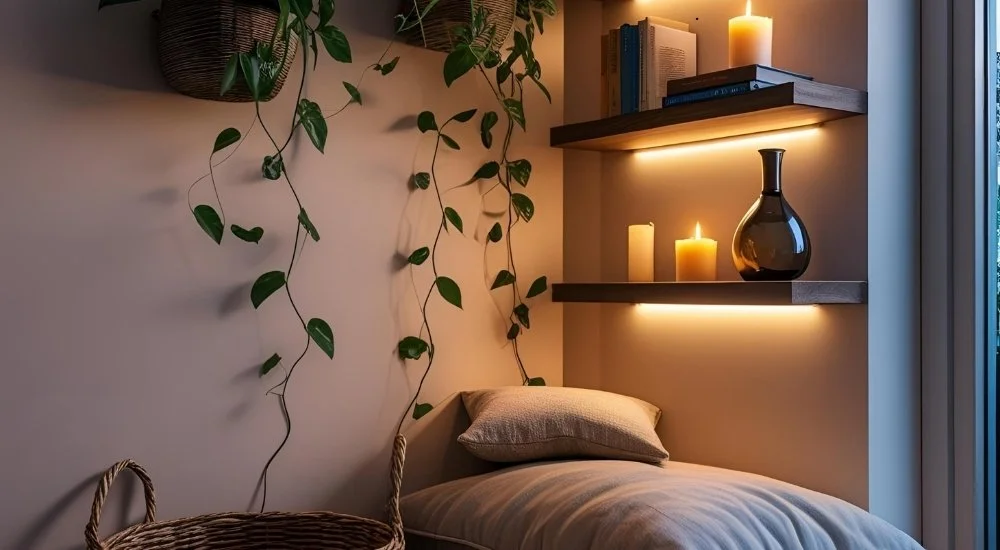
This is my dream nook idea. A mystical theme that evokes that Narnia-like immersion through layered textures, low lighting, and moody tones like plum and forest green.

How to achieve that mystical aura? Maybe apothecary-style libraries, or bohemian lofts, or you can use glow stars and floating shelves like in Space Odyssey. To immerse your space in this theme, designers suggest stress scent, silk, and ember light with metallic brass accents to boost creativity and calmness.

If you play your card right, this nook will be a curated, sensory-driven sanctuary that leverages mental comfort and intentional design for a transformative retreat from the modern world.

17. Pinterest-Inspired

Pinterest-Inspired

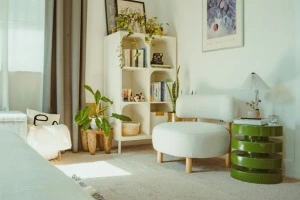
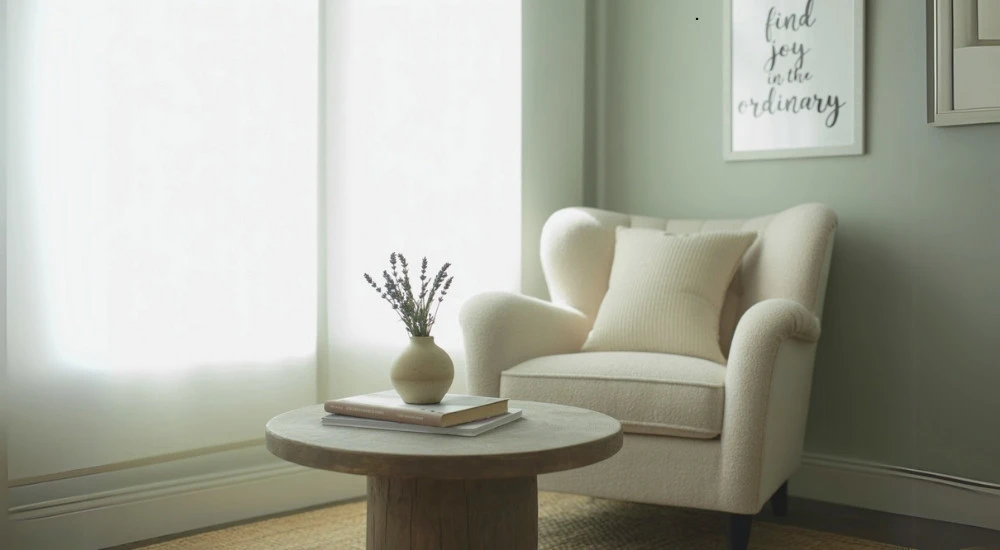
I’d say this is less spontaneous and a more generic one in the list. Projects like California Casual setups and countless YouTube videos describe this aesthetic with shades of white, elegant sheer curtains, and lush plants (plants are very important here) with motivational quote frames hanging in your nook.

Best part, 80% of it is DIY trends and thrift store decor, so it’s highly cost-effective.

Furthermore, Pinterest aesthetic works best with a tri-color neutral palette (cream, sage, terracotta), floral walls, and odd-number textiles to boost visual engagement. Just add a hygge-driven ergonomic armchair with arc lamps, and your Pinterest haven is complete and ready for your reading sessions.

18. Dark Academia

Dark Academia

Not everyone loves this aesthetic, but there’s always someone who will. If you wish to truly embrace this theme, study the Ivy League architecture space, which will guide you towards a process that gives off a luxurious vibe with that “darkness” aura.

To achieve that rich, dark look, designers focus on balancing high-contrast, moody aesthetics with comfort-driven, functional design, like inserting a fake(or real) fireplace next to your cozy leather chair and deep forest green walls.

This scholarly sanctum, layered with amber beeswax and antique props, transforms any corner into an expert-backed Oxford library in miniature.

19. Pretty Pink

Pretty Pink

All I can say is live your Barbie pink dreams. This nook is a beautiful blend of comfort and aesthetic. Projects like Sketch London and Rudloff’s chandeliered retreats really bring out that “princess haven.”

A nook with a bright pop of color, specifically vibrant pink, is a signature element of their “colorfully curated” spaces, according to Lemon & Kiwi’s designers. However, it’s equally essential to balance it with neutrals to avoid overstimulation.

For instance, swap juvenile bubblegum for plaster-pinks, pair dusty rose velvet with brass, and the furniture must complement one another, not clash. This reading nook will prove pink is a high-fashion neutral, offering a lifestyle of optimism and expert-level tranquility.

20. Earthy Aesthetic

Earthy Aesthetic

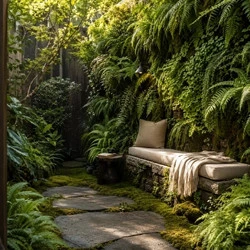
What to do when you love nature and don’t want to leave your house? Bring nature inside your house, of course. To elevate your indoor sanctuary, use the biophilic principles seen in Joshua Tree’s Wabi-Sabi eco-homes.

Moreover, research shows natural materials like raw timber and terracotta drop blood pressure as effectively as forest bathing. Beyond lush greenery and ethically kept exotic fauna, incorporate jute and unvarnished wood to ground the space. You wish to be even closer to nature, bring an obnoxious amount of plants inside for that extra oxygen to your mind and heart.

This aesthetic is not merely “rustic” but an intentional pairing of organic materials, tactile layering, and muted, nature-inspired palettes to create a serene, low-clutter environment that feels like a natural extension of the outdoors.

How To Make A Reading Nook Perfect

According to Vogue, a nook is more than a space with a chair. To make it a place you actually want to stay in, you need to follow these basic steps:

  • Perfect Lighting: Never depend on that big, ugly light in the ceiling. When it comes to a reading nook, the lighting must be flawless, like an IKEA adjustable floor lamp paired with warm LEDs. Layered lighting is highly suggested with adjustable task lamps to eliminate shadows and eye strain, proven to boost focus and comfort in homes.
  • Soft & Relaxing: It’s your haven, your nook needs to be relaxing and comfortable. Include ergonomic furniture suitable for your body. Whether it is a tiny stool or a floating ledge, you need a spot for your tea, your glasses, and that second book you might start without reaching a mile out.
  • It’s All In the Details: Perfecting the “Micro-Environment” involves Acoustic Dampening. Use heavy-weave rugs to drop ambient decibels. Mix a chunky knit throw with a couple of different-sized pillows. Each small decision amplifies both aesthetic authority and lifestyle benefits, turning a corner into a status-enhancing, high-end, and inviting space

Your Reading Nook Questions, Answered

Is my space too small for a nook?

Probably not! If you have two feet of wall space, you have a nook. Use vertical shelving and a floor pillow to keep the footprint tiny but the comfort level high.

How do I choose the right chair?

Do not just go for looks. Sit in it for at least ten minutes before you buy. If your legs go numb or your back hurts, it does not matter how aesthetic it is. You will not use it.

What kind of lighting should I use for late night reading?

Go for warm white bulbs (around 2700K). They are much easier on your eyes than the daylight bulbs that can mimic the blue light of a phone screen and keep you awake.

Do you struggle with your space? Do you wish to convert your kitchen into a warm, functional and inviting place, all at the same time? You’re certainly not alone. Many homeowners invest in layouts but still miss that cozy, usable corner that makes daily living easier. The truth is, without thoughtful planning, your kitchen has a wasted space staring at you in guilt.

You know what can turn that frown upside down? A kitchen nook! Yes, kitchen nooks are about to solve world hunger, and I mean the hunger for those intimate, efficient zones that boost your home’s flow and value. This article shows you some beautiful but practical ideas to create a kitchen nook in your house with little to no effort, and with your decisions.

1. Window Nook

Window Nook

A window-side dining nook is one of the most desired kitchen nook layouts, and for very obvious reasons. Think about all that natural lighting instantly kissing your face as you sip on your morning coffee.

Your ambiance is enhanced, your space feels larger and more inviting for weekly brunches. All you need are some linen curtains, cushioned upholstery, and some wooden tabletops to create that soft, warm glow that will bring you a perfect scene for your everyday meals.

2. Corner Nook

Corner Nook

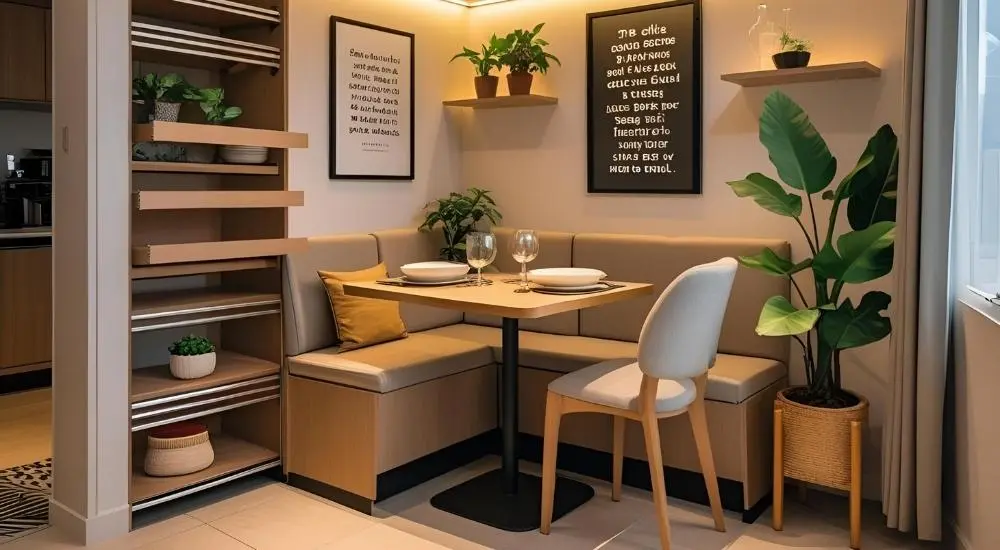
Now this is an overused idea, but how can we leave out the ideal breakfast nook in the kitchen (corner breakfast nook ideas)? Corner nooks rank high for their no-fuss efficiency in busy homes. Small or large?

Doesn’t matter. Corner nooks still look so classy and modern; it’s like optimizing every nook and cranny of your house to achieve that Pinterest aesthetic.

These corner breakfast nook ideas are so famous because they create a defined zone without adding restrictive walls, allowing you to integrate functional spaces, blending breakfast areas into a broader room beautifully.

3. Attached Island Nook 

Attached Island Nook 

This might seem like a questionable eating nook design idea, but give it a chance. A nook attached to your island. They might seem like an odd choice, but it is said to foster family chats and deepen blood and water connections without dominating the room. You’re sitting there, chatting with whoever is cooking and witnessing the cooking process with your very eyes.

In addition, you can easily angle an L-shaped booth against the island’s rear face to save square footage. This setup acts as an extended coffee nook in kitchen centers, making these kitchen nooks highly practical for quick meals.

4. Low Drawers As Seats

Low Drawers As Seats

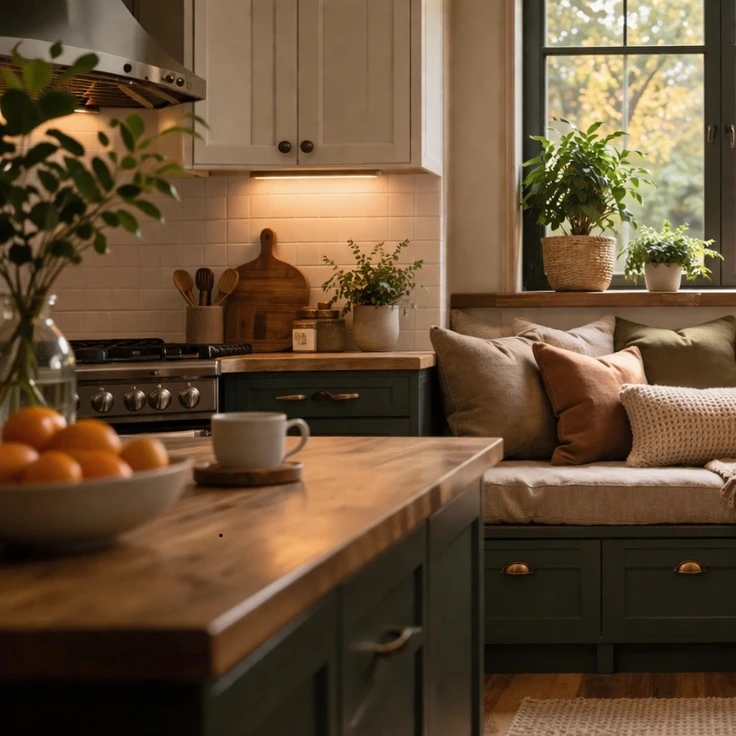
Who doesn’t love extra space for their extra items? Modern little kitchen nook concepts are going toward low drawers rather than conventional benches. Using under-seat cabinets to remove clutter, these space-saving wedges integrate seating with storage.

Moreover, it keeps a specific degree of cleanliness; thus, because these secret chambers keep your stored goods accessible and dust-free, deep cleaning your home feels like a breeze. Do you wish for additional nook storage?

5. Tightly Packed Nook

Tightly Packed Nook

You live in a tiny house with not much space to spare, yet you yearn for those aesthetically pleasing nooks in your kitchen. Maybe a kitchen nook idea without a table approach works for you. In tight spaces, vertical design matters. Use rattan chairs or narrow window seats paired with foldable surfaces.

Incorporating versatile gateleg table designs is an excellent way to provide a full dining surface when needed, while tucking away neatly to keep the floor clear.

This keeps the area flexible while maintaining usability. Add light fixtures, herb planters, and chalkboard menus to create that dream nook without having a stuffy, non-functional kitchen.

6. Child-Friendly Nook

Child-Friendly Nook

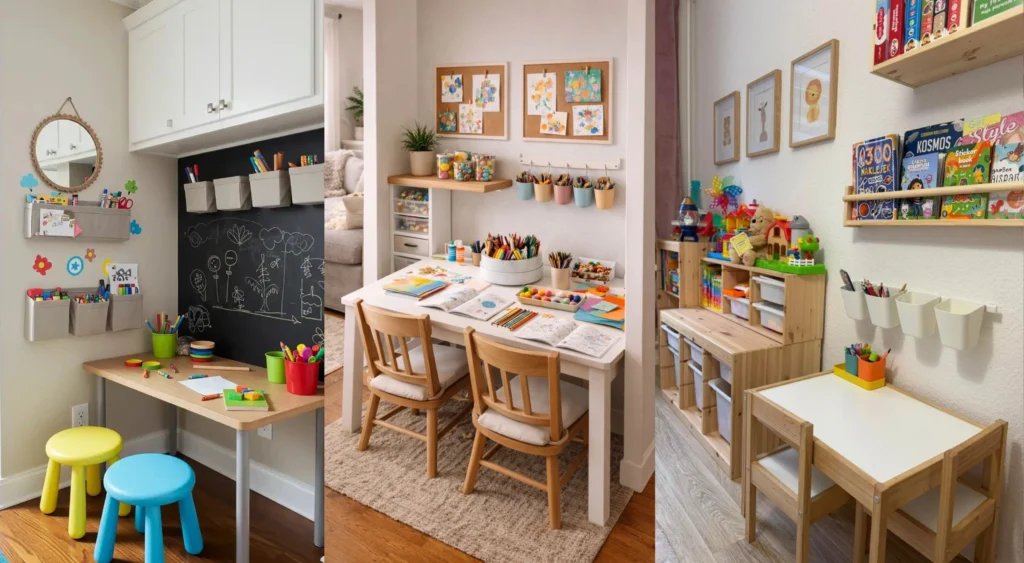
Can’t forget the children, the sparkle of every parent’s eyes. This coffee nook in the kitchen can also be a juice box nook for your children. Add playful features such as chalkboard walls or recipe flip boards. These transform the nook into an educational hub where kids can draw or learn basic cooking concepts.

Including bright colors, floral cushions, and fun placemats creates an engaging atmosphere while maintaining functionality. Furthermore, a child’s safety must also be a priority, so try to use rounded edges, cushioned upholstery, and durable fabrics like checkered materials for safety.

7. 80s Aesthetic Nooks

80s Aesthetic Nooks 

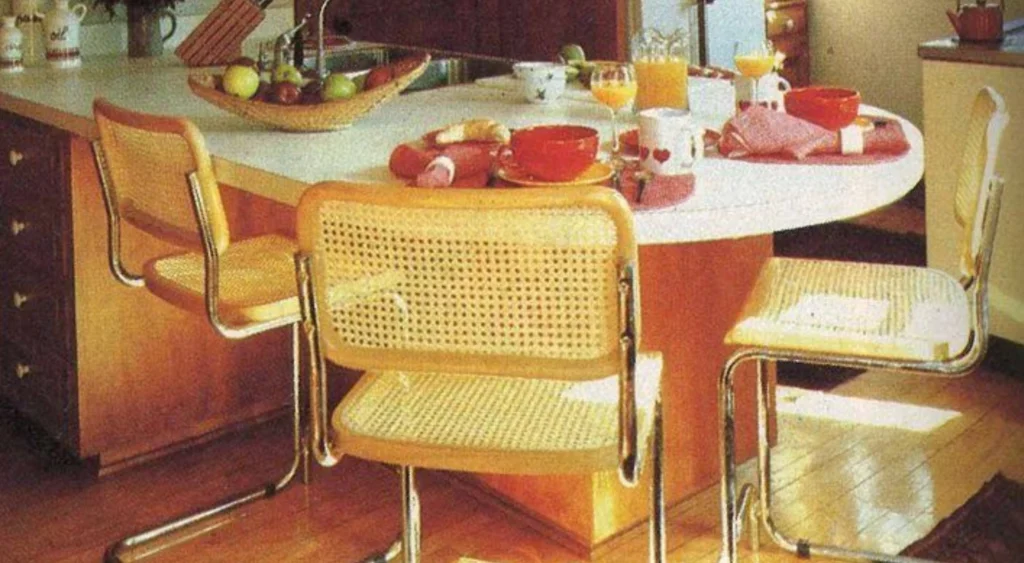
In the world of  Pinterest, modern kitchen nook ideas, you are an 80s style vintage inspired breakbook nook person, aren’t you? Let’s design your nook: bold patterns, checkered fabrics, vintage seatings. Get accessories like candle holders, ceramic pitchers, and fruit bowls as the cherry on top.

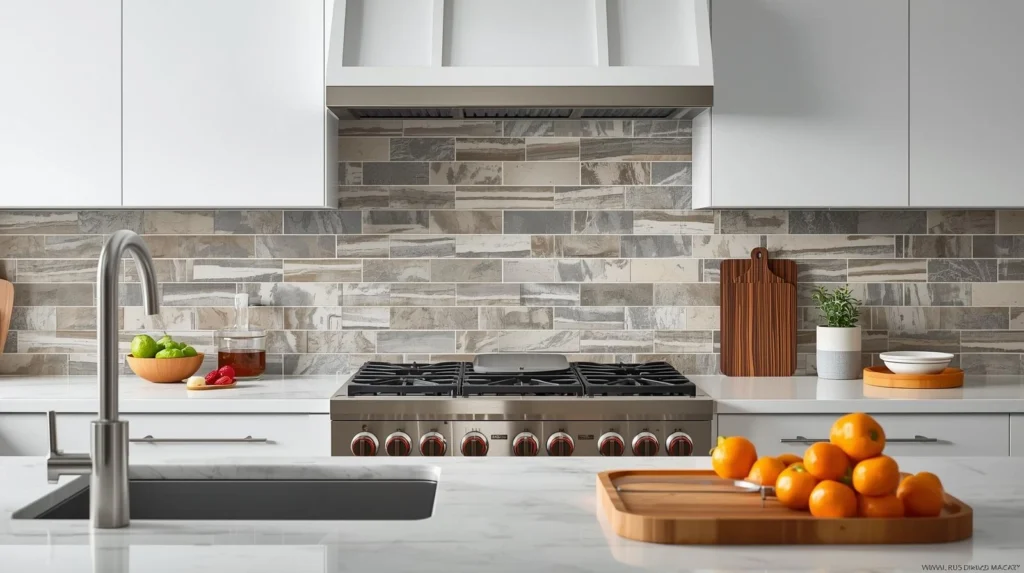
That nostalgic vibe is finally kicking in, and those teal colored splashbacks are blinding but perfect. If you want to lean more towards this aesthetic, you need to purchase retro appliances or decorative teacups to add that unique personality. You need to sell that style, so go all out with your cool grandmother’s furniture.

8. Minimalistic Nook

Minimalistic Nook

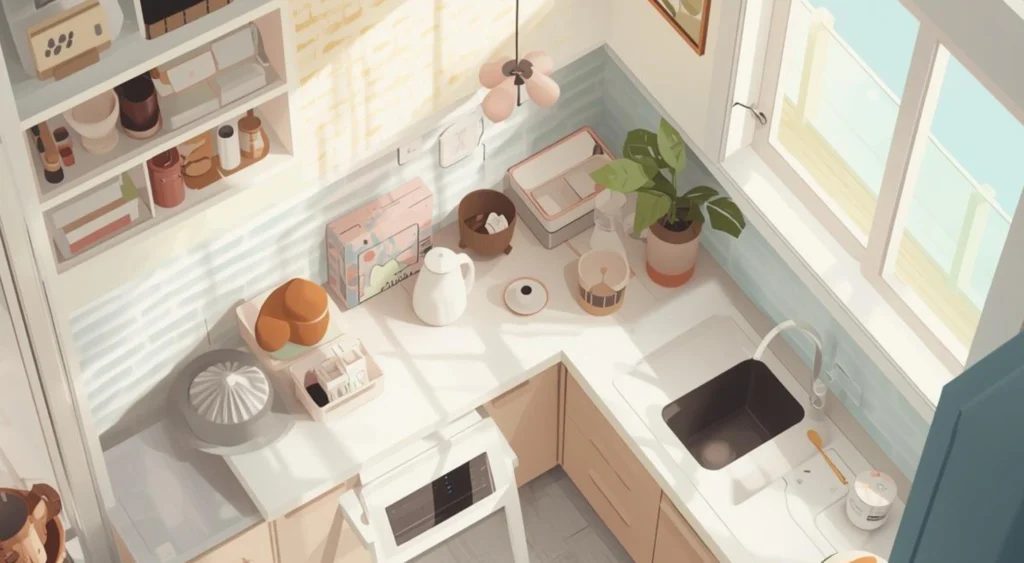
I’d call this a “safe choice” personally, but everyone has a preference. On the plus side, deep cleaning your kitchen would be a 5-minute task with that minimalist aesthetic. Designed with simplicity, a kitchen corner highlights plain lines and neutral color schemes.

Soft greys, whites, and beiges provide a tranquil, spotless setting. Floating shelves can be added to give it a sharp appearance and spice it up. Minimalism had the highest practicality rate as it blends into any kitchen, proving that less truly is more when designed with precision.

Conclusion

Well-planned kitchen nooks may turn even the tiniest kitchen into a very useful and welcoming area. Each concept has a specific function, from small drawer-based systems to window seating soaked with natural light.

These ideas guarantee every square foot is properly used, whether you are dealing with a cramped layout or designing a new construction. The secret is to strike a balance between comfort, storage, and flair without overly complicating the design.

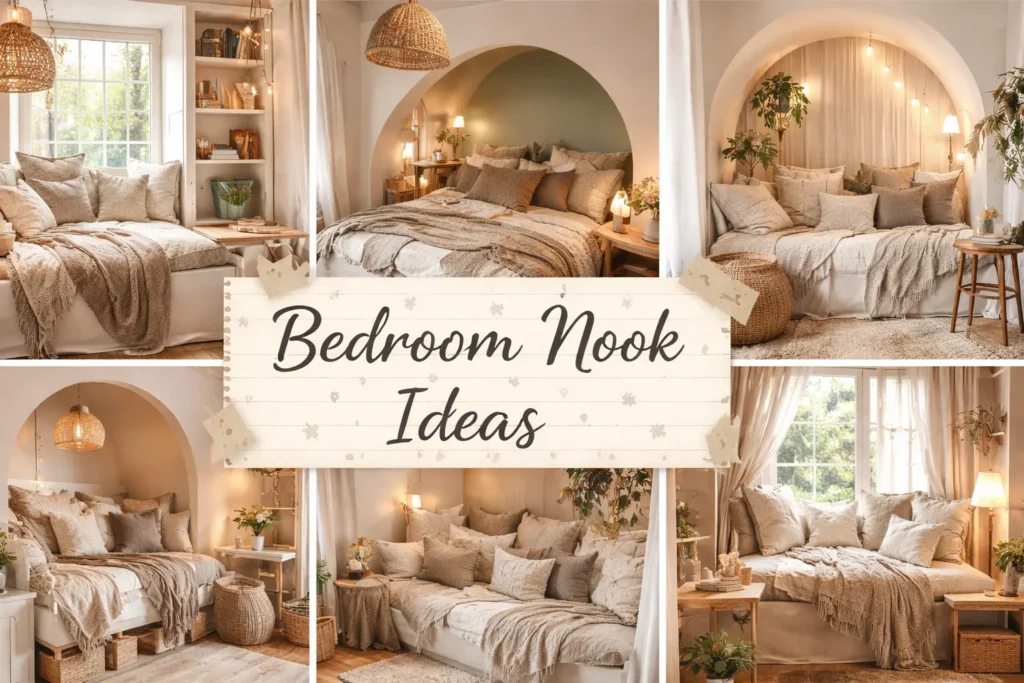
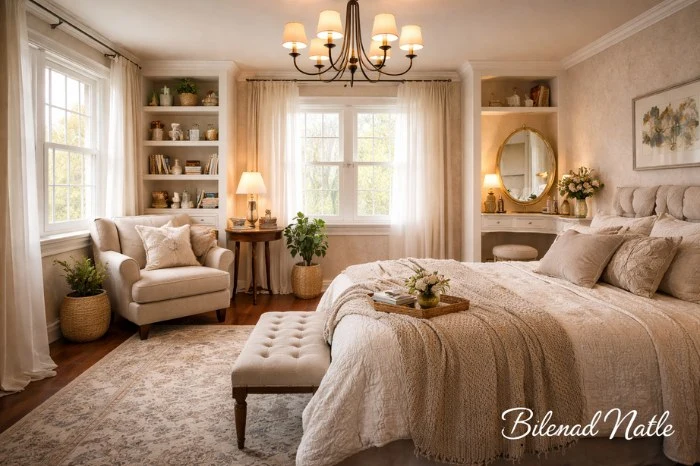
In my 15 years of designing nooks, the biggest mistake I see is treating that unused corner of a bedroom as dead space. Why leave it empty and boring when, with some effort, you can make it your cozy and dreamy room within a room?

The ideas below cover every budget, room size, and style. Each one is something I have designed and installed in the homes of my clients.

1. The Classic Reading Nook Tucked into a Bedroom Corner

The Classic Reading Nook Tucked into a Bedroom Corner

A built-in reading nook is the most requested project in my studio, and for good reason. It transforms the awkward 90-degree corner of a bedroom into a personal retreat that feels like it’s been there forever.

  • Use L-shaped shelving to frame the seat on both sides
  • Add a wall-mounted swing arm lamp. It will save the table space.
  • Choose a seat cushion at least 4 inches thick for long reading sessions
  • Install a small outlet inside the nook for phone charging

Pro Tip: Paint the interior walls of the nook 1-2 shades darker than the room. This depth trick makes the alcove feel intentionally designed.

2. Window Seat Bedroom Nooks

Window Seat Bedroom Nooks

A window seat nook is my go-to recommendation when someone has a deep bay or bump-out window they’re not using.

I recently designed one with a 16-inch deep storage base. It was perfect for extra bedding, seasonal throws, and books.

Pro Tip: Pair window seat nooks with dark wall colors behind the seat. Navy or deep green walls make the bedroom nook feel like a jewel box.

3. A Canopy Bed Nook for Some Drama

A Canopy Bed Nook for Some Drama

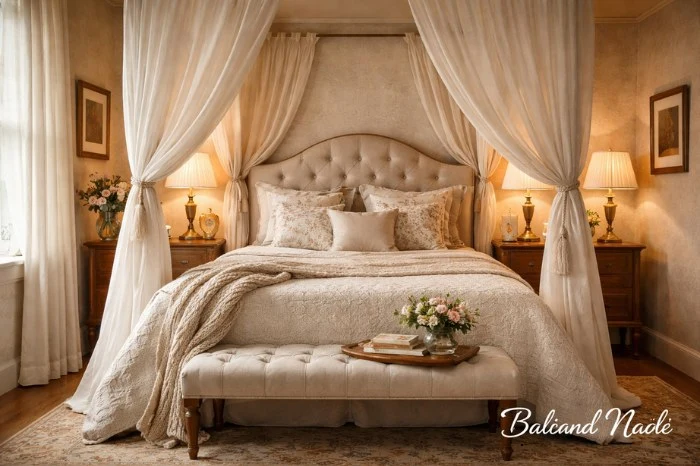
It’s one of the most sophisticated bedroom nook ideas for adults I’ve executed. The idea is to create a “room within a room” by building a canopy frame around the bed. Then you can add layering curtains that can be drawn for full enclosure.

Pro Tip: Pair the canopy with a moody color palette on the back wall, and you get a retreat that feels genuinely luxurious.

4. Create a Built-In Bookshelf

Create a Built-In Bookshelf

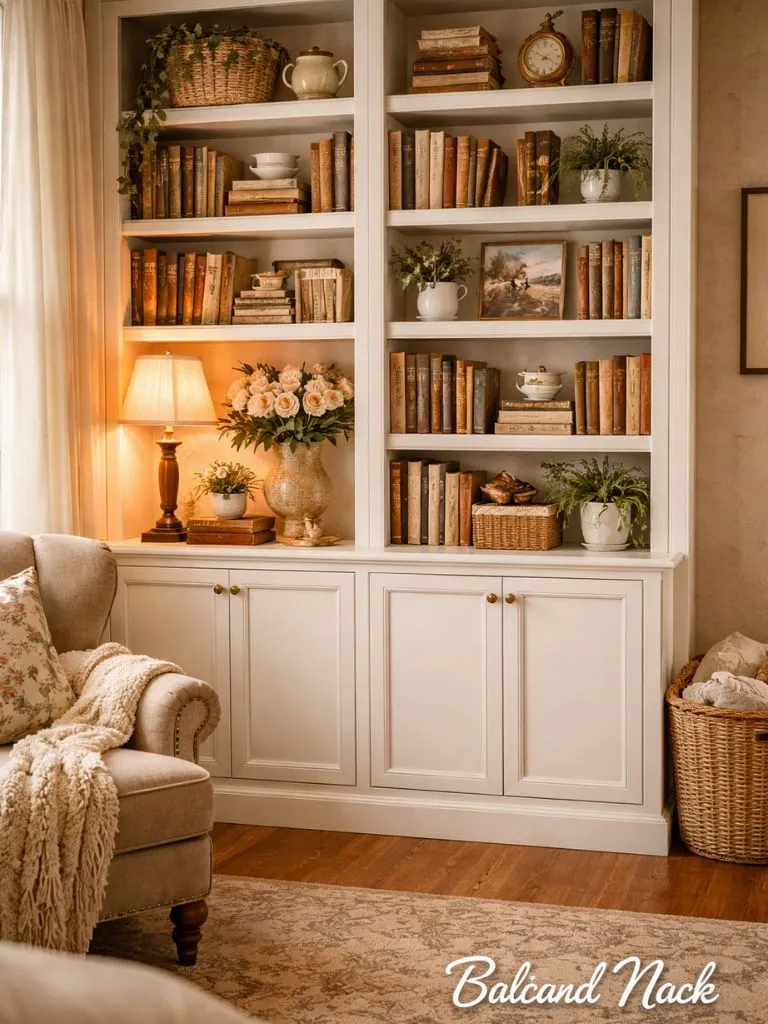
A built-in bookshelf nook in a bedroom does something shelving alone can’t: it creates a sense of enclosure that makes the space feel curated. I always design these with the shelves flanking a central focal point. It can be a chair, a bench, or even the headboard itself.

Pro Tip: The key measurement I use: keep shelves 10–12 inches deep for standard books, but bump one shelf to 14 inches to accommodate art books and display objects. That variation in depth makes the whole unit look more thoughtful. For more layered ideas, you can browse my different nook design approaches that go beyond the obvious.

5. Home Office in a Bedroom Nook

Home Office in a Bedroom Nook

A bedroom office nook is one of the most practical projects I get hired for, especially in studio apartments and smaller homes. The goal is always the same: create a workspace that functions fully during the day and visually disappears in the evening.

My go-to approach is a floating desk built into a shallow alcove. I’d suggest going for 22–24 inches deep. It is the sweet spot for a monitor and keyboard without the desk dominating the room.

Pro Tip: You can decorate this office nook with the shelves, small indoor plants, table lamps, and pedboards.

6. Under-Stair Bedroom Nook

Under-Stair Bedroom Nook

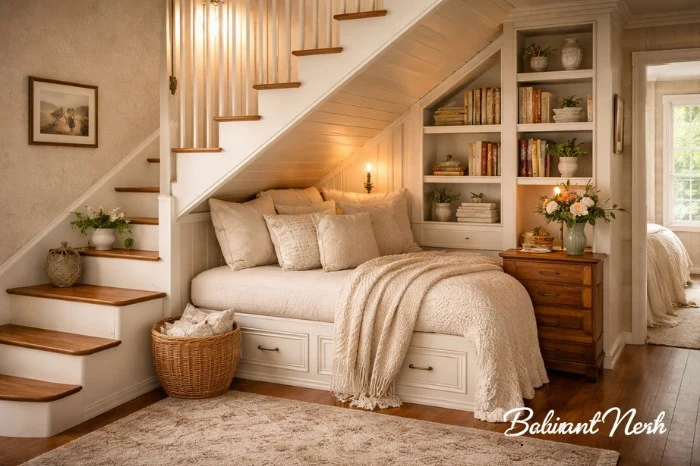
Under-stair bedroom nooks use triangular dead space that most homeowners ignore entirely. I always advise my readers to turn that space into a small reading pod, a workspace, a secret teen bedroom for your kids. It will give you a kind of Harry Potter vibe, and believe me, you will love it.

Pro Tip: Use shelves that follow the stair pitch. It will make the slope look integrated. Position the headboard at the tallest end and feet towards the slope for maximum utilization of space.

7. A “Zen” Nook

A “Zen” Nook

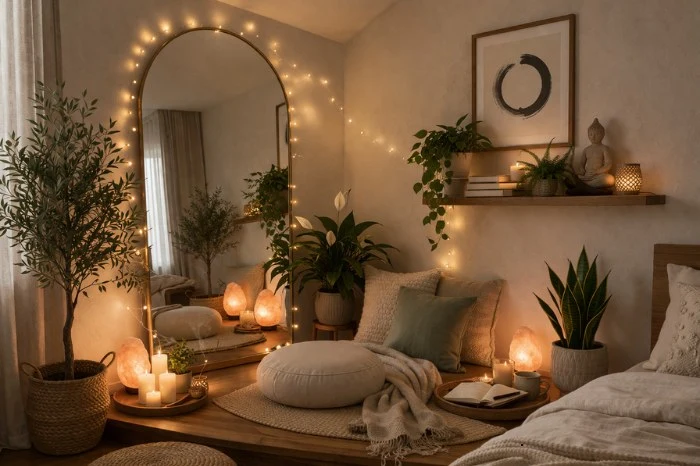
Place the large mirror and hang fairy lights in the corner. The mirror doubles the perceived space and bounces the warm glow of the candles and salt lamps throughout the corner, which looks stunning.

This feels less like a reading spot and more like a space for meditation, journaling, or winding down before bed.

Pro Tip: I’d suggest placing a rough, natural jute rug underneath a soft, shaggy faux-fur or wool rug. The contrast between “rough” and “soft” creates a sensory depth that makes a nook feel high-end.

8. Install an aerial furniture in the Corner

Install an aerial furniture in the Corner

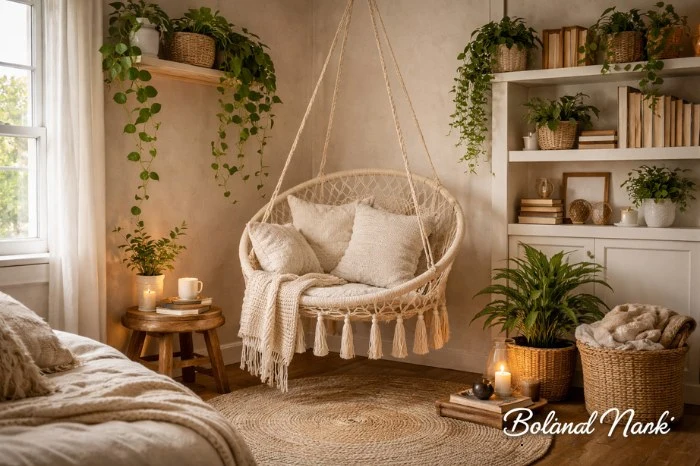
You can use a macramé hanging chair as your focal point. Hang pathos and other low-maintenance plants around it from the ceiling or sit on high shelves.

Pro Tip: Position your hanging chair in front of a tall, structural plant. It creates a “green wall” effect and adds more character to the room.

9. Couples’ Bedroom Nooks: Designing for Two

Couples' Bedroom Nooks

One of the most rewarding projects I take on is designing bedrooms for couples, especially when two people have genuinely different needs from their space. One wants a reading seat, the other wants a vanity. My solution in most cases: one nook per person, positioned on opposite sides of the room.

Pro Tip: Use the same wood tone or upholstery color in both nooks to tie them together visually, even if the function is completely different. This kind of symmetry is a hallmark of well-planned master suite interiors where comfort meets high-end design.

10. The Floating Nook Design

The Floating Nook Design

Let’s say you have an extremely small nook area where you can’t really put any sofa or mirror. What would you do then?

I have a solution for that. Place a small chair and install floating shelves in the corner. Make sure to mount the corner unit slightly off the floor. It will not look “heavy” like the traditional furniture.

For more flexibility in tight spots, using a compact gateleg table offers the same light appearance while giving you a fold-out surface for tea or a laptop whenever you need it.

Pro Tip: Use matte finish and a sophisticated color palette of sage green, light oak, and cream to give it a more open and airy vibe.

Closing Thought

The thing about a well-designed nook is that it changes how you inhabit your whole room. You start going to bed earlier because you actually want to be in your bedroom.

You read more, breathe a little easier, and eventually get a relaxing sleep at the end of the day.

You Might Also Like:

Wall Art Design ideas

Black and White Bedroom ideas

Every home has its hidden gems, the nooks and crannies that most people walk past without a second glance. But I’ve spent years helping homeowners rethink exactly those overlooked corners, and I can tell you with confidence: they hold more potential than almost any other area in your living room. Whether you have a compact apartment or a sprawling family home, a well-designed nook can shift the entire feel of your space.

I think the real magic of a cozy living room nook lies in its intentionality. It’s a corner with a purpose, a place to read, reflect, work, or simply breathe. Let me walk you through my top seven ideas, each one grounded in real-world design experience.

1. The Classic Reading Retreat

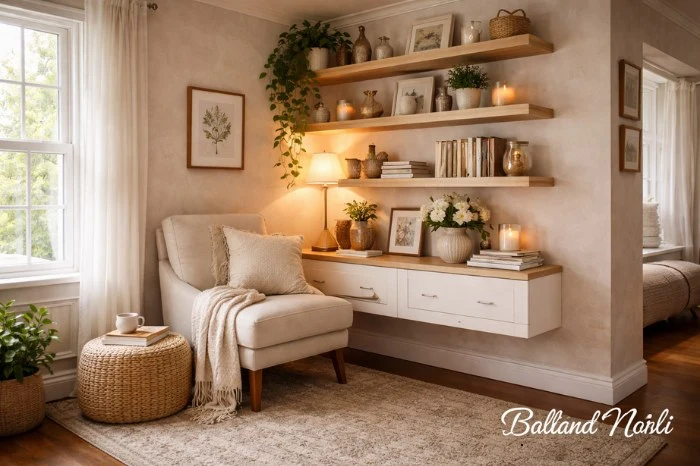
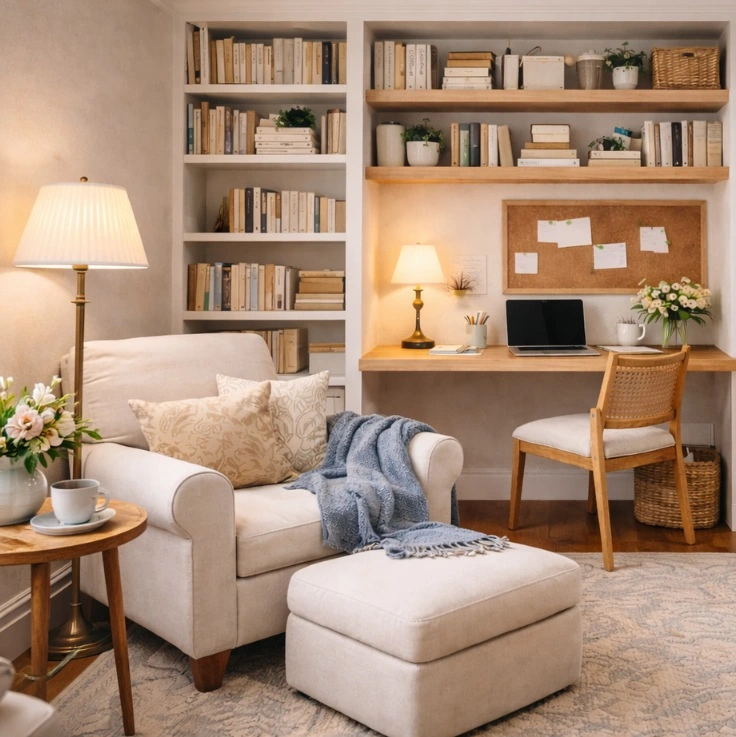
For nearly every client, I recommend a reading nook. Place a comfortable armchair in a quiet corner, add an overhead wall-mounted shelf for books, and layer lighting. Combining a floor lamp with a directional sconce turns a functional spot into an inviting one.

Add a wool throw and a small side table to enhance comfort. These simple touches create a relaxing nook without requiring renovations.

2. The Bay Window Showstopper

In my opinion, nothing beats a bay window nook for raw design impact. The architecture does half the work for you. Build a window seat design with a cushioned bench and hidden storage underneath, and suddenly you have a small-space seating solution that looks custom and costs far less than a built-in sofa.

Frame the window with floor-length curtains to create a cozy, modern sanctuary within your larger room.

3. The Boho-Inspired Corner

A boho living room nook is popular. Layer woven textiles, rattan furniture, and macramé to create a warm, personal corner. This style thrives on texture and imperfection, so don’t overthink it.

Add indoor plants like pothos or a fiddle-leaf fig, or terracotta pots, to bring the corner to life. Let the decor build itself.

4. The Minimalist Work Corner

Not every nook is for leisure. A slim desk, monitor, and floating shelf create a functional office nook that blends in. I’ve designed these for remote workers who need a workspace without taking up an entire room.

Keep the design clean and minimalist, fewer, better objects make the space feel intentional. Cable management and a neutral palette help it disappear when not in use.

5. The Budget-Friendly DIY Nook

A beautiful nook doesn’t need a big budget. A DIY nook with a secondhand chair, peel-and-stick wallpaper, and IKEA shelf can cost under $150 but look professionally designed.

This is ideal for rentals; everything is reversible, nothing is permanently fixed, yet it creates a cozy corner that adds character to any room. It’s a makeover on a shoestring.

6. The Luxury Lounge Nook

On the luxury end: velvet seating, built-in cabinetry, and a statement pendant. The nook becomes an interior highlight.

The best luxury nooks have one standout feature, an eye-catching chaise or bold banquette, and restrained surroundings. Add a marble side table and a curated selection of books for a guest-friendly corner.

7. The Tiny Nook That Works Harder

Tiny living room nooks are underestimated. Even a two-foot space can fit a stool, narrow shelf, and pendant. Think vertical, not horizontal.

Such a nook needs three things: a defined zone (even a small rug works), good lighting, and one standout piece. It adds coziness even without a library.

Pro-Tips for Nook Success

Regardless of which style you choose, follow these three universal rules I use for every project:

  • Define the Zone: Use a small area rug to “fence in” the nook.
  • Lighting is Vital: Never rely on the big “overhead” light. A dedicated sconce or floor lamp is a must.
  • Scale Matters: Measure twice! In a tiny living room nook, every inch counts. Ensure your furniture doesn’t block the natural flow of traffic.

Final Thoughts

The most effective nooks I’ve created were purposeful, not just large or expensive. Whether your goal is reading, working, or relaxing with plants and cushions, defining the purpose of your nook is what truly transforms it. Consider how you want to use the space, and design your nook with that clear intention in mind.

Start with just one overlooked corner. Transform it thoughtfully, and you might discover it becomes your favorite spot at home; that’s the power of an intentional living room nook.

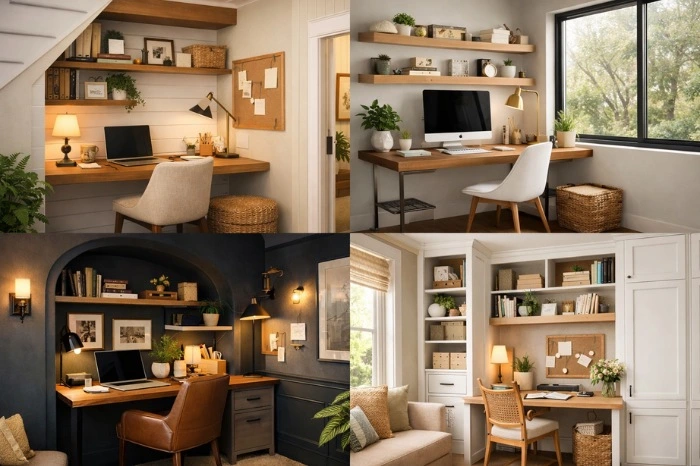
After a decade of helping homeowners reclaim their square footage, one thing has become crystal clear: you don’t need a spare bedroom to build a high-performance workspace. In fact, some of my most successful home office transformations have happened in the most unlikely nooks and crannies of a house.

Whether you are dealing with a cramped apartment or a sprawling suburban home with “dead zones,” these office nook ideas focus on ergonomics, flow, and visual harmony. Based on the design principles we prioritize at Beloved Nook, here is how to turn that neglected corner into a modern office nook that actually inspires deep work.

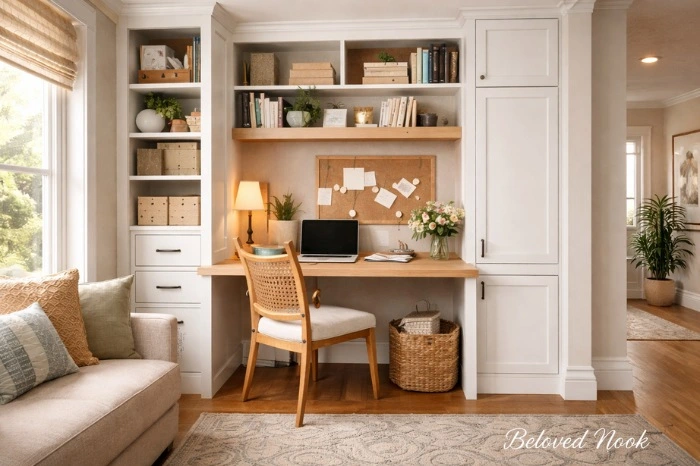
1. The Architectural Advantage: Built-in Desk Nooks

built-in office nook

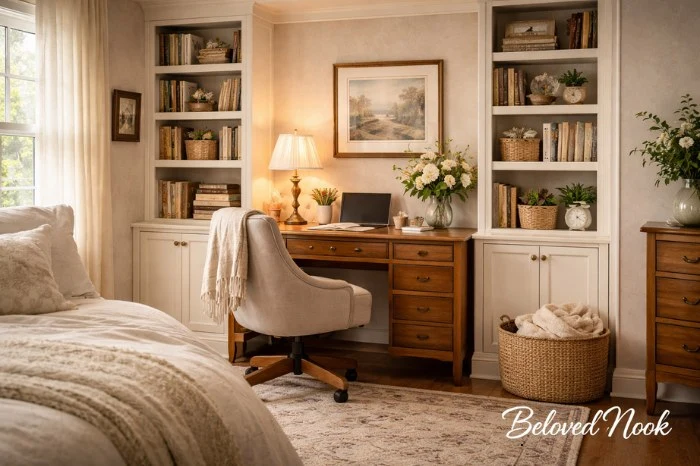
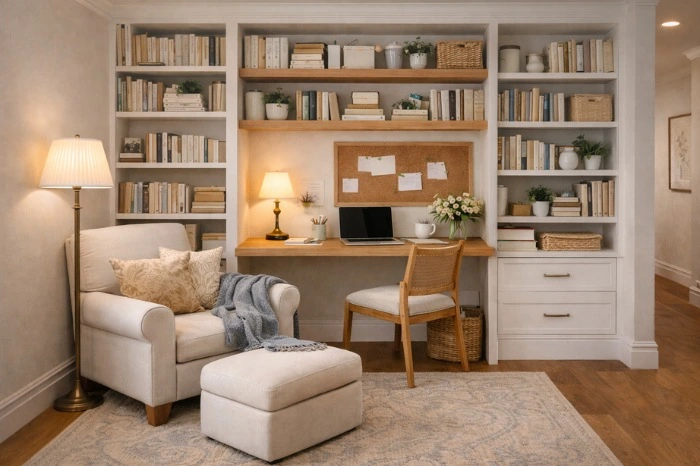
If you have an alcove or a recessed wall, a built-in desk nook is the gold standard for space optimization. By custom-fitting a desktop from wall to wall, you eliminate the “visual noise” of desk legs and gaps where cables hide.

Pro Tip: Use a thick butcher block or a floating stone slab for the desk surface. It feels permanent and high-end, instantly elevating nook design ideas from temporary to structural.

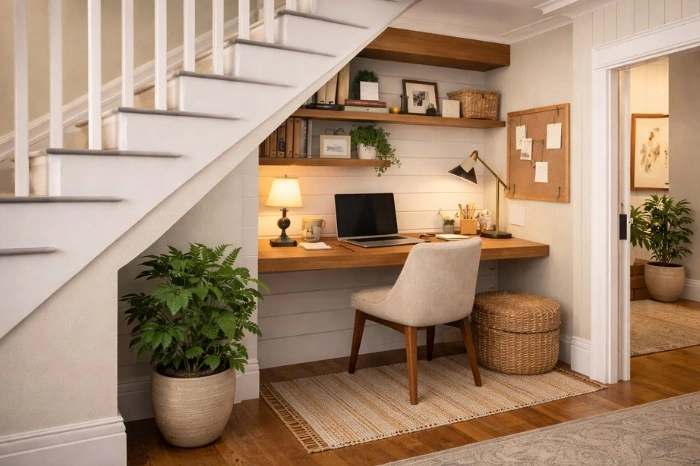
2. Under Stairs Office Nook: The Ultimate Space-Saver

under stairs office nook

The under-stairs office nook is the “white whale” of small-space design. It’s often awkward and sloped, but with the right office nook designs, it becomes a private cockpit.

Design Strategy: Use the deepest part of the slope for your monitor and the higher end for shelving. This prevents the “cave” feeling and maximizes vertical office nook organization ideas.

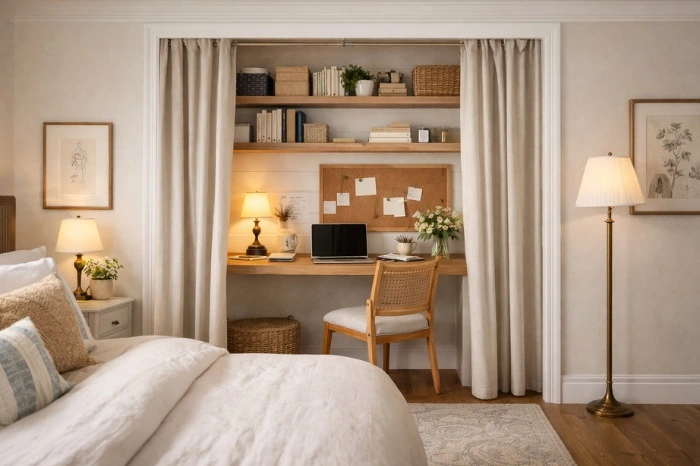
3. The Bedroom “Office” (Closet-Office)

Bedroom Office Nook

For those struggling with bedroom office ideas, look to your closet. By removing the doors or replacing them with linen curtains, you can tuck a small office nook away from your sleeping sanctuary.

Expert Advice: Keep the palette neutral. A minimalist office nook in a bedroom helps your brain “switch off” when the workday ends.

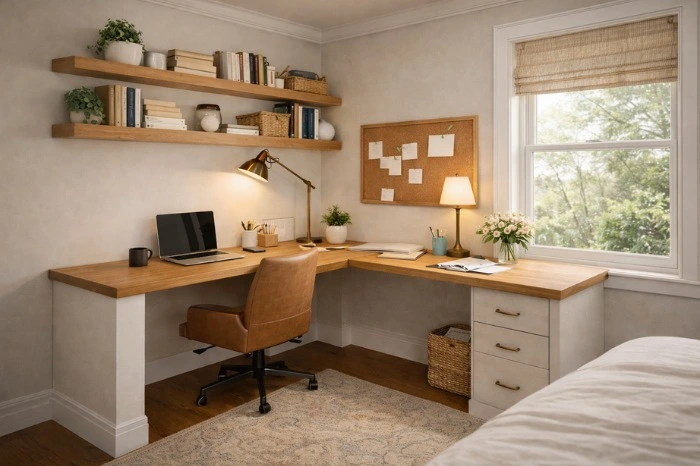
4. The Productive Corner: L-Shaped Efficiency

corner office nook

A corner office nook is often underutilized. Instead of a tiny table, use a wrap-around surface. This corner desk setup allows you to separate your “computer zone” from your “analog zone” (where you handle paperwork or coffee).

Trend Alert: Floating corner shelves above the desk provide ample storage without the bulk of a heavy cabinet.

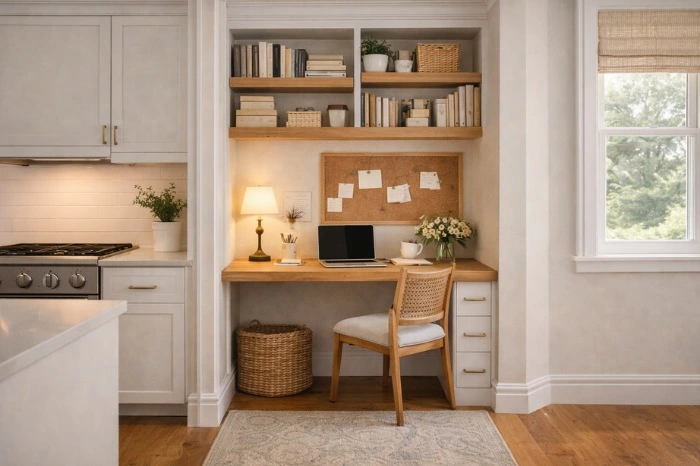
5. Kitchen Command Centers

small home office nook

The desk nook is making a massive comeback in kitchen design. Usually located at the end of a cabinetry run, a small home office nook here allows you to manage household schedules or take quick Zoom calls while staying central to the home’s pulse.

Practical Tip: Match the desk material to your kitchen counters for a seamless, modern office nook aesthetic.

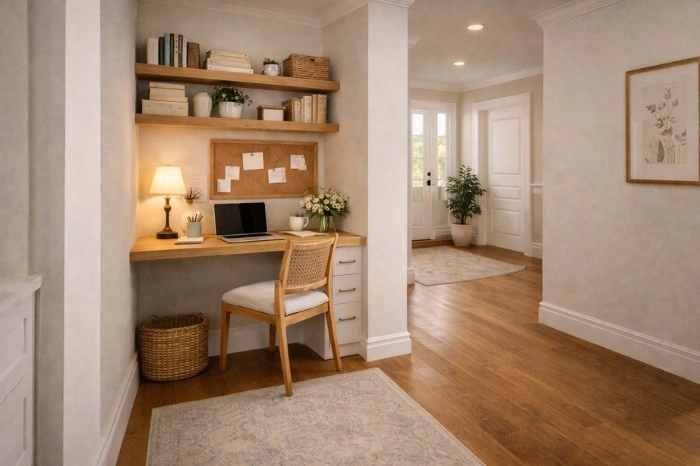
6. The “Hidden” Entryway Nook

computer nook setup

Many homes have wide entryways or hallways that serve no purpose. A shallow computer nook setup, using a desk no deeper than 18 inches, can turn a transition space into a functional work-from-home nook.

Styling: Use a ghost chair (clear acrylic) to keep the hallway feeling open and airy.

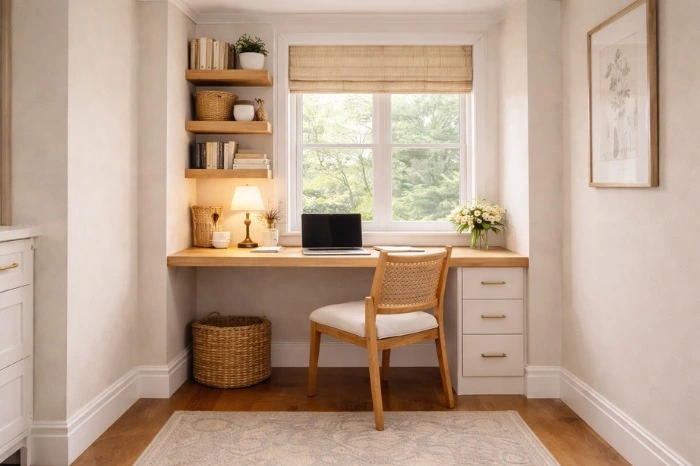
7. The Cozy Window Retreat

cozy office nook

Natural light is a powerhouse for productivity. According to research from the National Institutes of Health (NIH), daylight in workspaces significantly boosts cognitive function and sleep quality. At Beloved Nook, we suggest placing your cozy office nook by a window to provide a natural “view break,” which reduces digital eye strain.

DIY Hack: Reinforce a deep windowsill to create a diy office nook setup, just add a stool and you’re ready to work.

8. The Library-Inspired Reading Nook Hybrid

Reading Nook Ideas

Who says a workspace can’t be plush? By blending reading nook ideas with a functional desk, you create a multifunctional retreat. Use floor-to-ceiling bookshelves to frame a small writing desk.

Design Tip: Add a high-quality task lamp with a warm bulb to maintain the cozy office nook vibe in the evening.

9. Budget-Friendly Floating Workspaces

budget office nook ideas

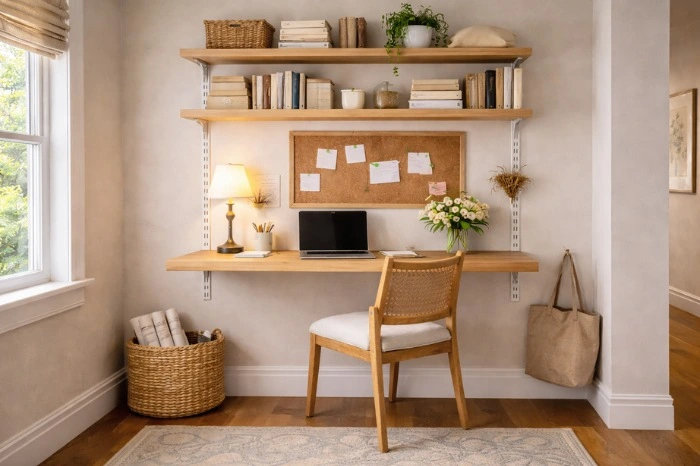
If you are looking for budget office nook ideas, skip the heavy furniture. A simple wall-mounted rail system with adjustable brackets lets you create an office nook that grows with you.

Organization: Use pegboards above the rail to keep your supplies off the desktop, maintaining a minimalist office nook look on a dime.

10. The Artistic “Niche” Office

nook office ideas

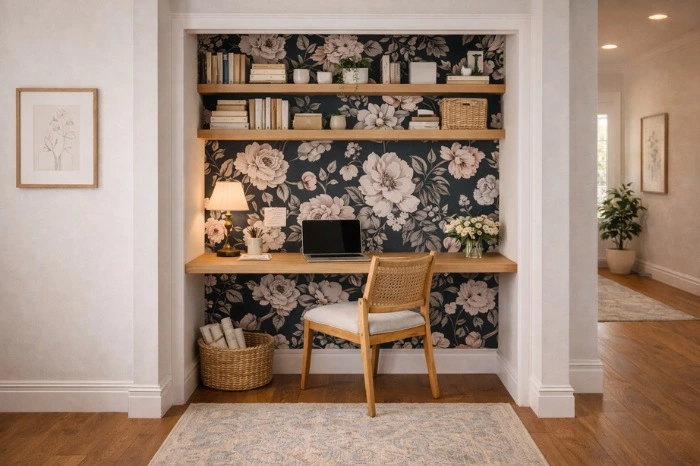
For those who want a creative office nook design, think vertically. Use bold wallpaper or a contrasting paint color inside your nook office ideas to visually “zone” the area. This creates a psychological boundary between “home” and “work” without needing a door.

FeatureExpert Recommendation
LightingLayer your light. Use a mix of natural light, overheads, and a dedicated task lamp.
ErgonomicsEven in a small office nook, your screen should be at eye level. Use a monitor riser if needed.
Cable ManagementUse “J-channels” or underside baskets to hide cords. Nothing ruins built-in office nook aesthetics like a tangle of wires.

Final Thoughts from the Designer’s Desk

The secret to a successful home office nook ideas gallery isn’t about how much money you spend, it’s about how well you define the boundary. When you treat a small corner with the same design intentionality as a full room, it stops feeling like a “placeholder” and becomes a destination.

Focus on space-saving workspace ideas that prioritize your physical comfort. A beautiful desk is useless if your back hurts after an hour. Invest in a quality chair that fits the scale of your nook office ideas, and you’ll find yourself more productive than ever.