
Author

Suleman Sheikh

Browsing

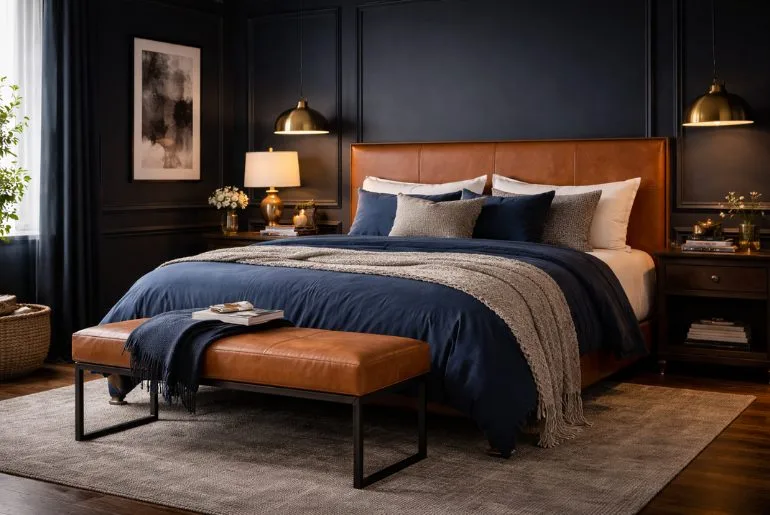
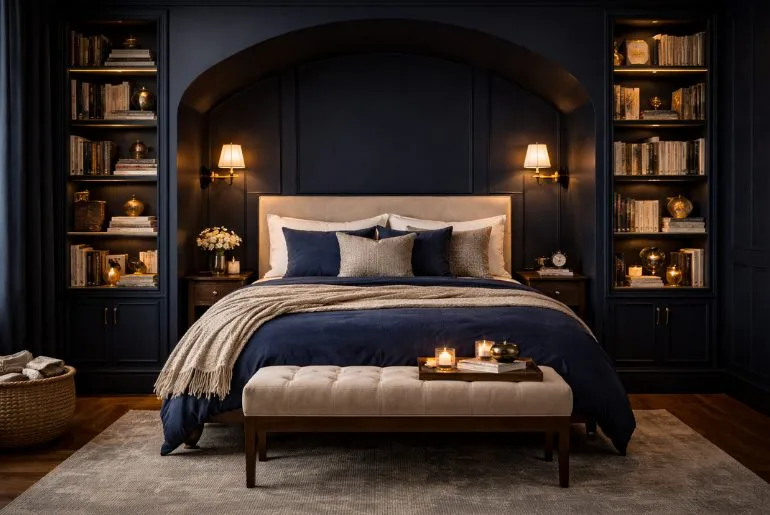
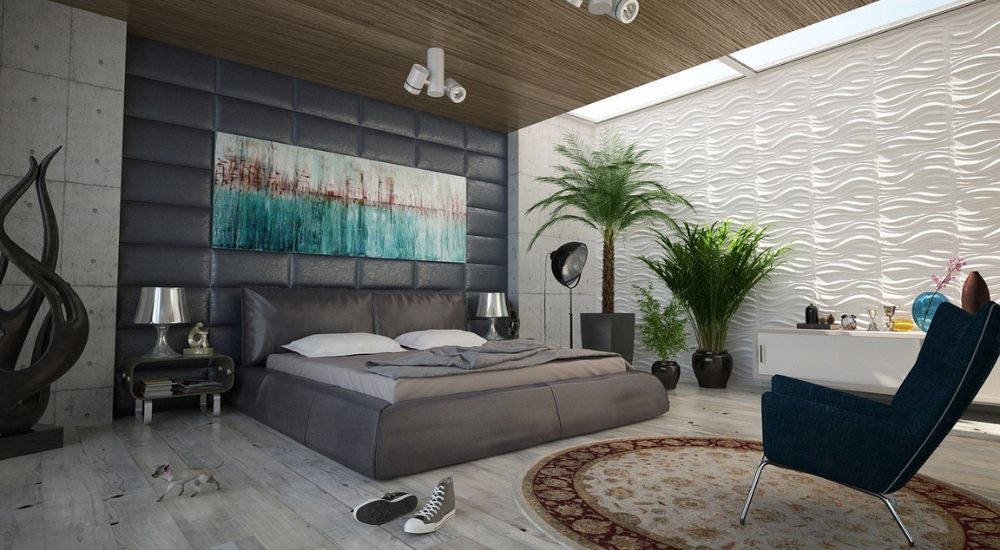
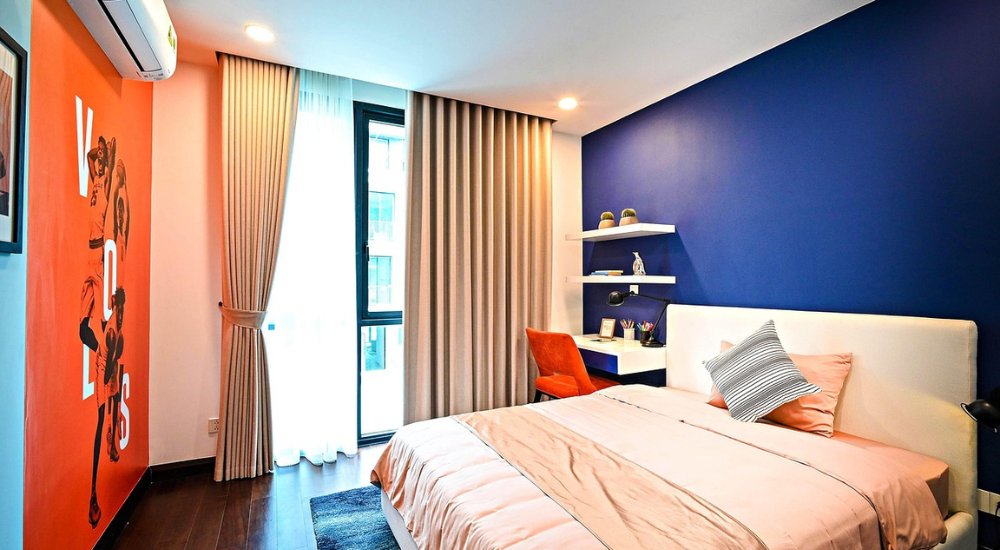
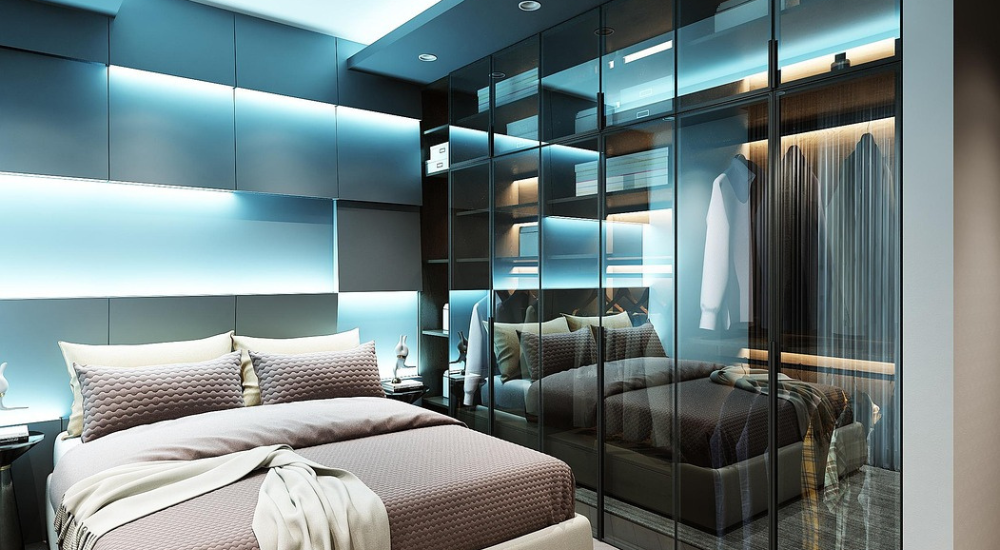
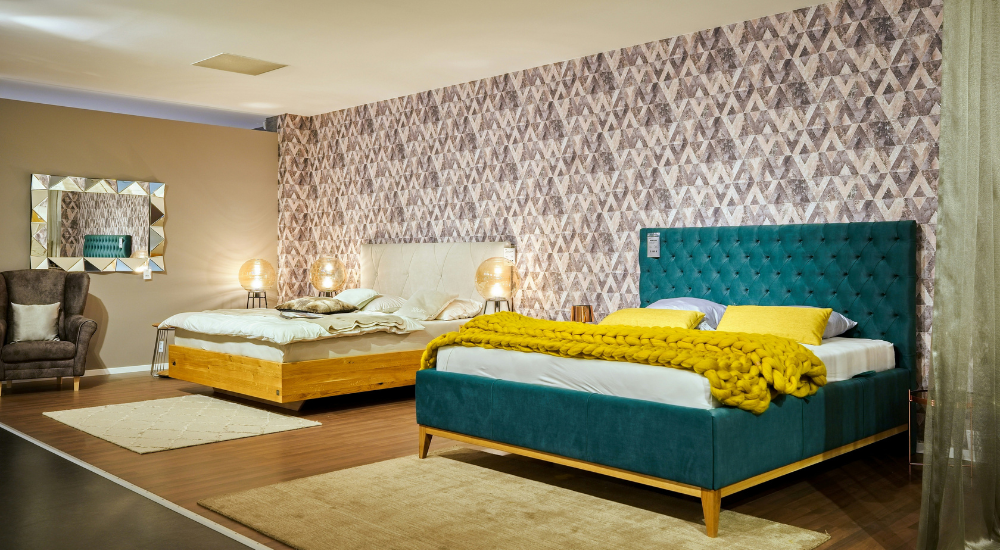
Thinking of giving your bedroom a deeper, moodier makeover? A dark bedroom can feel cozy, restful, romantic, dramatic, or quietly luxurious, depending on how you balance the color, lighting, bedding, and texture.

The secret is not simply painting the room black and hoping it feels elegant. The real magic happens when deep colors like charcoal, navy, forest green, plum, chocolate brown, burgundy, and soft black are paired with warm lamps, layered fabrics, natural wood, art, and a little breathing space.

You do not need a huge room or a designer budget either. Even a small bedroom can carry dark walls beautifully when the palette feels intentional and the lighting is soft enough to make the room glow at night.

Quick Answer: What Makes a Dark Bedroom Work?

A dark bedroom works best when deep wall colors are balanced with soft lighting, layered bedding, warm textures, and a few lighter accents. The best dark bedroom ideas usually use shades like charcoal, black, navy, forest green, chocolate brown, plum, burgundy, or deep gray, then soften them with linen, wood, brass, velvet, rugs, curtains, and warm lamps.

Dark colors can make a bedroom feel cozy and restful, but the room still needs contrast, texture, and enough light for daily use. In small bedrooms, painting walls, trim, or even the ceiling in one deep tone can feel intentional rather than cramped when the bedding and lighting stay soft.

Why Dark Bedrooms Feel So Cozy

A dark bedroom feels cozy because deeper colors reduce visual harshness and make the room feel more enclosed, calm, and cocoon-like. That does not mean the room has to feel gloomy. It simply means the color is doing some of the emotional work for you.

Dark walls also let texture show up more beautifully. Linen bedding, velvet pillows, brass lamps, woven rugs, wood nightstands, and framed art all feel richer against a deep background. This is why moody bedrooms often look layered even when the furniture is simple.

There is also a practical sleep angle. Light exposure can affect the body’s sleep-wake rhythm, and sleep experts often recommend keeping the bedroom dark at night for a more sleep-friendly environment, according to the Sleep Foundation. That does not mean every bedroom must be painted black, but it does support the idea that a soft, low-glare bedroom can feel more restful when designed thoughtfully.

Best Dark Bedroom Colors and What They Feel Like

Before choosing a paint color, think about the mood you want when you walk into the room at night. Dark bedroom colors are not all the same. Some feel calm, some feel romantic, and some feel bold and dramatic.

Dark Color Best For How to Soften It
Soft black Modern, dramatic, hotel-like bedrooms Use warm lamps, cream bedding, wood, and matte finishes.
Charcoal gray Calm, mature, minimalist bedrooms Add ivory sheets, silver or brass accents, and layered textiles.
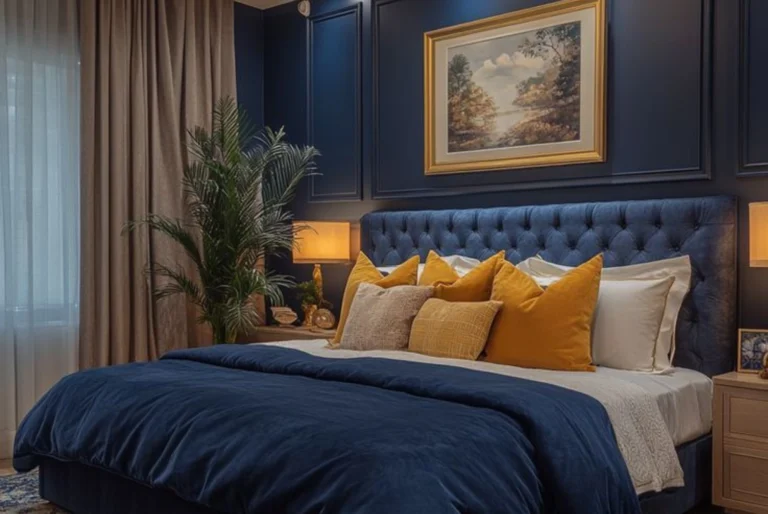
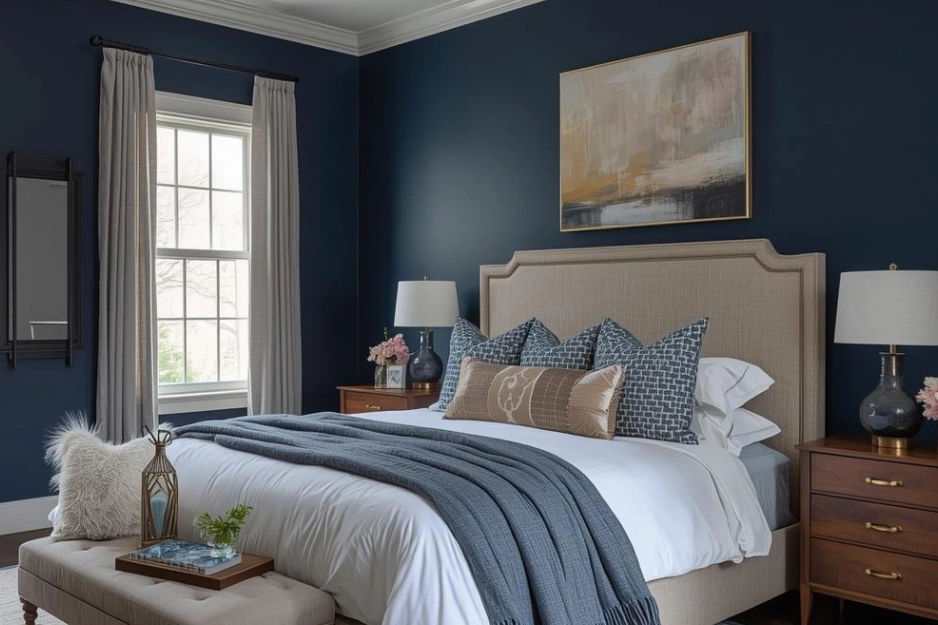
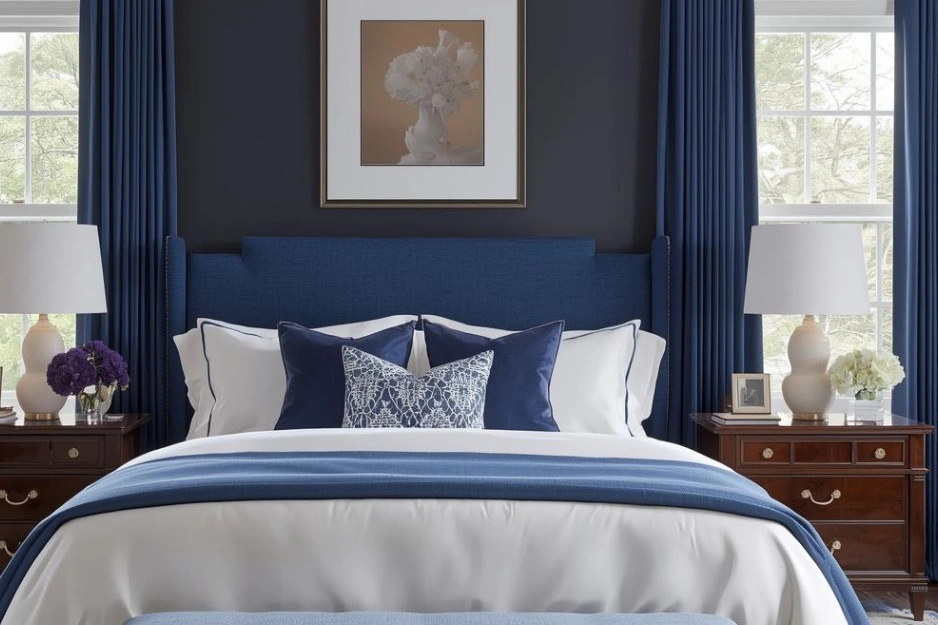
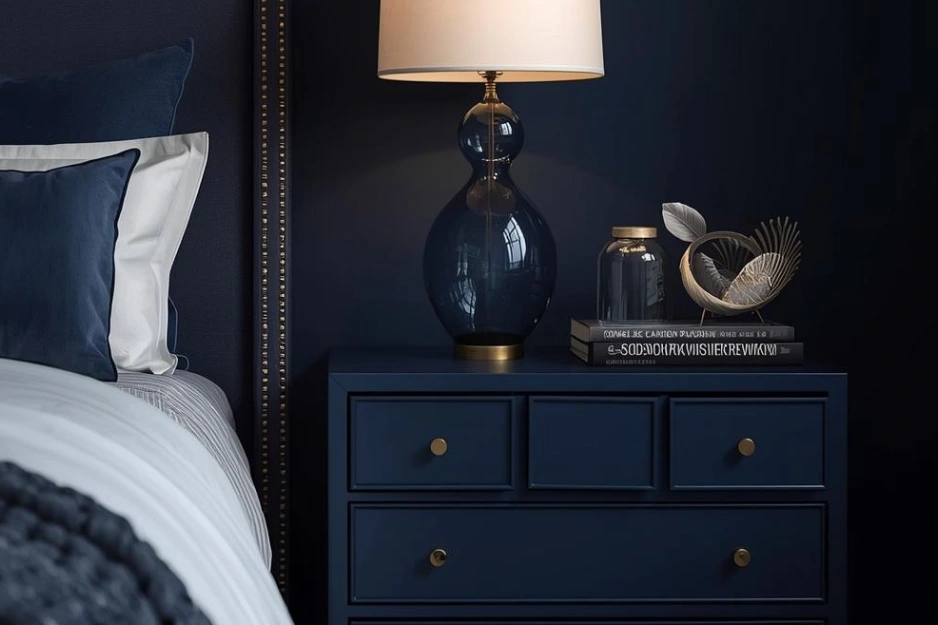
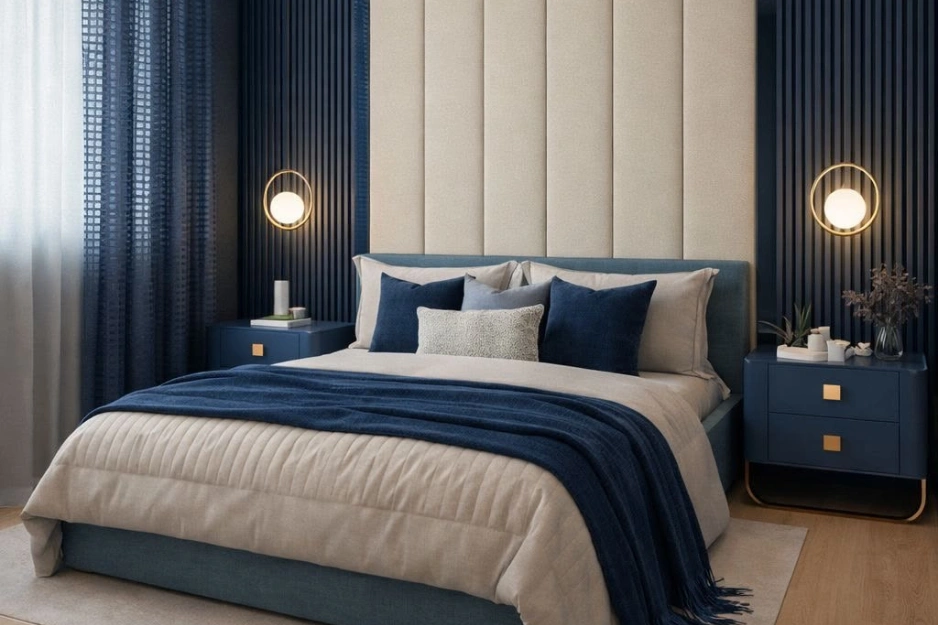
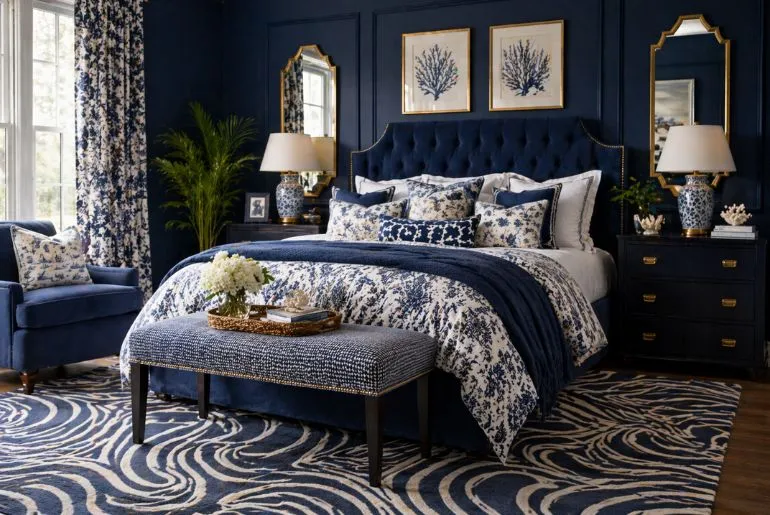
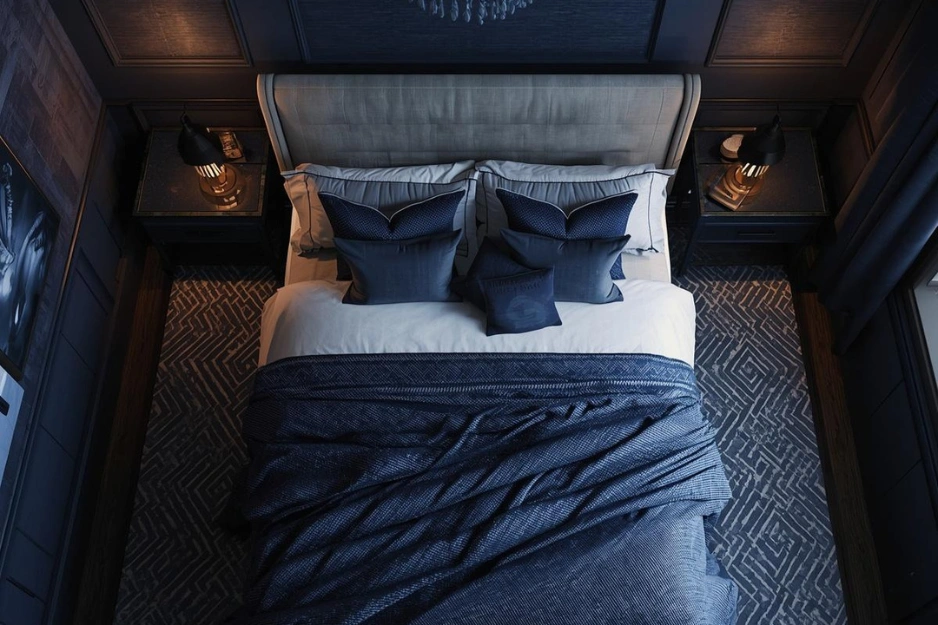
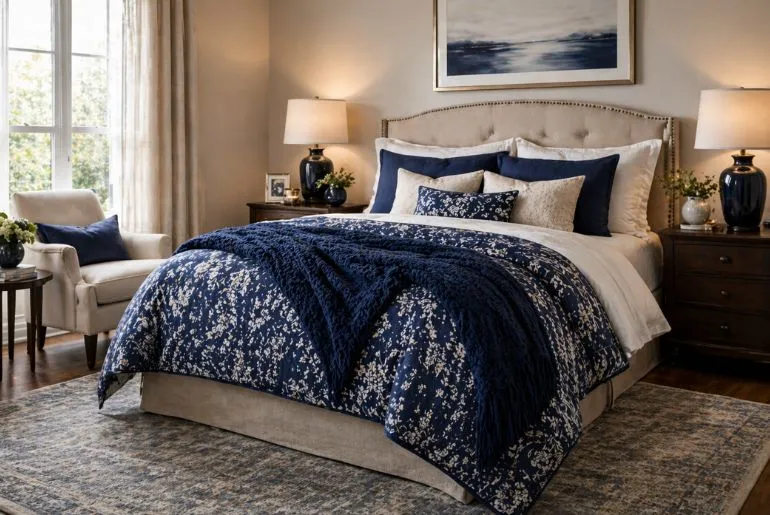
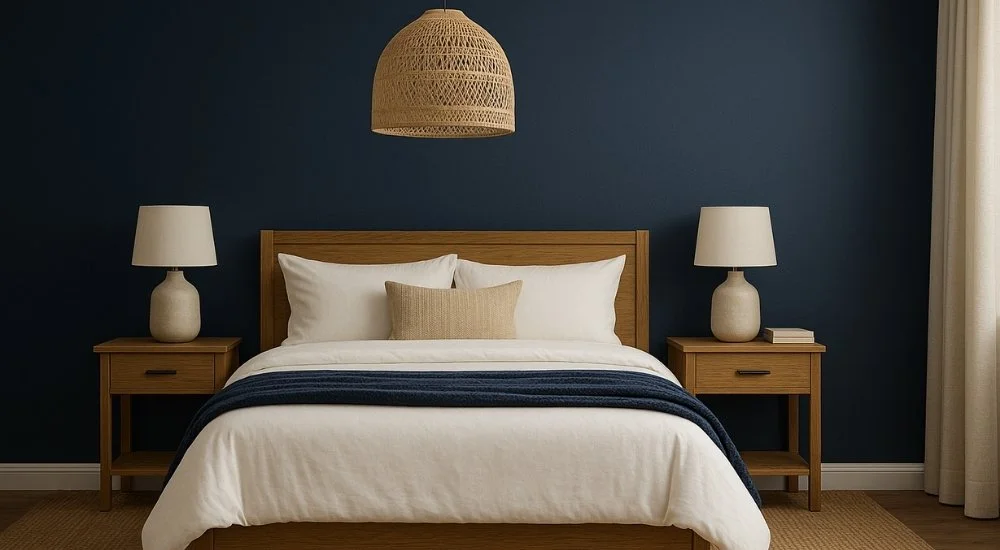
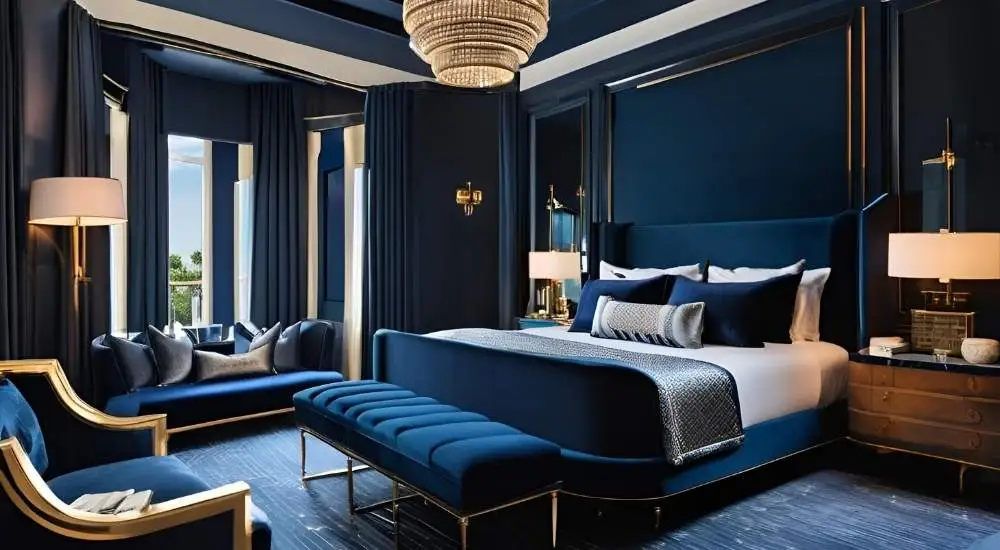
Navy blue Classic, romantic, coastal, or tailored rooms Pair with white, taupe, rattan, walnut, or antique brass.
Forest green Nature-inspired, cozy, grounding bedrooms Bring in plants, warm wood, linen, and cream curtains.
Plum or aubergine Romantic, vintage, feminine, or jewel-toned spaces Balance with blush, bronze, walnut, or soft gray.
Chocolate brown Earthy, warm, cocoon-like bedrooms Use caramel, ivory, rust, tan, and natural woven textures.
Burgundy Moody, warm, dramatic bedrooms Keep bedding simple and add aged brass or dark wood.

Paint brands often group dark palettes around shades like black, charcoal, deep green, navy, brown, and jewel tones. Benjamin Moore highlights dark glamour palettes through deep, saturated colors, while Sherwin-Williams notes that dark hues can create depth and drama when balanced with lighter elements.

10 Dark Bedroom Ideas That Feel Cozy, Not Heavy

These dark bedroom ideas are not about making your room look dramatic for a photo only. They are about creating a space that feels restful, personal, and easy to live with every night.

1. Try a Soft Black Bedroom with Warm Contrast

Black can look stunning in a bedroom, but the most livable black bedrooms are rarely flat black from top to bottom. They usually have warmth somewhere, such as oak nightstands, cream bedding, brass lighting, a textured rug, or soft curtains.

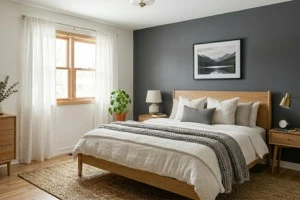
If you are nervous about going fully dark, start with the wall behind the bed. A black or near-black feature wall can frame the bed beautifully without overwhelming the whole room. For a more wrapped-in feeling, paint the walls and trim in the same soft black, then keep the ceiling slightly lighter.

The goal is not darkness for the sake of darkness. It is depth. A black bedroom works when it feels layered, not empty. Black also becomes easier to live with when the room has contrast, which is why black and white bedroom ideas can help you see how much lightness a dark room still needs.

2. Use Velvet, Plum, and Brass for a Softer Glam Bedroom

If you love a bedroom that feels dramatic but still soft, try deep plum, aubergine, wine, or muted berry tones. These colors bring that moody richness without feeling as sharp as pure black.

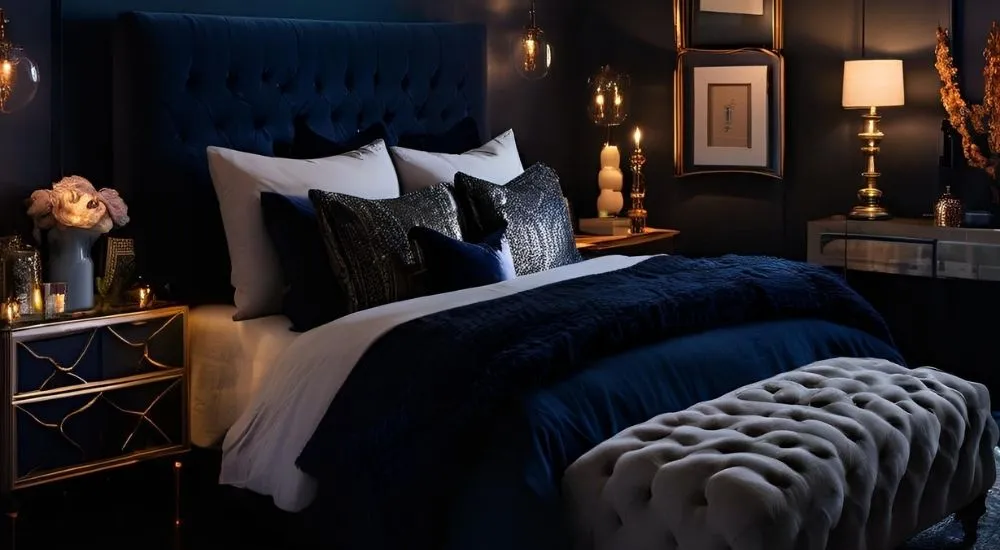
Velvet works beautifully here because it catches light in a gentle way. A velvet headboard, throw pillow, or bench can make the room feel richer without needing too much decor. Add brushed brass, antique bronze, or matte black hardware for a polished finish.

To keep the look grown-up, avoid making every piece glossy or overly decorated. A deep wall color, one velvet moment, simple bedding, and warm lighting are usually enough.

3. Create a Romantic Dark Bedroom for Couples

A romantic dark bedroom does not need to feel overly fancy. It only needs to feel private, warm, and personal. Deep navy, charcoal, plum, burgundy, or chocolate brown can all create that intimate feeling around the bed.

Start with lighting before adding more decor. Use lamps, sconces, dimmable bulbs, or shaded fixtures instead of one harsh ceiling light. If you use candles, keep them in safe holders and away from curtains, bedding, dried flowers, and open shelves.

Then add the personal details slowly: framed photos, a soft rug underfoot, a linen duvet, meaningful art, or a small chair in the corner. The room should feel like a shared retreat, not a showroom.

The same warm, personal feeling also appears in softer bedroom ideas for couples, where lighting, bedding, and shared details matter more than expensive furniture.

4. Make a Small Dark Bedroom Feel Intentional

A small bedroom can absolutely handle dark color. In fact, dark walls can sometimes blur the edges of a tight room and make it feel more like a cozy little cocoon than a cramped box.

The trick is to reduce visual clutter. Choose one strong wall color, keep the bedding soft, use closed storage where possible, and avoid too many tiny decorative pieces. A mirror can help bounce light, but it should be placed where it reflects something pretty, such as a lamp, window, artwork, or clean bedding.

If your room is very small, try painting the wall, trim, and closet doors in the same deep shade. That continuous color can feel calmer than chopping the room into too many light and dark blocks. In a small room, color placement matters just as much as the color itself.

5. Design a Moody Bedroom Office That Still Feels Restful

A bedroom office can become tricky because the room has to support two very different moods: focus during the day and rest at night. Dark colors can help if you use them with care.

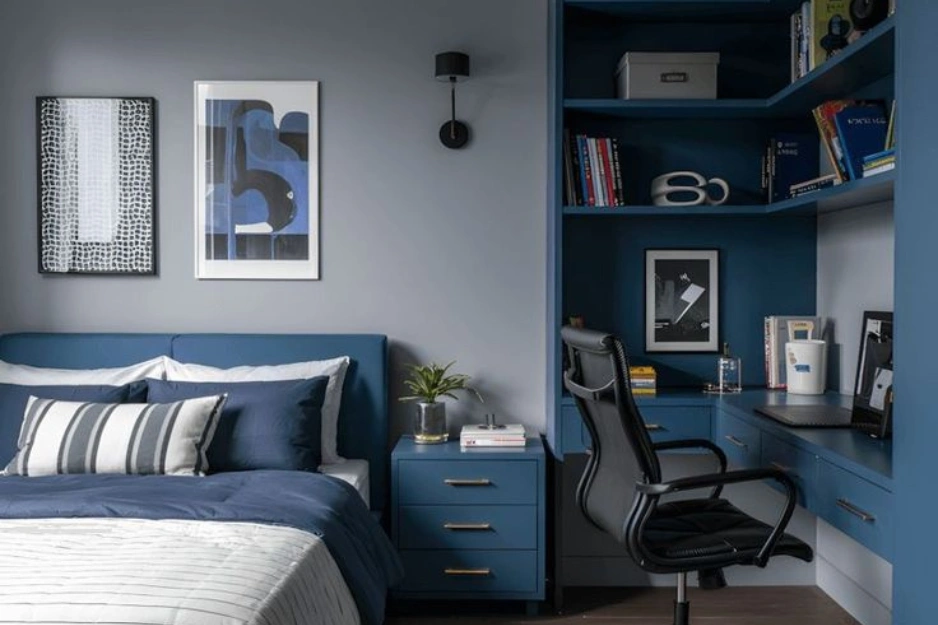
Place the desk where task lighting is easy, then keep the bed area softer and less work-focused. A charcoal, navy, or forest green wall behind the desk can create a focused backdrop, while warm lamps near the bed help the room shift back into rest mode after work.

Try to avoid leaving paperwork, laptop cables, and office supplies visible from bed. In a dark bedroom, clutter can feel heavier, so a small drawer, basket, or closed cabinet makes a bigger difference than you might expect.

A bedroom office needs task light during the day and visual calm at night, especially when the bed and workspace sit in the same small room.

6. Paint the Ceiling for a Cocoon Effect

If your bedroom already has dark walls, the ceiling can decide whether the room feels finished or slightly unfinished. A white ceiling can create contrast, which is useful in some rooms, but a deep ceiling can make the whole space feel wrapped and cozy.

This works especially well with navy, charcoal, olive, chocolate brown, or soft black. If you are nervous, choose a ceiling color one or two shades softer than the wall color. The effect still feels moody, but not too heavy.

This is also a lovely trick for bedrooms with tall ceilings that feel a little too open at night. A deeper ceiling visually lowers the space and makes the bed feel more grounded.

7. Layer Bedding So the Room Does Not Feel Flat

Dark bedrooms need texture even more than light bedrooms do. Without texture, deep colors can look flat at night.

Layer cotton sheets, linen duvets, waffle throws, velvet cushions, wool blankets, or a quilt at the end of the bed. You do not need all of them at once. Two or three textures are enough to make the bed feel soft and dimensional.

If your walls are very dark, try bedding in cream, taupe, oatmeal, rust, soft gray, muted blue, or warm white. These shades brighten the bed without breaking the moody feeling. A gray bedroom can also show how softer neutrals keep a room calm without making it feel plain.

8. Use Dark Green for a Nature-Led Bedroom

Dark green is one of the easiest moody bedroom colors to live with because it feels grounded and natural. Forest green, olive, moss, and deep sage can all make a bedroom feel calm without becoming too dramatic.

Pair green walls with wood furniture, linen curtains, plants, rattan, and warm white bedding. The result feels earthy instead of heavy.

Forest green also works beautifully when you want the room to feel richer than a neutral bedroom but softer than a black one. For a more color-focused approach, dark green bedroom ideas can help you shape the palette around wood, plants, and warm texture.

9. Try Dark Trim with Softer Walls

You do not have to paint every wall dark to get a moody bedroom. Dark trim, dark doors, dark window frames, or dark built-ins can give the room structure while the walls stay softer.

This is a good option if you rent, share the room, or feel unsure about fully dark walls. Charcoal trim with warm white walls, black doors with beige walls, or deep green built-ins with pale gray walls can all create a moody effect without covering the whole room in deep color.

Dark trim can create the same moody outline without covering every wall, especially when the room already has architectural detail. The contrast used in dark trim and light walls works beautifully for bedrooms that need depth but still need softness.

10. Add a Dark Reading Corner or Bedroom Nook

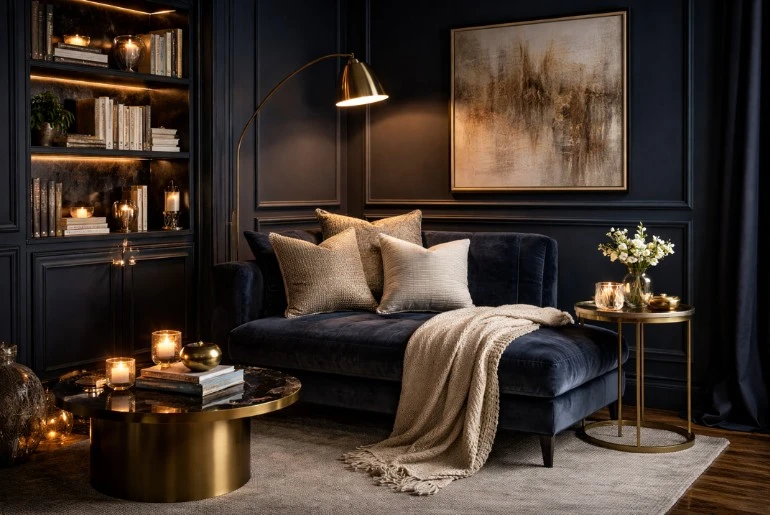
If your bedroom has an empty corner, window seat, or little awkward space, turn that into the moody moment instead of painting the whole room. A dark accent wall, small lamp, soft chair, side table, and textured throw can make the corner feel like a quiet retreat.

This idea works beautifully for introverts, book lovers, artists, and anyone who wants the room to feel personal without changing every surface.

A dark corner can become the softest bedroom nook in the whole room when it has a lamp, a comfortable seat, and one or two textures that invite you to stay for a while.

How to Keep a Dark Bedroom from Feeling Too Heavy

The most common mistake with dark bedroom ideas is thinking paint will do all the work. Deep color sets the mood, but the room still needs layers to feel beautiful and livable.

  • Use warm lighting: one overhead light is not enough. Add lamps, sconces, or accent lighting so the room glows softly at night.
  • Bring in texture: linen, velvet, wool, wood, rattan, and woven rugs soften dark paint.
  • Keep some contrast: cream bedding, pale artwork, brass, or natural wood keeps the room from feeling flat.
  • Test paint first: dark colors shift a lot from morning to night, especially in rooms with low natural light.
  • Control clutter: small items stand out more against dark walls, so storage matters.
  • Choose the right finish: matte paint feels soft and elegant, while eggshell can be easier to wipe in busier homes.

Common Dark Bedroom Mistakes to Avoid

A moody bedroom should feel calm, not closed-in. These small mistakes are usually what make a dark room feel wrong.

  • Using only one light source: dark bedrooms need more than a ceiling fixture.
  • Choosing a color without testing it: a shade that looks soft online can look too blue, too green, or too black in your room.
  • Forgetting the bedding: dark walls with dark bedding can work, but only if there is enough texture and contrast.
  • Overdecorating every surface: deep colors already create drama, so the decor can stay calmer.
  • Ignoring natural light: a north-facing room and a bright south-facing room can make the same paint color look completely different.
  • Using too many dark colors at once: choose one main deep color, then support it with softer shades.

Best Dark Bedroom Ideas by Room Type

If you are still unsure where to begin, choose the dark bedroom idea that matches the room you actually have.

Bedroom Type Best Dark Bedroom Idea Why It Works
Small bedroom Dark walls with soft bedding and closed storage It makes the room feel intentional instead of cramped.
Couple’s bedroom Navy, plum, burgundy, or chocolate with warm lamps It creates privacy, softness, and a romantic mood.
Bedroom office Dark desk wall with calmer bedding nearby It separates work energy from rest energy.
Minimal bedroom Charcoal walls, simple bedding, and one textured rug It adds depth without needing too much decor.
Cozy reading bedroom Dark nook with a lamp, chair, and soft throw It creates a personal retreat without changing the whole room.

FAQs About Dark Bedroom Ideas

Are dark bedrooms a good idea?

Yes, dark bedrooms can be a very good idea if you want a cozy, restful, and intimate space. The key is to balance deep wall colors with warm lighting, soft bedding, texture, and a few lighter accents.

What colors are best for a dark bedroom?

The best dark bedroom colors include charcoal gray, soft black, navy blue, forest green, chocolate brown, burgundy, plum, and deep taupe. Choose navy or green for calm, black or charcoal for drama, and brown or burgundy for warmth.

Do dark colors make a bedroom look smaller?

Not always. Dark colors can make a bedroom feel smaller if the room lacks lighting, contrast, and storage. But when used intentionally, deep colors can blur edges and make a small bedroom feel cozy and finished.

How do you brighten a dark bedroom?

Use layered lighting, cream or warm white bedding, mirrors, pale artwork, light curtains, metallic accents, and natural wood. You do not need to remove the dark color. You only need enough contrast to keep the room balanced.

Should I paint all bedroom walls dark or just one accent wall?

Use one dark accent wall if you want a safer, easier update. Paint all walls dark if you want a cocoon-like look. In small rooms, painting trim and doors the same color can sometimes feel calmer than using one strong contrast wall.

What bedding looks best in a dark bedroom?

Cream, oatmeal, taupe, warm white, rust, muted blue, soft gray, and linen bedding all work well in a dark bedroom. Layering different textures usually matters more than using many colors.

What lighting is best for a dark bedroom?

Warm, layered lighting works best. Use bedside lamps, sconces, dimmable bulbs, picture lights, or soft accent lighting instead of relying only on a bright ceiling fixture.

Final Thoughts on Dark Bedroom Ideas

A dark bedroom is not about making the room feel gloomy. It is about giving the space more depth, softness, and atmosphere.

Whether you choose soft black, charcoal, navy, forest green, plum, burgundy, or chocolate brown, the best results come from balance. Let the walls create the mood, then let the bedding, lighting, wood, art, rugs, and personal pieces make the room feel like yours.

Start small if you need to. Paint one wall, darken the trim, refresh your bedding, or create one moody reading corner. Once the room starts to feel warmer and more settled, you can keep layering from there.

The best dark bedroom is not the darkest one. It is the one that feels calm when you walk in, beautiful when the lamps are on, and easy to rest in at the end of the day.

Sources and Helpful References

As someone who loves space-saving furniture that still feels warm, pretty, and intentional, I genuinely think gateleg tables deserve more attention than they get.

They are not just “folding tables.” A good gateleg table can be your breakfast nook in the morning, your laptop desk in the afternoon, your craft table on the weekend, and your slim little console when everything needs to feel calm again.

That is exactly why this piece works so beautifully in small homes, apartments, guest rooms, studio layouts, and cozy corners where every inch has to earn its place.

Quick Answer: What Is a Gateleg Table?

A gateleg table is a drop-leaf table with one or two hinged sides, called leaves, supported by swing-out legs. When the leaves are down, the table becomes narrow enough to sit against a wall, behind a sofa, in a hallway, or inside a small kitchen nook. When you need more surface space, the legs swing out like little gates and hold the tabletop open.

The beauty of a gateleg table is flexibility. It can work as a small dining table, home office desk, entryway console, craft table, sewing station, bar setup, or extra serving surface when guests come over.

What Makes Gateleg Tables So Useful?

A gateleg table has a fixed center section and one or two folding leaves. The “gate” part comes from the legs that swing out to support those leaves. Merriam-Webster defines a gateleg table as a table with drop leaves supported by movable paired legs, which is the simplest way to understand the design.

The idea is old, but it feels surprisingly modern. Gateleg tables have been around for centuries, and museum collections still preserve beautiful early examples. The Metropolitan Museum of Art, for example, holds an American gate-leg table dated 1690–1730, made in New York from sweet gum and yellow poplar. That kind of history is part of the charm. This is not a trend that appeared yesterday. It is a practical furniture idea that kept surviving because homes kept needing it.

For small homes, the appeal is obvious. You get a “real” table when you need one, but you are not forced to live around it all day. Fold one side down, fold both sides down, push it near a wall, or open it fully when life suddenly needs more room.
Gateleg Table vs Drop-Leaf Table: What Is the Difference?

Every gateleg table is a type of drop-leaf table, but not every drop-leaf table is a gateleg table.

A drop-leaf table simply has hinged tabletop sections that fold down. Some drop-leaf tables use fixed brackets, hinged supports, or pull-out rails. A gateleg table uses swing-out legs to support the leaves. That one detail makes it feel sturdier and more furniture-like, especially when you want to use it for dining, working, sewing, or hosting.

  • Choose a gateleg table if you want more support under the open leaves and a piece that can work as a proper table.
  • Choose a simple drop-leaf table if you only need a lighter side table, small breakfast surface, or occasional extra space.
  • Choose a gateleg table with drawers if your home needs storage as much as surface area.

This small difference matters a lot in real life. A table used for dinner plates, a laptop, sewing tools, or craft supplies should feel steady. That is where gateleg tables usually make more sense than very lightweight folding options.

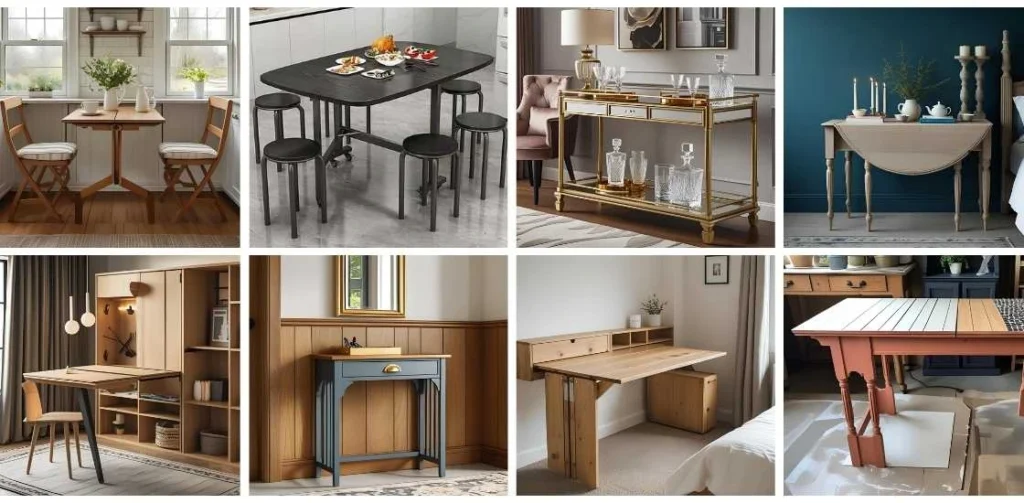
10 Gateleg Table Ideas for Small Spaces

Below are the most useful and stylish ways to bring a gateleg table into your home without making the room feel crowded.

1. Use a Gateleg Table in a Soft White Living Room

A white living room can sometimes feel too plain if every piece is clean-lined and flat. A wood gateleg table brings in a softer, more lived-in layer without making the room heavy.

Folded down, it can sit against a wall as a slim sideboard. You can style it with a small lamp, books, a ceramic bowl, or a tray for evening drinks. Fully opened, it becomes a flexible surface for board games, casual dinner, or extra seating when guests stay longer than expected.

This works especially well if your room already leans into a simple white living room style. The table adds warmth without stealing attention from the airy look.

Soft styling tip: choose light oak, warm pine, or a pale painted finish if you want the table to disappear gently into the room. Choose walnut or antique oak if you want it to become the cozy old-soul piece in the corner.

2. Turn a Norden-Style Gateleg Table into a Home Office Desk

If you work from home but do not have a full office, this might be the most practical gateleg table idea of all.

A Norden-style gateleg table gives you a generous desk when opened, then folds back into a narrow piece when the workday is over. Many versions also come with drawers, which means notebooks, chargers, pens, sticky notes, and small office clutter can stay hidden instead of spreading across the room.

I especially like this idea for a bedroom office because it lets the room return to being a bedroom at night. That emotional shift matters. Nobody wants to fall asleep staring at a giant desk that still feels like Monday morning.

For more compact work-zone inspiration, Beloved Nook’s bedroom office ideas guide has several ways to make a workspace feel intentional instead of squeezed in.

Best setup: keep one leaf open for daily laptop work, then open both leaves only when you need to spread out papers, sketches, fabric, or project materials.

3. Style an Antique Gateleg Table as an Entryway Console

An antique gateleg table can be gorgeous in an entryway, especially if your home has wood trim, half-wall paneling, vintage art, or cottage-style details.

When folded, the table works like a slim console. Add a mirror above it, a small tray for keys, and one low bowl or vase. It gives the entryway that “someone thoughtful lives here” feeling without needing built-ins or a wide hallway.

This is also a lovely place to use darker wood. Antique oak, cherry, walnut, or mahogany can bring depth to a pale entryway. If the table feels too formal, soften it with a woven basket underneath or a linen runner on top.

If your doorway already has trim details or you are planning a wall treatment, a gateleg table pairs beautifully with the warmth of dark trim and light walls. The contrast makes the whole corner feel more grounded.

4. Add a Gateleg Table with Storage to a Teen Bedroom

Teen bedrooms need furniture that can change quickly. One day the surface is for homework. The next day it is makeup, gaming gear, journaling, painting, snacks, or a very serious collection of random things that “cannot be moved.”

A gateleg table with drawers can handle that chaos softly. It gives enough space for homework or creative projects, then folds down when the room needs more floor space. The drawers can hold stationery, chargers, craft supplies, hair tools, or small accessories.

The trick is to keep the finish simple. White, light wood, black, or soft gray usually works better than something too childish. It can grow with the room instead of feeling outdated in a year.

For styling around the table, pull color and personality from your teen’s bedding, posters, rug, or lighting. The furniture can stay calm while the room still feels expressive. Beloved Nook’s teen bedroom ideas can help you build that balance between personality and storage.

5. Create a Small Dining Area with a Gateleg Table and Chairs

This is the classic gateleg table use, and honestly, it still works.

If your kitchen or apartment does not have space for a bulky dining table, a gateleg dining table can give you a proper eating area without permanently taking over the room. Keep one leaf open for everyday meals. Open both leaves when you have a friend over, serve breakfast slowly on the weekend, or need a little extra prep space.

For a cleaner look, pair it with slim-profile chairs, small stools, or folding chairs that can be tucked away. Avoid oversized upholstered dining chairs unless the room is larger, because they can make the whole setup feel heavier than the table itself.

As a practical rule, measure the table folded, half-open, and fully open before buying. Also check chair clearance. Better Homes & Gardens notes that in small spaces, every inch matters when measuring for furniture, including height and chair clearance.

Best for: studio apartments, small kitchens, breakfast corners, shared rentals, and homes where the dining area also needs to function as a walkway.

6. Choose a Black Gateleg Table for Monochrome Interiors

A black gateleg table can look surprisingly elegant, especially in a black-and-white room, a moody bedroom, a modern apartment, or a minimalist living space.

Folded down, it reads almost like a sculptural side table. Opened up, it becomes a practical surface for your laptop, coffee, books, or dinner for two. The color gives the piece presence, so you do not have to style it heavily.

If your room already has a black-and-white aesthetic, keep the table lines simple. Let the shape do the work. A matte black finish feels modern, while a slightly distressed black finish leans farmhouse or cottage.

Designer-style note: black furniture needs a little softness around it. Add a warm lamp, a linen runner, light curtains, or a natural woven chair so the corner does not feel too strict.

7. Use a Gateleg Table as a Luxe Living Room Bar or Sideboard

A gateleg table does not always have to be used for dining. In a living room, it can become a very charming little bar, serving station, or sideboard.

Keep it folded against the wall most days with a tray, glassware, coasters, and a small lamp. When guests come over, open one side and use it for snacks, drinks, desserts, or a coffee station.

This idea works beautifully beside a velvet accent chair, under a gallery wall, or near a window where the table can catch warm evening light. It gives the room function without making it feel like you bought “extra furniture.”

For a richer look, style it with crystal, brass, dark wood, or marble-patterned accessories. If your room already leans elevated, the same design thinking used in a luxury room aesthetic can help the table feel like part of the whole mood.

8. Place a Light Wood Gateleg Table in a Deep-Tone Bedroom

Deep blue, navy, charcoal, forest green, and moody gray rooms can feel incredibly cozy, but they need balance. A light wood gateleg table is one of the easiest ways to soften that depth.

Use it as a small desk, reading table, nightstand alternative, vanity, or tea corner. Because the sides fold down, it will not visually crowd the room the way a standard desk or dresser might.

In a dark blue bedroom, pale oak or natural birch can feel fresh and calming. In a navy blue bedroom, a darker antique table can feel more traditional and library-like. Both work. It depends on whether you want contrast or depth.

Small-room tip: keep the chair light, armless, and easy to tuck in. The table saves space, but the chair can still ruin the flow if it is too bulky.

9. Give a Used Gateleg Table a Soft DIY Makeover

Secondhand gateleg tables are often worth a look. Many older pieces have better wood, prettier legs, and more character than brand-new flat-pack furniture. They may need a little love, but that is part of the fun.

A dated table can be refreshed with sanding, paint, stain, new knobs, peel-and-stick wallpaper inside drawer fronts, or a simple oil finish if the wood is still beautiful. You do not have to make it perfect. Sometimes a little age is exactly what gives the piece its charm.

Before buying a used gateleg table, open and close the leaves. Check whether the legs swing smoothly, the hinges feel secure, and the tabletop sits level. A wobbly table can sometimes be fixed, but loose joints, cracked leaves, or badly warped tops may turn into a bigger project than you planned.

Best makeover finishes: soft white for cottage homes, black for modern rooms, sage green for cozy kitchens, warm walnut stain for traditional interiors, and pale oak for Scandinavian-style spaces.

10. Build a Breakfast Nook Around a Gateleg Dining Table

If your kitchen is tight on space but big on cozy potential, a gateleg table can become the sweetest little breakfast nook.

Place it near a window, against a short wall, or beside a narrow bench. Keep one leaf open for daily coffee and breakfast. Fold it down when you need the walkway clear. Open both sides when you want a slower weekend meal or need extra prep space while cooking.

This setup feels especially lovely with a pendant light, linen café curtains, a small plant, and two simple chairs. The whole corner can feel intentional without needing a built-in banquette.

Beloved Nook’s kitchen nook ideas guide has more inspiration for turning tight corners into warm, usable spaces. And if your table sits near a splash-prone wall, easy-to-clean wall protection can help keep the nook pretty without making it precious.

How to Choose the Right Gateleg Table

A gateleg table looks simple, but the wrong size or material can make it frustrating. Before buying one, slow down and think about how the table will actually live in your home.

Measure It Folded, Half-Open, and Fully Open

This is the most important step. A gateleg table can look small online, then feel huge once both leaves are open.

Measure the floor area in three ways:

  • Folded: for daily storage against a wall or inside a nook.
  • Half-open: for everyday use as a desk, breakfast spot, or side table.
  • Fully open: for dining, crafting, hosting, or larger projects.

Also measure the space around the table. You need room for chairs, knees, drawers, and walking paths. A small table only works if the room can still breathe around it.

Pick the Right Shape

Oval and round gateleg tables feel softer and are lovely for dining. Rectangular gateleg tables usually work better as desks, consoles, craft tables, or kitchen prep surfaces.

If the table will sit in a narrow room, choose a rectangular shape. If it will sit in a corner breakfast nook or small dining zone, an oval shape may feel more graceful.

Think About Storage

Some gateleg tables come with drawers, shelves, or a center storage column. This is useful if the table will work as a craft station, sewing table, home office desk, or tiny dining area.

Storage is not always necessary, though. A simpler antique gateleg table may look more elegant in an entryway or living room because it has less visual bulk.

Choose Materials Based on Use

Solid wood is usually the best choice if you want the table to last for years. Oak, maple, walnut, birch, pine, and rubberwood can all work depending on the style and budget.

Engineered wood or veneer can still be useful, especially for lighter budgets, but check the hinges, legs, tabletop edges, and drawer quality carefully. The Spruce also notes that solid wood tends to be more long-lasting, while composite wood may perform well for more immediate needs.

Check the Gate Mechanism

The swing-out legs should move smoothly and hold the leaves securely. The tabletop should not dip, wobble, or feel uneven when opened.

If you are buying in person, gently press near the outer edge of each open leaf. It should feel supported. If it bounces too much, the table may not be ideal for dining, sewing, or work.

Best Rooms for Gateleg Tables

One reason gateleg tables are so valuable is that they move easily between roles. Even if you buy one for your kitchen, it may later become a craft table, desk, entry console, or plant station.

  • Kitchen: breakfast nook, prep surface, two-person dining table, or extra counter space.
  • Living room: sideboard, game table, bar setup, sofa table, or occasional dining spot.
  • Bedroom: desk, vanity, reading table, nightstand alternative, or small tea corner.
  • Entryway: folded console table with a mirror, key tray, and lamp.
  • Craft room: sewing table, wrapping station, painting surface, or project table.
  • Guest room: temporary desk or luggage surface that folds away when not needed.

That flexibility is what makes the gateleg table feel so Beloved Nook. It is not just furniture. It is a way to make a small corner feel cared for.

Are Gateleg Tables Good for Small Apartments?

Yes, gateleg tables are one of the best table styles for small apartments because they do not demand a permanent footprint. You can keep the table closed most of the time, open one leaf for daily use, and open both leaves when you need more surface area.

They are especially useful in studio apartments where one room has to do everything. A gateleg table can support breakfast, remote work, hobbies, and hosting without making the space feel like a furniture showroom.

The only caution is weight. Some gateleg tables, especially storage-heavy styles, can be quite heavy. If you plan to move the table often, check the weight and consider floor-safe sliders.

Are Antique Gateleg Tables Worth Buying?

Antique gateleg tables can absolutely be worth buying if the structure is sound. They often have beautiful wood, turned legs, aged patina, and a sense of history that newer pieces cannot fake.

However, antique does not automatically mean better. Always check stability, hinges, repairs, tabletop level, woodworm signs, and whether the leaves sit evenly when open. If the table is mostly decorative, small flaws may not matter. If you want to eat, work, or sew on it, sturdiness matters more than charm.

A good antique gateleg table can be wonderful in a cottage kitchen, traditional dining nook, entryway, reading corner, or moody bedroom. A painted secondhand one can also look very sweet in a lighter, more casual home.

Common Mistakes to Avoid with Gateleg Tables

  • Buying without measuring the fully open size: this is the fastest way to crowd a small room.
  • Ignoring chair space: the table may fit, but the chairs may not.
  • Choosing a heavy table for a room where it needs to move daily: storage gateleg tables can be practical but not always easy to shift.
  • Over-styling the folded table: if you need to open it often, keep the top simple.
  • Using weak chairs: slim chairs are good, but they still need to feel comfortable and stable.
  • Forgetting the room’s mood: a black gateleg table, antique oak table, and white painted table all tell very different stories.

FAQs About Gateleg Tables

What is a gateleg table used for?

A gateleg table can be used for dining, working, crafting, sewing, serving, studying, or styling as a console table. Its folding leaves make it especially useful in small homes where one piece of furniture needs to serve more than one purpose.

Is a gateleg table the same as a drop-leaf table?

A gateleg table is a type of drop-leaf table, but it has swing-out legs that support the folding leaves. A regular drop-leaf table may use brackets or other supports instead of gate-style legs.

How many people can sit at a gateleg table?

Most small gateleg tables seat two to four people when fully open. Larger antique or dining-size gateleg tables may seat more, but you should always check the fully open dimensions and chair clearance before buying.

Are gateleg tables sturdy?

A well-made gateleg table can be sturdy because the leaves are supported by swing-out legs. However, sturdiness depends on the quality of the hinges, joints, legs, and tabletop. Always test the open leaves if you are buying secondhand.

Where should I place a gateleg table?

The best places for a gateleg table are small kitchens, breakfast nooks, living rooms, entryways, bedrooms, guest rooms, craft rooms, and studio apartments. It works best where you need a table sometimes but open floor space the rest of the time.

Can a gateleg table work as a desk?

Yes, a gateleg table can work very well as a desk, especially in bedrooms, guest rooms, and studio apartments. Open one leaf for laptop work or both leaves for larger projects. A version with drawers is especially useful for office supplies.

Are used gateleg tables a good idea?

Used gateleg tables can be a lovely idea if the structure is strong. Check the hinges, swing-out legs, tabletop level, and overall wobble before buying. A secondhand table can also be painted, stained, or styled to fit your room.

Final Thoughts on Gateleg Tables

A gateleg table is one of those rare pieces that feels both humble and clever. It does not shout for attention, but it quietly makes a home easier to live in.

It can open up for dinner, fold down after breakfast, hold your laptop during a busy workday, become a tiny bar for guests, or sit sweetly in an entryway with a lamp and a bowl for keys. That kind of flexibility is hard to beat, especially when your home is short on space but not short on personality.

So if you have a corner that never quite knows what it wants to be, try imagining a gateleg table there. It might become the little piece that finally makes the whole nook feel useful, charming, and complete.

Practical outdoor reading nook ideas and concepts go much deeper than just providing a place to rest one’s rear in the fresh air. Such setups do generally consist of a combination of comfy, weather-proof seating, an area for shade, and sufficient privacy for deep relaxation.

It doesn’t matter if you have a tiny balcony in your flat or a huge patio. Having your cozy nook to relax with some reading is all that you need. Carefully selecting the layout and materials reflecting the climate, location, and your space is the secret.

This article talks about 15 outdoor reading nook ideas, including how to set up, prices, and weatherproof ways, so that you can use the area all year long.

Getting started

How to Create the Perfect Outdoor Reading Nook

67%
of builders struggle with lighting placement
78%
of nook failures caused by poor rain protection
4–7%
property value increase from a pergola

Choose the Best Location for Your Outdoor Reading Nook

Landscape architect Andrea Besten recommends selecting a place for the reading nook that will be exposed to the sun before noon and covered during the heat of the afternoon. In this way, the spot won’t overheat at midday.
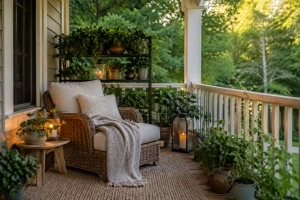
To keep the reading nook private, ideally, it should be 15–20 feet away from the neighbors’ line of sight. Light is usually the most challenging aspect of the project; a 2024 Houzz survey revealed that 67% of people have difficulties with it, so choosing the right spot is essential.

Key arrangement principles:

Look for level, firm ground (decks, patios, or paved sections with stepping stones). For natural privacy, put them 3–5 feet away from walls and fences, then add screens or plants. Make sure there are 36 inches of space around the chairs for convenient mobility. Choose furniture accordingly — light furniture for compact areas with cheap patio pavers, loungers, and hanging swings for bigger patios.

Best Outdoor Furniture Materials for Reading Nooks

Sarah Michaelson from Michaelson Interiors suggests using HDPE wicker or powder-coated aluminum because these materials are fade-resistant and dry quickly. She also recommends choosing fast-drying foam with removable, UV-resistant covers while avoiding any pillows that tend to hold water.

MaterialDurabilityPrice RangeBest Brand/Model
HDPE Wicker10–15 Years$300–$800Leisure Touch synthetic rattan
Teak Wood20+ Years$500–$1,200Polywood Classic Adirondack ($339)
Powder-Coated Aluminum15+ Years$400–$900Frontgate Rowan Adirondack ($700)
Recycled Poly Lumber15–20 Years$350–$750Polywood Modern Curveback

How to Weatherproof an Outdoor Reading Space

Outdoor design specialist Jamie Gold says that not enough rain protection accounts for 78% of outdoor nook failures. Buy covers before you buy furniture.

  • Shade Options: To block the sun from 10 AM to 4 PM, put up a shade sail ($40–$120) or a pergola ($1,500–$5,000).
  • Furniture Covers: Ruimoy Patio Furniture Covers ($30–$46) or Duck Covers Ultimate Waterproof Chair Cover ($25–$43).
  • Outdoor Fabrics: Get cushions composed of Solution-Dyed Acrylic — fade-resistant and simple to clean.
  • Waterproof Storage: Store books in weatherproof containers ($50–$150) when not in use.

Best Outdoor Reading Nook Lighting Ideas

For concentrated illumination free of glare, specialists advise putting solar lanterns two to three feet from your chair. According to the 2024 Houzz survey, 67% of builders found lighting to be the most difficult problem.

TypePriceBest ForBrand Recommendation
Warm white LED string lights$25–$60Ambient ambianceGovee Perimeter ($59)
Solar lanterns$15–$45Focused page lightingMr. Beams MB360 ($18)
Battery-operated LED lamp$30–$70Task lightingBioLite Camp Lux ($65)

Privacy Advice

  • Privacy Screens: Jute panels ($35–$80) or bamboo panels ($40–$120 for 6ft).
  • Vertical Gardens: Potted plants and tall shrubs ($25–$150 each) establish natural barriers.
  • Railing Planters: For balconies, use bamboo blinds ($30–$70).
  • Curtain Enclosures: Lightweight weather-resistant curtains ($50–$150) on basic frames.

How to Make an Outdoor Reading Nook More Cozy

  • Outdoor Rugs: Create space and shield from heat ($40–$180 for 5’×8′).
  • Weatherproof Cushions: Quick-drying foam with UV-resistant covers ($30–$80 each).
  • Throw Blankets: Cotton or synthetic mixes for cooler evenings ($25–$60).
  • Side Tables: Metal, treated wood, or durable plastic ($35–$120).

15 Outdoor Reading Nook Designs for Every Space

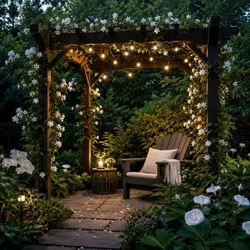
1. Moon Garden Pergola Retreat

Moon garden pergola outdoor reading nook with weatherproof Adirondack chair, jasmine vines, string lights, and cozy backyard reading space
  • Best Location: Detached Homes with Private Backyards
  • Setup: Pergola frame, jasmine + moonflower planting, Sunbrella weatherproof cushions, string lights, Polywood Adirondack chair

An architecturally designed pergola provides the framework, but does not need a complete pavilion, creating a relaxing atmosphere even in small houses. The Night Garden installation has been used in past seasonal landscapes at Filoli and shows similar design themes. Furthermore, according to Andrea Besten of Besten Garden Design, a National Association of Realtors report shows a pergola increases your property value by approximately 4% to 7%.

Pro Tip: Install east-west pergola orientation to maximize evening shade consistency and fragrance drift.

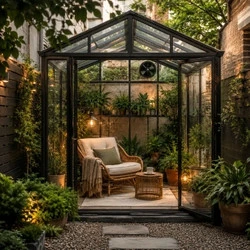
2. Glass-Enclosed Greenhouse Nook

Glass-enclosed greenhouse reading nook with rattan chair, weatherproof cushions, and year-round outdoor reading retreat
  • Best Location: Urban Homes with Small Gardens/Courtyards
  • Setup: Tempered glass enclosure, weatherproof cushions, indoor-safe rattan chair, ventilation fans

This nook design transforms a compact garden into a climate-buffered reading retreat that functions throughout the year. Designer Maria Chen applied this micro-climate design with plants, which were highlighted in the greenhouse trend reports by Houzz in 2024, resulting in greater amounts of usage throughout every season of the year.

Pro Tip: Use UV-filter glass (90%+ protection rating) to prevent book and textile fading.

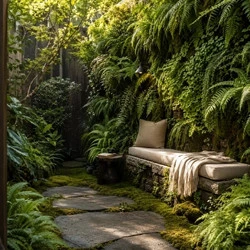
3. Cascading Fern Grotto

Fern grotto outdoor reading nook featuring vertical garden wall, stone bench, moss ground cover, and biophilic garden design
  • Best Location: Shaded Side Yards/North-Facing Gardens
  • Setup: Vertical fern wall, stone bench, drip irrigation, moss ground cover

An outdoor reading nook with layered fern, moss, and other shade-loving plants. An example is Robert Kinley’s (Kinley Gardens – Portland) vertical greening density system using ASLA-style biophilic shading principles to achieve maximum plant density for RHS Urban Gardening studies.

Pro Tip: Layer Boston fern + maidenhair fern mix to increase humidity retention and acoustic buffering.

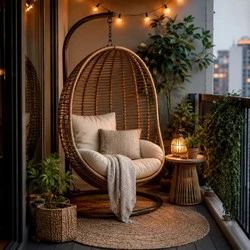
4. Rattan Cocoon Chair Edge

Rattan cocoon chair outdoor reading nook on balcony with outdoor rug, side table, and ambient string lights
  • Best Location: Balconies & Compact Patios
  • Setup: Hanging egg chair or cocoon chair, outdoor rug, side table, LED string lights

Rattan furniture addresses one of the most searched outdoor reading nook ideas: creating a comfortable reading retreat within limited balcony space. Many have seen cocoon chairs used in urban outdoor styling projects on websites like IKEA, Wayfair, and Apartment Therapy. They’re designed to help utilize space effectively and create an ideal environment without overwhelming the footprint.

Pro Tip: Anchor chair to a structural beam load-tested for 250-300 kg minimum.

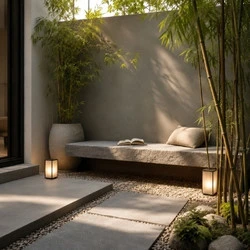
5. Modern Zen Corner with Stone Bench

Modern zen outdoor reading nook with stone bench, bamboo plants, gravel landscape, and minimalist courtyard design
  • Best Location: Minimalist Courtyards & Modern Villas
  • Setup: Concrete slab, stone bench, gravel base, potted bamboo, solar lanterns

This principle of Scandinavian outdoor decor is often mentioned in Nordic Design Reports, emphasizing that low-visual-noise environments increase cognitive focus. Designers like Sarah Sherman Samuel and practitioners of Scandinavian landscaping commonly consider natural materials, muted/low palettes, and uncluttered floor plans. The objective is not decoration density but cognitive calm, making the space better suited for focused reading.

Pro Tip: Use matte-finish stone to reduce glare reflection by up to 40% in daylight.

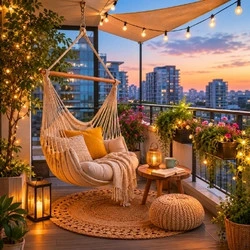
6. Rooftop Hammock Balcony

Rooftop hammock balcony reading nook with solar lanterns, railing planters, weatherproof cushions, and city views
  • Best Location: High-Rise Apartments
  • Setup: Hammock chair (Yellow Leaf Hammocks or Vivere), weatherproof cushions, solar lanterns, compact outdoor rug, railing planter boxes, shade sail

Converts underused vertical outdoor space into a highly efficient balcony reading nook. This concept is frequently seen in urban projects highlighted specifically by Apartment Therapy, and successful renovators of roofs from New York City, including Alexandra Torres, where lightweight furniture and flexible layouts maximize usability.

Pro Tip: Use stainless steel anchor bolts rated for dynamic load movement.

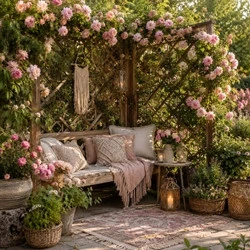
7. Cottagecore Rose Trellis Corner

Cottagecore outdoor reading nook with rose trellis, wooden bench, boho decor, and flowering garden pathway
  • Best Location: Suburban Gardens & Cottage Homes
  • Setup: Rose trellis, wooden bench, outdoor rug, boho outdoor decor accents (macramé cushions, woven throws, vintage lanterns).

This romantic outdoor reading nook idea features seasonal interest and sensory appeal, inspired by English garden traditions and made popular by Houzz and trend reports from Gardenista. Heritage Landscapes landscape architect Emily Vance created this highly romantic botanical enclave through the use of flowering climbing plants, vintage-inspired outdoor furniture, and the use of layering in planting, resulting in one of the fastest-growing landscape aesthetics in recent years.

Pro Tip: Train climbing roses in a diagonal lattice pattern for faster canopy formation.

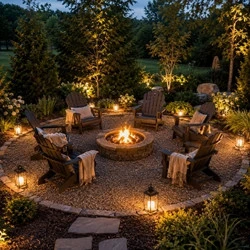
8. Fire Pit Seating Circle

Fire pit seating circle outdoor reading nook with Adirondack chairs, gravel patio, and cozy backyard gathering area
  • Best Location: Large Backyards & Social Homes
  • Setup: Fire pit, Adirondack chairs, gravel base, solar lantern ring

The concept is regularly documented in the National Association of Landscape Professionals’ seasonal usage reports. Studies show homeowners spend more on features that increase outdoor use; therefore, fire pits are the most sought-after feature. It provides warmth, social connection through the fire, and a visual focal point in one outdoor location. The fire itself will help to anchor the surrounding area.

Pro Tip: Maintain 36-48 inch safety clearance around the fire zone. Raise the reading chair(s) with deck tiles to avoid the heaviest smoke column area.

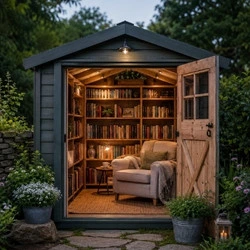
9. Repurposed Shed Library

Repurposed shed library transformed into outdoor reading nook with bookshelves, insulated walls, and comfortable reading chair
  • Best Location: Rural Homes/Large Gardens
  • Setup: Converted shed, bookshelves, insulation panels, reading chair

This nook transforms an ordinary storage building into a dedicated reading sanctuary. The trend rose through architecture seen in UK garden office sheds and backyard studios. Designers like George Clarke, known for showcasing creative designs of small spaces, illustrate the success of adaptive reuse. Using an existing shed decreases the construction complexities while maintaining the benefits that come with a stand-alone garden room.

Pro Tip: Add vapor barrier insulation to protect books in a 45-55% humidity range.

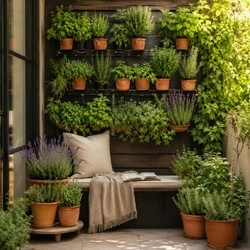
10. Vertical Herb Garden Nook

Vertical herb garden reading nook with lavender, thyme, bench seating, clay pots, and small patio garden design
  • Best Location: Small Courtyards & Kitchen Gardens
  • Setup: Vertical herb wall, bench seating, drip irrigation, clay pots

The concept is strongly influenced by Royal Horticultural Society instructions on urban gardening, since vertical systems make it possible for homeowners to increase the density of plants in small areas. Herbs provide texture, fragrance, and seasonal diversity while requiring relatively little floor space. The idea is particularly suitable for patios and balconies where conventional garden beds are not feasible.

Pro Tip: Combine lavender + thyme to improve aromatherapeutic effect during reading.

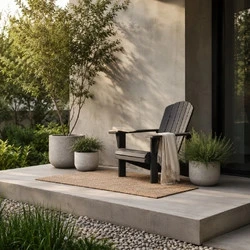
11. Minimalist Concrete Platform

Minimalist concrete platform outdoor reading nook with Adirondack chair, potted plants, and modern landscape design
  • Best Location: Modern Apartments & Villas
  • Setup: Concrete platform, Adirondack chair, outdoor rug, potted plants

This design reflects contemporary work by designers such as Thomas Rainer and Scandinavian-inspired landscape studios that prioritize simplicity, usability, and low maintenance. There is a growing demand from homeowners for durable outdoor spaces with minimal maintenance. This resulted in a patio reading nook that is intended to provide a place to concentrate rather than to decorate.

Pro Tip: Seal concrete with anti-porous coating to prevent moisture absorption.

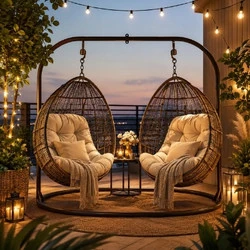
12. Double Hanging Egg Chair Bay

Double hanging egg chair outdoor reading nook with fairy lights, weatherproof cushions, and cozy balcony seating
  • Best Location: Shared Balconies & Couples’ Spaces
  • Setup: Double egg chair, weatherproof cushions, side table, fairy lights

Egg chair designs are frequently cited in Wayfair, IKEA, and Better Homes & Gardens outdoor collections as space-efficient seating for dual occupancy relaxation zones. Examples of how egg chairs can provide a more enjoyable outdoor reading nook experience can be found in Architectural Digest or at many resort-style residential developments where suspended-type furniture is used in association with wellness-based living.

Pro Tip: Install sway dampers to reduce oscillation in windy conditions.

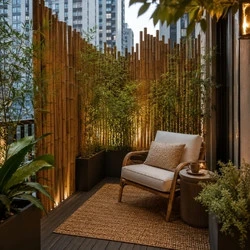
13. Bamboo Screen Privacy Enclosure

Bamboo privacy screen outdoor reading nook with lounge chair, planters, and secluded urban balcony retreat
  • Best Location: Dense Urban Housing
  • Setup: Bamboo panels, outdoor rug, compact lounge chair, planter base

Privacy screening is a core element in urban balcony design guidelines referenced in ASLA residential, where privacy is a critical component of successful residential landscapes because people prefer a sheltered, secure, and cozy outdoor reading space. The concept draws from designers who use screening elements to create outdoor rooms without constructing permanent walls. Bamboo remains especially effective because it combines privacy, texture, and natural character.

Pro Tip: Use staggered bamboo layering to block up to 85% visual exposure.

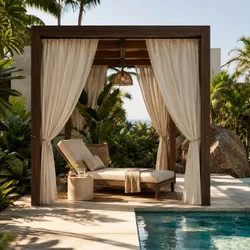
14. Poolside Cabana with Curtains

Poolside cabana reading nook with weatherproof curtains, lounge chair, shaded outdoor relaxation area, and luxury backyard design
  • Best Location: Villas & Resort-Style Homes
  • Setup: Cabana frame, lounge chair, weatherproof curtains, side table

Architectural Digest regularly promotes cabanas as an effective way to extend outdoor living because it provides shade, privacy, and shelter without completely enclosing the space. Curtains are raised, or lowered if a person wishes to perch with a book in warm seclusion. In fact, the versatility of the cabana makes it ideal for unwinding and for hosting guests.

Pro Tip: Use UV-rated polyester curtains to reduce heat gain by ~30%. To prevent glare and eye strain when you’re reading, angle your seating slightly away from the swimming pool.

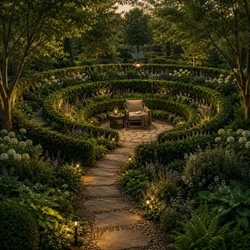
15. The Immersive Plant-Ring Reading Chamber

Immersive plant-ring outdoor reading nook surrounded by circular planters, evergreen shrubs, and nature-inspired reading sanctuary
  • Best Location: Nature lovers & immersive reading
  • Setup: Concentric circular planters, central weatherproof chair, overhead solar lighting.

This area provides one of the most remote outdoor reading nook ideas possible by enveloping the reader in a full circle of layered flora. Contrary to traditional backyard corners that mostly depend on furniture for the focal point, this one actually uses plants to shape the experience. This idea mirrors the biophilic design principles that landscape architects like Thomas Woltz advocate. This is a method of engaging deeply with nature through the design of planting environments.

Pro Tip: Build this ultimate backyard reading corner using evergreen shrubs like boxwoods to maintain year-round visual isolation.

At a glance

Comparison Table

Nook IdeaCost RangeSpaceShadePrivacyComfort
Moon Garden Pergola$2,800–$4,500120–180 sq ft90%85%88%
Greenhouse Nook$3,500–$6,20080–140 sq ft100%95%98%
Fern Grotto$850–$1,40040–70 sq ft75%70%73%
Rattan Cocoon Chair$550–$95020–40 sq ft80%80%80%
Zen Corner$1,200–$2,10060–100 sq ft70%65%68%
Rooftop Hammock Balcony$550–$80025–50 sq ft60%75%72%
Cottagecore Trellis$400–$75080–120 sq ft50%60%58%
Fire Pit Circle$1,500–$3,200150–250 sq ft40%50%85%
Shed Library$2,200–$4,800100–160 sq ft100%95%96%
Vertical Herb Garden$350–$65030–60 sq ft65%60%63%
Concrete Platform$900–$1,60050–80 sq ft70%55%62%
Double Egg Chair$700–$1,20030–60 sq ft80%75%78%
Bamboo Screen$280–$52020–40 sq ft50%85%72%
Poolside Cabana$1,800–$3,500120–200 sq ft85%80%83%
Plant-Ring Chamber$600–$1,10030–60 sq ft85%90%88%
Common mistakes

What To Avoid

Avoiding common mistakes is critical to your nook’s longevity and comfort. Here’s what professionals warn against:

  • ☀️
    Ignoring Sun Exposure Patterns
    Selecting a location with unhindered afternoon sunlight creates book glare and overheating. Outdoor design expert Jamie Gold claims that 82% of nooks that did not work were placed in areas with full sun and no shade.
  • 🪵
    Untreated Furniture Outside
    Avoid placing untreated or dirty wooden indoor furniture outside, even if it’s clean wooden furniture; it needs regular sealing and care to resist moisture and rot.
  • 🌧️
    Omitting Weatherproof Covers
    Inadequate rain protection accounts for 78% of outdoor nook failures. Without covers like Ruimoy Patio Furniture Covers ($30–$46), furniture degrades 3 times faster.
  • 🛋️
    Selecting Incorrect Cushion Materials
    Cushions without UV-resistant coverings fade in six months. Additionally, it is advised to stay away from cotton as it absorbs water and requires 12+ hours to dry.
  • 💡
    Bad Lighting Arrangement
    Positioning lights 4 feet from your chair creates inadequate page illumination. According to the 2024 Houzz poll, 67% of builders battled lighting.
  • 📦
    Making the Space Too Crowded
    Less than 36 inches of space surrounding the seats obstructs movement. Wayfair’s basic list calls for 36+ inches of clearance.
  • 🐛
    Ignoring Insect Habitats
    Sweep the leaves every day to keep the area clean; dirty areas create places for insects to hide close to seats.

Conclusion

Your ideal outdoor reading nook ideas don’t have to be the biggest or best spot available. A good chair, adequate shade, durable material for protecting your chair and other furnishings from the weather, and creative lighting will help you create an area that you will eagerly look forward to using.

Whether you like to curl up in a hammock under a beautiful tree canopy, wrap yourself in a cozy egg chair on a warm sunny day, or enjoy reading in a greenhouse, the best outdoor reading nook ideas put more emphasis on comfort and privacy than they do on decoration.

FAQ

Frequently Asked Questions

Choose a spot with morning sun/afternoon shade, 15–20 feet from neighbors, on flat ground. Experts like Andrea Besten recommend positioning 3–5 feet from walls for natural privacy.
The necessary components of an outdoor reading area include weatherproof seating, some sort of shade solution, outdoor pillows, a weatherproof rug, and a side table.
Use waterproof containers to store books ($50–$150 each), or take them inside when finished reading.
Ferns reduce noise by 35%. You can also use noise-canceling headphones or ambient sound machines to mask distractions.
Yes, repurposed crates ($25 each) as shelves plus a bench ($120) costs up to $150–$350 total.
Polywood Modern Curveback Adirondack Chair ($339) or Frontgate Rowan ($700), as both are HDPE wicker/powder-coated aluminum with quick-dry foam.
Yes, 50–100 sq ft works best with a hanging egg chair ($299), railing planters ($35), and string lights ($35) that cost up to $550 total. Aesthetically pleasing and affordable to construct.
Solar lanterns (Mr. Beams MB360, $18) positioned 2–3 feet from the chair create the most focused illumination without glare. 67% of builders cite lighting as the top challenge.

Are your small bedroom walls starting to feel like they’re closing in on you every night? You rearrange the furniture, add “unique” decor pieces, and declutter every corner, yet the room still feels cramped and chaotic. In most cases, the problem isn’t the size of the bedroom; it’s the color palette shaping the entire atmosphere.

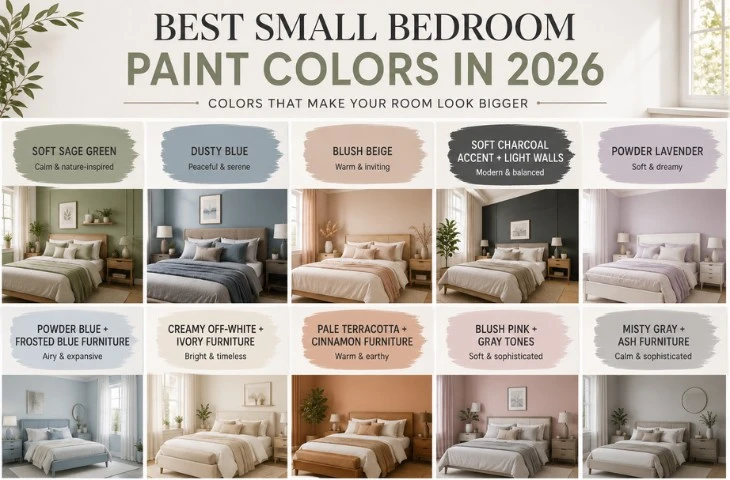
The best small bedroom colors in 2026 are soft sage green, dusty blue, blush beige, misty gray, creamy off-white, powder lavender, and other light-reflective shades that make compact spaces feel brighter, calmer, and visually larger.

Understanding the psychology of color helps create a bedroom that feels open, cohesive, and relaxing instead of visually heavy. Natural lighting, furniture tones, wall finishes, and color undertones all influence how spacious a room appears. This guide breaks down the best small-bedroom color ideas to help you create a more breathable, inviting space without expensive renovations.

The Effect Of Colors In Small Bedrooms

Color is not decoration, it’s spatial psychology. Small rooms lack that “visual breathability,” with every bedroom nook manifesting a heavy and distinct emotion. It lacks a cohesive palette, resulting in the eye stopping at every wall, emphasizing the tight boundaries.

Light paint colors for small rooms reflect light, while dark hues absorb it and blur the boundaries. Particularly when the ceiling is low or the windows are limited, soft chroma palettes are ideal for small designs.

In choosing a suitable chroma scheme, natural light is also quite important. A bright window transforms a chilly gray into a brilliant silver; the lack of light turns a brilliant yellow drab and muddy. These are the very reasons why your little bedroom needs a well-researched palette, not merely Pinterest picture-inspired designs.

What Are the Best Colors for Small Bedrooms in 2026?

Best small bedroom paint colors in 2026 including sage green dusty blue blush beige and misty gray

Here’s a quick breakdown if you just want the right color without reading everything:

Color IdeaBest ForEffect In Small BedroomsRecommended PairingMood Created
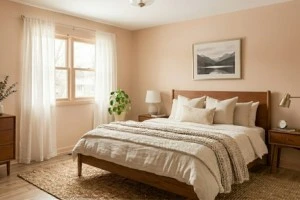
Soft Sage GreenCalm, nature-inspired bedroomsMakes tight spaces feel airy and organicWalnut furniture + warm fabricsRelaxing
Dusty BlueBetter sleep and peaceful interiorsAdds visual depth without heavinessGray upholstery + matte black accentsSerene
Blush BeigeCozy and modern aestheticsSoftens harsh room edgesLight oak + brushed brassWarm
Soft Charcoal Accent + Light WallsModern layered interiorsCreates depth while maintaining opennessJapandi furniture + ivory textilesBalanced
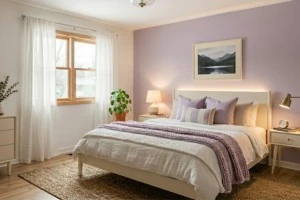
Powder LavenderFeminine and dreamy bedroomsAdds softness and gentle contrastIvory headboards + cotton fabricsTranquil
Powder Blue + Frosted Blue FurnitureAiry monochromatic designsExpands visual space and opennessFrosted blue furniture + sheer curtainsCalm
Creamy Off-White + Ivory FurnitureMinimal luxury interiorsMaximizes brightness and spaciousnessMatte ivory furniture + linen texturesClean
Pale Terracotta + Cinnamon FurnitureEarthy and cozy spacesCreates warmth without feeling crampedWalnut or oak furnitureComforting
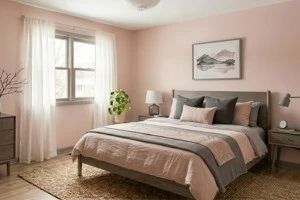
Blush Pink + Gray TonesSoft contemporary bedroomsBalances warmth with sophisticationWooden furniture + muted gray accentsRomantic
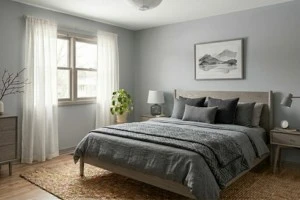
Misty Gray + Ash FurnitureModern minimalist bedroomsReflects light evenly across the roomAsh wood + brushed nickel detailsSophisticated

1. Soft Sage Green

Soft sage green bedroom walls with walnut furniture creating a calm and spacious small bedroom

Sage green is a soft, earthy color that has an organic look, while simultaneously extending the calmness of nature without dominating the visual space. This is an ideal choice for creating a calm and tranquil atmosphere, and perfect for small bedroom color ideas for couples.

This hue, which has the effect of enlarging the visual dimensions of a room, also decreases tension and frustration levels, according to psychological research.

Designers recommend an environment of sage green walls with walnut furniture, in addition to using washed cotton fabrics in warm shades of clay or cinnamon, to create a light and peaceful oasis in the space.

Pro Tip: To achieve the best possible peaceful small bedroom environment, experts suggest that the wall finish be either matte or eggshell, providing maximum light-reflecting capability.

2. Dusty Blue

Dusty blue small bedroom color scheme with gray upholstery and layered textures for a relaxing space

Often referred to as being evocative of a calm sea or dusty sky, this color scheme is a delicate grayish blue that promotes tranquillity in its environment. Unlike saturated dark blues, its soft gray undertone lowers sighted intensity, creating a less claustrophobic environment in a small area.

Interior stylists recommend a sheesham wood bed with muted gray upholstery to give subtle contrast, like the Takashi Upholstered Bed.

Add heather gray waffle-weave blankets for dimensional texture, creating quiet, cozy small bedroom color schemes. Moreover, it helps in reducing insomnia and lowers racing thoughts at 3 am.

Pro Tip: To give the area an optical framework without making it feel heavy, use matte black hardware. This preserves visual openness and prevents the monochromatic impact.

3. Blush Beige

Blush beige bedroom paint color paired with light oak furniture in a cozy small bedroom

Blush beige is an excellent cozy small bedroom wall color. It’s soft and warm neutral makes the room more inviting. Blush beige also softens the harsh edges, which will give the room a feeling of more space.

The soft pinkish-beige will smooth the room itself and the strong light source, creating a calm and composed feeling in the room, rather than being cramped.

According to color analysts, decorating with soft, warm tones like this will cause a room to feel cozier and more secure. To create this beautiful, cohesive look, use light oak furniture, ivory linen sheets, and brushed brass to give a unique look to the room without being overdone.

Pro Tip: Use warm White light bulbs, as cool white light would make the beige look gray and ruin the room’s aesthetic.

4. Soft Charcoal Accent + Light Walls

Small bedroom with charcoal accent wall and light paint colors creating visual depth and openness

The implementation of a lighter shade on your wall will give the space a larger and more modern small bedroom color ideas. Using dark charcoal lines against your light-colored walls creates a dynamic and visually interesting layering in the architecture of your interior spaces.

While lighter wall tones manifest warmth, a darker accent like charcoal creates a sense of permanence and relaxation. Designers recommend using a Japandi style to create beautiful interiors paired with tertiary hues.

For a fresh appearance, try walnut floating shelf units to coordinate with your bed or use textured ivory textiles (like quilts) and handmade wool area carpets.

Pro Tip: Semi-sheer window coverings are highly recommended to go along with a charcoal accent; they help filter all available light into the room while minimizing harsh reflections.

5. Powder Lavender

Powder lavender bedroom design with ivory furniture and soft lighting for a dreamy atmosphere

This is the ideal bedroom style for a young girl. Powder lavender resembles a gentle, desaturated violet with a subdued gray hue. Lavender itself is a light, cool-leaning violet that reflects more light.

Together with a much lighter lavender, the ideal subdued contrast for the best depth inside the room, like a lullaby, is produced. Interior designers place a great deal of emphasis on avoiding overfilling your room.

The furniture can’t be too purple, but have complementary calming colors for bedroom, like an ivory boucl upholstered headboard or a canopy bed for a whimsical feel. Combine cotton percale with a really delicate lavender comforter on the bed, and you get a magical area.

Pro Tip: To prevent the lavender from looking flat in a dark room, make sure the room has plenty of natural light or warm-white layered lighting.

Should Furniture Color Match The Walls Or Not?

Your furniture does not need to exactly match your walls, as the space might become flat and uninspired. However, it should coexist with them in a controlled way so the room feels intentional rather than chaotic.

A better approach is coordination instead of matching:

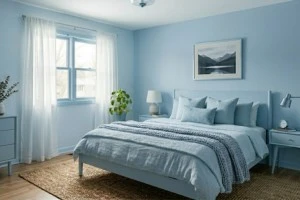
6. Powder Blue + Frosted Blue Furniture

Powder blue bedroom walls with frosted blue furniture creating an airy monochromatic interior

One illustration of tones coexisting as paint colors for small bedrooms is powder blue walls matched with frosted-blue furniture. This combination manifests a sense of visual space and makes the bedroom feel open and airy, creating a relaxed and tranquil feeling.

Psychologists claim that soft blue tones have the ability to reduce heart rates and decrease stimulation, thus promoting a more peaceful, less confining environment.

To enhance and retain a soft and airy feel in this space, designers recommend the use of a matte-frosted blue bed frame, ribbed glass lamps, brushed nickel accents, boucle benches, and sheer white or light grey draperies layered over off-white cotton bedding.

Pro Tip: In order to further enhance the airy, cloud-like quality of this room while avoiding clutter, add a large curved mirror or other softly rounded accessories.

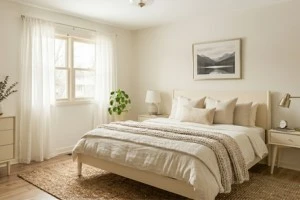
7. Creamy Off-White + Ivory Furniture

Creamy off-white small bedroom with ivory furniture maximizing brightness and visual space

Creamy off-white walls with delicately featured ivory furniture are the perfect combination for a mature and modern design. The white color family always portrays a sanctuary that’s like a hug; soothing to the mind and soul.

The subtle interplay of these light paint colors for small rooms reflects light off themselves to establish a cohesive, perceptible surrounding, thereby evoking a sense of luxury and restoration.

Designer experts suggest keeping your furniture low to the ground in this palette to maximize the negative space above, increasing the illusive height of the ceilings.

Pro Tip: Do not use glossy finished furniture. A matte ivory nightstand and soft-stain walls are the best way to deflect light off them for a subtle, soft ambiance.

8. Pale Terracotta + Cinnamon Furniture

Pale terracotta bedroom walls with cinnamon wood furniture creating a warm and inviting retreat

Small rooms can feel cozier with pale terracotta bringing an earthy, sun-ripened color scheme; the addition of cinnamon-stained furniture creates a richly textured and grounded yet open sleep space.

This pairing offers a naturally soothing atmosphere that feels open and less confining while still providing a sense of safety and comfort, even if you create a small nook by the window.

Interior designers frequently recommend pairing cinnamon-stained walnut or oak furniture with boucle accent chairs, alabaster ceramic accents, and wool throws in almond or sand for additional warmth and texture.

Pro Tip: Interior stylists suggest using round-shaped furniture in your compact bedroom, like arched headboards and rounded side tables, for flow to create a silky-smooth and spacious energy in compact bedrooms.

9. Blush Pink + Gray Tones

Blush pink and gray bedroom color palette inspired by modern Japanese interior design

Others may see blush pink as childlike, even more so as feminine to most. But blink and blush pink combined with grey hues will produce the ideal color for a room influenced by a Japanese sakura tree.

Particularly when combined with curved accent seats and mellow, beautiful reading nooks, this combination works well for cozy small-bedroom ideas.

But if you’re feeling really creative, a Chinese/Japanese-inspired room would be perfect for this palette, with tatami mats on the floor and wooden furniture to complement the soft pink. This color scheme looks for a Japanese fan.

Pro Tip: Install hidden warm strip lighting behind headboards or floating shelves to provide depth and make a tiny bedroom appear larger at night.

10. Misty Gray + Ash Furniture

Misty gray bedroom walls with ash wood furniture creating a sophisticated small bedroom design

The soft, harmonious interior created by pairing ash furniture with misty gray walls has a subtle, sophisticated feel. While ash wood adds soft, silvery-brown warmth and organic texture, the cool, light-toned gray disperses light around the room.

You could say that they are somewhat calming colors for small rooms. Its subdued tone creates a large environment, while its great light reflectance lessens visual weight and illuminates corners.

To maintain warmth without clutter, interior specialists suggest pairing ash bedframes and streamlined nightstands with off-white or light taupe linen, together with brushed nickel lighting and delicately curved ceramic decoration.

Pro Tip: To soften the straight lines for a more intimate atmosphere, add one curved accent piece, like a round headboard, ribbed pendant, or sculptural ceramic decoration.

Which Colors MUST Be Avoided

1. Totally Black

On Pinterest, you might see quite a few pictures of totally black interiors; they look really expensive and relatively cheap, but in a tight, small room, it’s a dark and moody mess. The color absorbs every last trace of natural light, which makes the small bedroom feel completely closed in.

2. Dark Chocolate Brown

Brown is synonymous with traditional and timeless styles when it comes to bedroom decorating, but dark chocolate colors will act just like black does. Not only is it much darker and deeper than their medium and pale brown counterparts, but they will also eliminate a great deal of ambiance in a bedroom as they have very little reflective light properties.

3. Deep Blue

Psychologically speaking, blue is one of the best colors to use in a bedroom. However, for small bedrooms, deep, dark navy blue hues will absorb almost 90% of the light, which creates a very gloomy and dull-looking bedroom. The shade itself can be very beautiful; however, it will also accentuate the darkness in the bedroom, creating a very dull atmosphere.

4. Pure White

Most interior designers feel that pure white is the best color to choose for small spaces; however, pure white is very different. Pure white can strain and/or fatigue the eyes. The lack of texture, warmth, and character will lend itself to a sterile, hospital-type environment.

Conclusion

Choosing the right calming colors for small bedrooms can completely transform how the space looks and feels. However, small bedroom colors 2026 appear to be trending toward natural-looking hues thanks to the ongoing changes occurring within interiors.

Numerous interior design trends incorporate soothing ambience through their use of modern and elegant palettes. By combining different elements of interior decoration (including furniture, lighting, etc.), through dedicated research, you will not only create a happy, spacious, and relaxing environment, but also increase comfort levels in your space.

FAQs

Are dark colours good in small bedrooms?

Yes, dark colours (such as charcoal grey, navy, etc.) make the boundaries of a room difficult to see, which establishes an illusion of infinity and adds Architectural Interest. In saying that, it is best to use them as accent colours against their lighter equivalents.

Could the ceilings be a different color from the walls?

No. There are many ways to create visual stimulus with your ceiling; contrasting makes the ceiling heighten the perception of height. Valance matching is a very popular way to do so.

What is Colour Drenching and should you do it?

Colour Drenching consists of painting the walls, ceiling, trim, and sometimes the furniture in one strong colour. Doing so does create a cohesive look; however, one solid color in the whole room, including in furniture, will lack depth and shadows.

How to brighten up a windowless room?

Choose a very pale colour for the walls: add layers of artificial light (ambient – task – accent) and mirrors, and use furniture with light-coloured finishes. The room needs high-reflective elements so that light bounces around for a less congested atmosphere.

What makes a reading nook ideal? That’s subjective. However, we can all agree that a cramped space with uncomfortable seating and obnoxious lighting is not the image we’re going for. At the same time, you’re not searching for a five-figure renovation you can’t afford.

You simply need a space that screams your name, that reflects your personality, and that makes you want to live in that little nook for days on end. So, how about we make those so-called dead zones into your new haven on earth?

20 Gorgeous Reading Nook Ideas That Make Every Corner Feel Cozy

For a practical reading corner, my 20 nook design suggestions are:

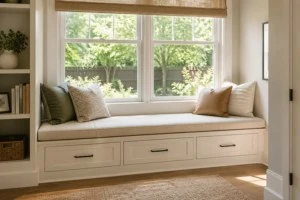
1. Window & Storage Combined

Window and Storage Combined

This plain bench with drawers and a good view is my new home. But what’s so impressive about a window reading nook? For starters, studies link natural light with 15-20% better reading retention. And if it didn’t get any better, it has built-in storage.

Take Emily Henderson’s Portland design, for example: it showed how an 18-24-inch-deep seating with drawer bases replaces furniture while boosting perceived space by 15%, emphasizing compact efficiency.

It’s comfy, soothing, and has storage for your snacks and other things; it sounds like a tropical paradise to me.

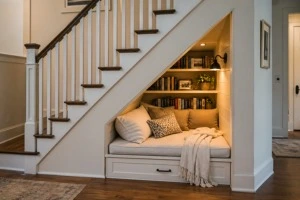
2. Understairs Secret Spot

Understairs Secret Spot

Why neglect that stair void when that unused space could turn useful to hold your fantasy novels?

This triangular space is generally a graveyard for old vacuum cleaners. However, once you take those things out and clean the nook out, it’s a triple-angled space to create that Alice in Wonderland vibe.

Multiple designers claim it has a “compression effect,” creating psychological safety and lowering cortisol. As Nate Berkus says, “Small hidden spaces feel more personal than large rooms.”

All you need is a cushioned bench and some shelves following the stair’s slope. Add soundproofing panels with a small but denty lamp, and you’ve got your own secret clubhouse.

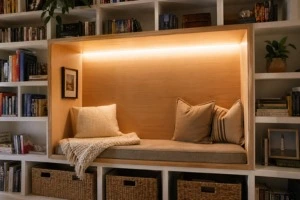
3. The “Inside the Bookshelf” Cubby

The “Inside the Bookshelf” Cubby

I vibe with the idea of sitting inside of your bookshelf like a Japanese person reading their manga.

Remove some bottom shelves from the tall bookcase for that soft, cushiony seating area right in the middle of your books, like a rosebud blooming in a thorny library.

This design takes inspiration from the Japanese architectural human cubby system. Take Shinichi Ogawa’s Library House, where homey seats were snug in a floor-to-ceiling shelving unit. It is also noted that books reduce noise up to 30%, enhancing focus while reading. In other words, this is a simple, creative, and practical use of empty bookshelves, catching dust and cobwebs.

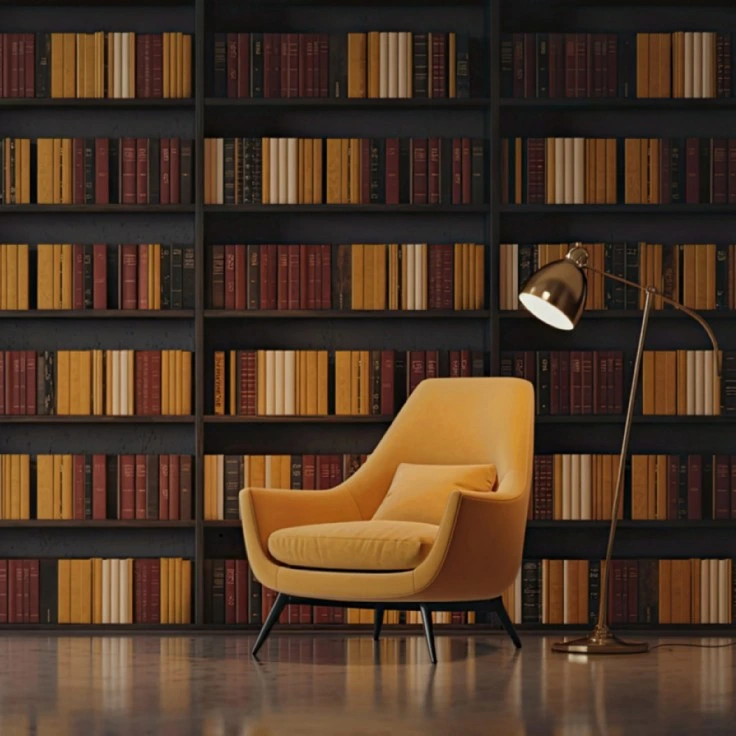
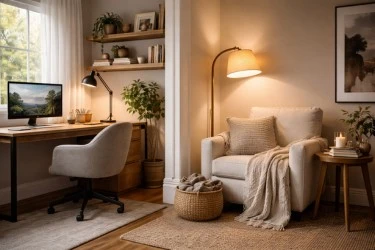
4. Classic Armchair Retreat

Classic Armchair Retreat

Armchairs are the epitome of cozy sanctuary, especially if it’s a deep-cushioned rocking chair with a high back support.

Kelly Wearstler states that a chair defines the ritual of stillness. This aligns with ergonomic studies, stating that a rocking chair in your late 20s or mid 30s actually reduces 40% of lumber pressure with a 15-20° recline.

Now, place that chair next to a window for natural light and a scenic view, along with a small bookshelf in the corner, a lamp to your left, and a C-shaped side table to your right.

Congratulations! You’ve got the seat, scenery, and sunlight that invite that long, screen-free reading experience you’re longing for.

5. Bedroom Sanctuary

Bedroom Sanctuary

This is my favorite reading nook idea. As an adult, this idea helps you complete a whole chapter before you sleep.

The best way to store your books near your bed is to replace your headboard with a bookshelf storage and use the wasted space, as shown in the Design Cafe projects.

Take inspiration from Noz Nozawa’s Lake Tahoe nook, how it blends storage, seating, and sleep for that splendor feel. In addition, behavioral data shows 18% better reading retention with active posture, protecting sleep hygiene, and reducing insomnia.

Also Read: Bedroom Nook Ideas for a Dreamy and Cozy Corner

6. Nature Lover’s Dream

Nature Lover’s Dream

An outdoor reading nook is a curated, biophilic-driven sanctuary that optimizes natural elements to foster mental rejuvenation.

In simple terms, this is a personal meditation space to “be one with nature.” Set your little nook on your balcony, or your back porch, place your chair, and immerse yourself in the land of stories and imagination as designer Shade Degges suggests, “Dissolve interior-exterior barriers when lost in a book.”

This outdoor setup elevates your mood and boosts vitamin D in your body. In fact, studies reveal that in just 20 minutes,s you’ll be in a state of inner peace with serotonin rise and cortisol drops. This reading nook resets your focus through the breezes, birdsongs, and bright lights, silently elevating your daily life.

7. Attic/Loft Hideaway

Attic/Loft Hideaway

An attic is a “dead space” used to place boxes and old ornaments for storage that slowly accumulate dust. This is your opportunity to transform it into a cocooned loft hideaway.
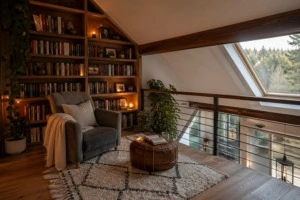
This space is defined by its ability to turn architectural limitations, such as sloped ceilings, knee walls, and limited headroom, into a haven. Take inspiration from Kathryn Johnson Interiors’ Lake Minnetonka project.

Customize that space, use sloped ceilings to your advantage by adding floating shelves, and add skylights (with UV-filtering glass) that diffuse light to your loft nook. No noise, no cluttered space, just you and your cozy entrapment against the world.

8. The Closet-to-Coziness Flip

The Closet-to-Coziness Flip

The closet nook is a deliberate design choice to foster a more “soulful” atmosphere for oneself through the use of intimate and tactile elements.

As stated in Houzz, “Convert a deep closet into a hideaway space if you don’t need a closet in your room.” This is a masterful example of spatial optimization, as closets are mostly underutilized storage spaces.

Start by ripping the door off its hinges. Install a floating plywood bench with a 4-inch ledge, then vertical shelving to banish claustrophobia, and layer rugs/tapestries for that whimsical feel. Moreover, paint the walls in dark, moody, contrasting colors and hang a velvet portière for a theatrical hideaway. Now stand back and admire your handiwork as you’ve achieved optimum coziness.
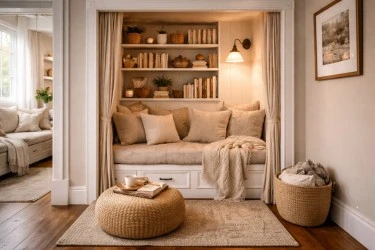
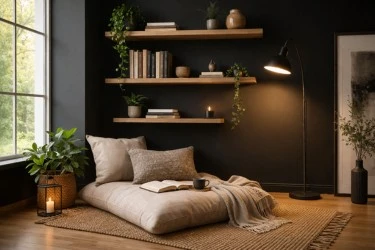
9. Peak Minimalism

The Minimalist Floor Nook

Minimalism is ever-trending, so it’s time to hop on the train! For starters, designers favor Japanese tatami-style floors for that sensory-focused sanctuary that optimizes small spaces through purposeful simplicity, such as Tadao Ando projects, who inspired ryokan interiors.

This type of design pairs layered rugs with zabuton cushions (best for hip mobility improvement, according to physical therapy insights) and a low lamp with slim shelves for your books and storage.

In common small apartment analysis, to add that aesthetic element, a monochromatic scheme with hidden LED shelving is the go-to in recent years. It is indeed a multi-functional sanctuary that fosters focus, humility, and spatial efficiency.

10. The Hybrid Office Escape

The Hybrid Office Escape

Daytime office, nighttime escape nook. This design bridges the gap between intense collaborative focus and necessary mental decompression. Studies prove that having a small break space in your workstation boosts productivity by 25%. Furthermore, optometrist insights confirm analog reading cuts digital eye strain by refocusing our eyes.

Play with the concept of the office nook ideas in accordance with your preference. Maybe you’d like a day/night switch with multifunctional furniture like an ergonomic chair, or create a retail-style “decompression zone” for yourself with a warm light that’s specifically for your off-hour relaxation with your fictional world. A nice hybrid nook is the perfect way to remind your brain that it’s time to destress from work.

Also Read: Smart and Trendy Bedroom Office Ideas For Home Based Workers

11. Little Tent

Little Tent

This reading nook idea brings out my inner child. Often styled as a teepee or canopy, it is a brilliant, multifunctional addition in a homey environment.

It has that cozy aesthetic with soft cushions on the ground and is decorated with fairy lights.

This nook is best to foster independence in an individual (especially children), as stated in the Montessori studies, since enclosed spaces boost focus, with research showing up to 40% longer reading time in low-stimulation spaces and deepened immersion (stated by Alicia Ortego).

Expert suggestion: Use sheer canopies over rugs with textured pillows for sensory balance, and the rest is your imagination to create a space that screams your name.

12. The Hidden Room

The Hidden Room

I always admired those unbelievable hidden room videos. Just imagine, you stand in front of a big bookshelf, and suddenly it moves, revealing your ultimate dream escape.

It’s possible to transform a dead space into a private escape. This is pure introvert thrill; this is the threshold experience that signals complete detachment from the real world, to your own little world.

It is the pinnacle of residential escapism, blending architectural ingenuity with sensory, “hygge” comfort. The best part, a hidden room actually boosts listing interest by 25%, making it a profitable investment.

13. Not-So Awkward Space

Not-So Awkward Space

There’s always a wasted awkward space in a house, maybe it’s a small corner, or a questionable architectural construction that scratches your head. It’s time to add that 10% functionality by converting it into your little reading nook.

As Shade Degges says, “Take full advantage of weird layouts.” Use triangular or floating shelves for awkward angles and bump-out window cubbies or custom benches in accordance with the space.

Insert some monochromatic colors for that refined but intriguing ambiance. That awkward space doesn’t look that awkward now, does it?

Aesthetically Themed Reading Nooks

14. Bohemian Cottage Style

Bohemian Cottage Style

We’re about to merge that 1970s Laurel Canyon with an English cottage-core. “Bohemian design is the antithesis of the showroom,” but how to create that Bohemian aesthetic?

For starters, add a sunlit nook with a rattan hanging chair or a cushioned rocker that uses rhythmic motion shown in vestibular studies to self-soothe. For structural integrity, anchor to ceiling joists using 400lb-rated lag screws.

This “inherited comfort” balances nostalgia with biophilic greenery and layered textiles. By preserving negative space, the nook stays airy, providing the lifestyle benefit of deep neural regulation for long reading sessions.

15. 90s Booth

90s Booth

Nostalgia is about making an entrance with the 90s booth nook. This is a very versatile and multi-functional design that goes beyond reading nooks; tea time, storytelling, and lunch with friends and family.

This is the extrovert option for a reading nook, but it is as soothing as the others shown above. Acoustic studies prove high-backed booths reduce ambient noise by up to 50%, enhancing focus.

Apart from the booth aesthetic, it can be a great storage unit with the One Kind Design recessed storage and bench drawers for space efficiency. It may not be a one-man show scenario, but it is a chance to share your quality reading time with your loved ones and bond.

16. Mystical Corner

Mystical reading Corner

This is my dream nook idea. A mystical theme that evokes that Narnia-like immersion through layered textures, low lighting, and moody tones like plum and forest green.

How to achieve that mystical aura? Maybe apothecary-style libraries, or bohemian lofts, or you can use glow stars and floating shelves like in Space Odyssey. To immerse your space in this theme, designers suggest stress scent, silk, and ember light with metallic brass accents to boost creativity and calmness.

If you play your card right, this nook will be a curated, sensory-driven sanctuary that leverages mental comfort and intentional design for a transformative retreat from the modern world.

17. Pinterest-Inspired

Pinterest-Inspired

I’d say this is less spontaneous and a more generic one in the list. Projects like California Casual setups and countless YouTube videos describe this aesthetic with shades of white, elegant sheer curtains, and lush plants (plants are very important here) with motivational quote frames hanging in your nook.

Best part, 80% of it is DIY trends and thrift store decor, so it’s highly cost-effective.

Furthermore, Pinterest aesthetic works best with a tri-color neutral palette (cream, sage, terracotta), floral walls, and odd-number textiles to boost visual engagement. Just add a hygge-driven ergonomic armchair with arc lamps, and your Pinterest haven is complete and ready for your reading sessions.

18. Dark Academia

Dark Academia

Not everyone loves this aesthetic, but there’s always someone who will. If you wish to truly embrace this theme, study the Ivy League architecture space, which will guide you towards a process that gives off a luxurious vibe with that “darkness” aura.

To achieve that rich, dark look, designers focus on balancing high-contrast, moody aesthetics with comfort-driven, functional design, like inserting a fake(or real) fireplace next to your cozy leather chair and deep forest green walls.

This scholarly sanctum, layered with amber beeswax and antique props, transforms any corner into an expert-backed Oxford library in miniature.

19. Pretty Pink

Pretty Pink

All I can say is live your Barbie pink dreams. This nook is a beautiful blend of comfort and aesthetic. Projects like Sketch London and Rudloff’s chandeliered retreats really bring out that “princess haven.”

A nook with a bright pop of color, specifically vibrant pink, is a signature element of their “colorfully curated” spaces, according to Lemon & Kiwi’s designers. However, it’s equally essential to balance it with neutrals to avoid overstimulation.

For instance, swap juvenile bubblegum for plaster-pinks, pair dusty rose velvet with brass, and the furniture must complement one another, not clash. This reading nook will prove pink is a high-fashion neutral, offering a lifestyle of optimism and expert-level tranquility.

20. Earthy Aesthetic

Earthy Aesthetic

What to do when you love nature and don’t want to leave your house? Bring nature inside your house, of course. To elevate your indoor sanctuary, use the biophilic principles seen in Joshua Tree’s Wabi-Sabi eco-homes.

Moreover, research shows natural materials like raw timber and terracotta drop blood pressure as effectively as forest bathing. Beyond lush greenery and ethically kept exotic fauna, incorporate jute and unvarnished wood to ground the space. You wish to be even closer to nature, bring an obnoxious amount of plants inside for that extra oxygen to your mind and heart.

This aesthetic is not merely “rustic” but an intentional pairing of organic materials, tactile layering, and muted, nature-inspired palettes to create a serene, low-clutter environment that feels like a natural extension of the outdoors.

How To Make A Reading Nook Perfect

According to Vogue, a nook is more than a space with a chair. To make it a place you actually want to stay in, you need to follow these basic steps:

  • Perfect Lighting: Never depend on that big, ugly light in the ceiling. When it comes to a reading nook, the lighting must be flawless, like an IKEA adjustable floor lamp paired with warm LEDs. Layered lighting is highly suggested with adjustable task lamps to eliminate shadows and eye strain, proven to boost focus and comfort in homes.
  • Soft & Relaxing: It’s your haven, your nook needs to be relaxing and comfortable. Include ergonomic furniture suitable for your body. Whether it is a tiny stool or a floating ledge, you need a spot for your tea, your glasses, and that second book you might start without reaching a mile out.
  • It’s All In the Details: Perfecting the “Micro-Environment” involves Acoustic Dampening. Use heavy-weave rugs to drop ambient decibels. Mix a chunky knit throw with a couple of different-sized pillows. Each small decision amplifies both aesthetic authority and lifestyle benefits, turning a corner into a status-enhancing, high-end, and inviting space

Your Reading Nook Questions, Answered

Is my space too small for a nook?

Probably not! If you have two feet of wall space, you have a nook. Use vertical shelving and a floor pillow to keep the footprint tiny but the comfort level high.

How do I choose the right chair?

Do not just go for looks. Sit in it for at least ten minutes before you buy. If your legs go numb or your back hurts, it does not matter how aesthetic it is. You will not use it.

What kind of lighting should I use for late night reading?

Go for warm white bulbs (around 2700K). They are much easier on your eyes than the daylight bulbs that can mimic the blue light of a phone screen and keep you awake.

Navy blue is not just a colour, it is a feeling of timeless sophistication and elegance. This colour has earned its place as one of the most serene and psychologically beneficial colours in bedroom design.

Not only that, navy is recommended by many interior designers as the “anchor hue” in 2026, especially when paired with thoughtful lighting to avoid a cave-like feel.

Decorating your sleeping space can be overwhelming, but you don’t need to worry. In this guide, I have shared some modern navy blue bedroom ideas that can lift your mood and help you improve your sleep.

1. Navy Blue Bedroom Walls with Statement Impact

navy blue wall paint ideas

So if you want an instant mood lift, paint your one wall in rich navy and keep the remaining walls in neutrals like warm white. It creates a very calming depth and a luxury hotel feel without overwhelming your space.

However, if your inspiration is dark and moody bedroom ideas, try navy blue bedroom walls and ceiling. Remember that it can look like a very cave-like and closed space, yet luxurious and personal.

2. Navy Blue and White Bedroom Classic Contrast

navy blue and white bedroom design ideas

In case you are fascinated by a maritime style and want to get that marvelous design, combine the navy blue walls with pure white bedding, trim, and furniture.

This is a high-contrast design, but it is nevertheless fresh and sophisticated, with a sense of visual balance. White linen curtains and layered bedding would help to add texture to the palette and avoid the feeling of a flat one.

To get more ideas about the seaside, see our list of nautical bedroom ideas.

3. Navy Blue Bedroom Furniture as Focal Points

navy blue bedding sets

Everyone wants the centre point to look attractive. If you want the same, invest in a navy blue velvet upholstered bed frame. It will provide a sense of richness in the touch and a visual density as well.

You can also paint your old furniture pieces navy or combine them with lighter wood dressers and nightstands. This romantic cozy navy blue style is also very effective for bedroom ideas for couples seeking warmth and intimacy.

4. Try a Minimalistic Scheme with All-Blue Everything

small navy blue bedroom ideas

Experiment with a minimalistic scheme with All-Blue Everything. Well, the range of blues is huge and has limitless shades to select from. Mixing two shades is also a great idea to give a darker look to your bedroom without making the space overwhelming.

This enables you to select which colour you want to be the predominant one and select the furniture of matching colours.

Additionally, to achieve the idea of navy blue bedroom ideas for small rooms, the monochromatic scheme in the lightest embodiments of navy blue can, in fact, enlarge the small rooms and make them look more unified.

For maximising compact spaces, explore our nook design ideas for creative corner solutions.

5. The Undiscovered Power of a Navy Blue Headboard

navy blue headboard design

Besides being comfortable, a soft and puffy navy blue headboard is also an eye-catching, jealousy-provoking piece of navy blue bedroom decor. Your blue headboard will be prominent, and you will not have to go mad with your interior design, no matter how your bedroom is styled.

A navy blue headboard will provide a sense of superiority, grandeur, and royalty to your bedroom design. This is a great dark blue bedroom inspiration for those who want statement pieces but do not want to overload the entire room with them. Similar principles apply when creating a cozy reading nook ideas space within your bedroom.

6. The Art of Pattern: Elevating Navy Blue Spaces

Elevating Navy Blue Spaces

Let your creativity shine here and play with patterns when considering how to decorate a navy blue bedroom. Use accent items and soft furniture with patterns to liven up your navy blue bedroom. 

Grey in blue and white designs can be seen in upholstery, curtains, rugs, throw pillows, and throw coverings. Choose anything that appeals to you, such as flowers, botanicals, boats, anchors, waves, and inquisitive animals. 

Below, a cheerful and welcoming bedroom is created by combining block colours and patterns. In particular, the patterned carpet offers an intriguing wave-like impression. For teens wanting personality, check our teen bedroom ideas for pattern inspiration.

7. Layer Textures for a Cozy, Designer Look

Layer Textures for a Cozy, Designer Look

A simple way to break up the intensity of a striking navy blue bedroom is to experiment with texture. To create balance and depth in your décor, you can combine natural or neutral materials with hard furnishings and soft accessories.

You can style your space with wicker baskets, knitted blankets, macrame, unfinished wood, bamboo window shades, or a blue textured quilt cover.

Understanding the best colors that go with navy blue bedroom designs, like warm woods, crisp whites, soft metallics, and natural textures, helps create perfectly balanced and inviting spaces. These layering techniques work beautifully in bedroom interior decor ideas across all styles.

8. Get Yourself a Navy Bedspread

Navy Bedspread

If you want to make only a part of your bedroom blue, get yourself a navy blue bedspread. This way, you can add style and refinement to your neutral bedroom, even if it is small. You will adore how quickly a textured navy throw and a navy blue and white comforter can change this bedroom.

Why Navy Blue Dominates Bedroom Design

Why does navy blue work wonders in a bedroom? The answer to this question is science, which is behind its psychological effects. Although its darker part promotes sleep because it forms a cocoon effect, its deep blue color is a color of stability, confidence, and calmness.

Research by Zillow’s paint says navy has a 30% longer resale value for painted walls than fads, which makes it even more lucrative. Some experts said offset it with 60% white accents to make it flow to prevent frequent errors, such as too dark schemes.

Therefore, regardless of whether you are designing a navy blue bedroom for a boy, renovating a couple’s hideaway, or simply giving your own room a navy blue room aesthetic, you will find it a classic elegance and enhanced sleep quality with the soothing neurological effects of navy.

Best Color Combinations With Navy Blue

Here comes the innovation of your creative mind. You can mix and match different color combinations and make your own style, or you can pick from the best combinations discussed below.

Navy blue and white

The first on the list is navy blue and white. This timeless pairing of navy and crisp white creates depth while maintaining lightness. Perfect for both master and guest bedrooms, this classic contrast never fails to deliver sophisticated balance.

Navy blue with Gold accents

For those who appreciate luxury, navy paired with golden lighting fixtures and hardware transforms any space into an elegant sanctuary. The warmth of gold beautifully offsets the navy’s coolness.

Navy blue and coral pink

This vibrant duo brings unexpected energy to bedrooms. Navy bedding with coral accent pillows creates a striking contrast. It is ideal for young adults transitioning from themed rooms to mature décor schemes.

Green with Navy Blue

Combining navy with deep emerald green adds dramatic opulence with a mid-century vibe. Balance this bold palette with soft pastels like rosemary pink and charcoal grey for a relaxing yet luxurious feel. For more color inspiration, see our dark green bedroom ideas.

Do you want to level up your room and get into a darker, moodier vibe? Less said. A dark blue bedroom can make your room that ideal combination of cozy, contemporary, and flat-out luxurious. These blue tones aren’t just trendy, but they have been linked to feelings of calm and relaxation, making bedrooms feel like your safe space.

Achieving this level of comfort often starts with choosing the right bedroom interior and decor elements that reflect your personality while maintaining a luxury feel. Whether you’re a fan of deep navy or dark indigo feels, shades of blue can instantly make your space pop like a velvet sofa, but for your walls.

10 Navy Blue Hues to Elevate Your Bedroom

From cozy city bedrooms to romantic master suites, this guide is full of trendy dark blue bedroom inspiration that’ll have you grabbing a paintbrush. We’ve also thrown in some teens’ and couples’ inspo, as well as anyone looking for a romantic, cozy navy-blue bedroom feel. Yes! We got you covered.

However, combo of dark and lightor contrasting colors like black and white, gray and black or indigo paired with crisp white can deliver timeless appeal to your bedroom.

1. Midnight Minimalism: The Sleek and Chic Look

Midnight Minimalism: The Sleek and Chic Look

If you’re into clean lines, uncluttered spaces, and that cool aesthetics, the modern dark blue bedroom ideas start right here. Just think of deep navy walls paired with crisp white bedding, floating nightstands, and matte black lighting fixtures.

Pro Tip: Break up the darkness with metallic accents – brass or gold hardware adds a glam touch without going overboard.

2. Starry Night Teen Dream: For the Aesthetic Queens

Starry Night Teen Dream: For the Aesthetic Queens

Designing a dark blue bedroom for teenage girls? Go beyond basic and create something magical. You can paint one wall a bold navy and pair it with celestial-themed wallpaper or glow-in-the-dark stars. You can add string lights, plush bedding, and a comfy reading nook so that it gives a full vibe. This would create a cozy yet functional corner in the bedroom.

Add This: Acrylic floating shelves with her fave books or a mini gallery wall with moody prints and quotes.

Read More: Cozy Nook Design Ideas

3. Coastal Cool Meets Moody Blues

Coastal Cool Meets Moody Blues

If you’re stuck between beachy and bold, meet in the middle with a navy-meets-natural texture palette. Think rattan light fixtures, jute rugs, and a mix of creamy whites and dark blue bedroom decor. If you want to lean further into this aesthetic, check out this curated collection of coastal-inspired bedroom concepts for a look that feels both adventurous and calming.

Why It Works: The contrast between earthy elements and rich navy tones brings a refreshing yet grounding energy.

4. Candlelit and Cozy: Romantic Navy Bedroom Goals

Candlelit and Cozy: Romantic Navy Bedroom Goals

Trying to impress your So? A romantic, cozy navy blue bedroom might be the move. Go all in with deep blue walls, a tufted velvet headboard, and ambient lighting. Add tons of throw pillows, layered textures, and maybe a faux fur rug for the ultimate cuddle zone.

Pro Move: A statement chandelier or string lights = instant romance.

5. Luxe Master Mood: Hotel Vibes at Home

Blue bedroom ideas for adults

Bring those 5-star vibes into your personal sanctuary with these dark blue master bedroom ideas. Paint all four walls in a statement navy or charcoal-blue hue, then go monochromatic with varying shades of blue on your curtains, bedding, and even furniture.

Styling Tip: For a rich, layered look that is really luxurious, blend in materials like soft velvet, satin, or linen.

6. His and Hers: Moody Yet Magical for Couples

Dark blue bedroom ideas for couples

If you and your boo have different design tastes, dark blue bedroom ideas for couples are all about balance. The Navy creates a bold base that works with masculine and feminine elements. Pair it with wood furniture, personal art, and cozy textiles that reflect both your personalities.

Keep It Cute: Frame photos from your travels or print your star signs for a custom gallery wall.

7. Dark Blue + Blush = Chef’s Kiss

Dark blue bedroom ideas pinterest

Ngl, currently, navy with blush pink accents is one of the most popular combinations. It’s soft, romantic, and gender-neutral enough to work for anyone. The pink adds a touch of warmth and tenderness, while the dark blue anchors the room.

Try This: Navy blue bedroom walls with blush throw pillows, rose gold lamps, and a soft pink area rug.

8. Dark Blue with Metallic Drama

Dark Blue with Metallic Drama

This one is my favorite. Dark blue and metals are already fancy. This spell-binding theme is created by the contrast. Dull, mysterious walls versus shiny surfaces. Soft textures contrast beautifully with metallic finishes.

That’s why it works so well. The blue grounds everything. The metallics lift it.

Why This Idea Hits Different:

  • First, it creates instant contrast. Dark blue absorbs light. Metallics bounce it right back.
  • Second, it adds depth without extra color. You don’t need ten shades fighting for attention.
  • Third, it is timeless.

9. Dark Blue + Leather Accents

Dark Blue + Leather Accents

Leather and navy together create a rich, grounded look. It leans slightly masculine but stays balanced when you pair it the right way.

A tan leather headboard or bench instantly warms up the coolness of blue. It adds depth without introducing bright colors.

10. Library-Core Bedroom

Library-Core Bedroom

This setup leans into that tucked-away, cocoon feel. The bed sits inside a bedroom nook, wrapped in dark blue from all sides. It feels like your own secret place in the world right away.

The shelves around it aren’t just storage. They frame the bed and turn it into a focal point without trying too hard.

Try This: Create a semi-arched bed nook and paint the entire section in deep navy. Add built-in shelves for books and small decor.

More Creative Ideas to Try

  • Ombre Walls: Blend navy into lighter blues or grays from floor to ceiling for a dreamy ombre effect. These walls can actually play with your eyes and make you feel the room taller. If you’re loving the idea of a deep, atmospheric bedroom, you might also find some gorgeous dark green bedroom ideas to inspire your next makeover.
  • Pattern Play: Try dark blue wallpaper with subtle textures or patterns- think abstract lines, florals, or geometric prints.
  • Moody Gallery Wall: Set up a curated gallery wall using black frames, dark art prints, and vintage photos for that artsy, mysterious vibe. You might also find inspiration for creating a sophisticated and cozy atmosphere in a gray bedroom design by exploring different shades and textures to complement a moody aesthetic.
  • Navy Accent Ceiling: Instead of painting the bedroom walls, go bold with a navy ceiling. It adds a lil drama vibe to the room while keeping it feeling cozy.

Dark Blue Bedroom Decor Must-Haves

  • Velvet or linen navy curtains
  • Brass or gold bedside lamps
  • Dark blue or marble nightstands
  • Moody artwork or DIY canvas painting
  • Chunky knit throw blankets in navy, gray, or cream

Pro Tip: Always keep your statement pieces in the bedroom looking their best shape because nobody wants dusty velvet or forgotten throw pillows.

Choosing the Right Shade of Dark Blue

Not all blues are created equal. For something moody and dramatic, try:

  • Navy
  • Midnight Blue
  • Indigo
  • Deep Teal (for a twist!)

Lighter Accent Tones to Pair with Them

  • Blush Pink
  • Taupe
  • Mustard Yellow
  • Creamy White
  • Olive Green

Final Thoughts: Time to Paint It Blue

Dark blue is not only a color, it’s an entire mood. Whether you’re designing a teen hideout, a master retreat, or a couple’s snuggle den, there are infinite ways to make a dark blue bedroom absolutely your own. So, get creative with texture and layer lighting, and don’t hold back from combining bold pieces. And remember, a moody bedroom is not equal to a boring one, but it is equal to a bold, intentional, and snuggly bedroom in the absolute best way possible.

Nautical bedroom is a unique theme that induces the peacefulness of salty breezes and the attraction of seaside living. Whether you are planning to project a modern room or a small playing space for kids, nautical bedroom ideas carry a very charming ambience to your planned design.

Nautical bedroom ideas are very popular because they fetch a sense of serenity. Whether you are creating a work space or a small space for your kids, a small delicate touch will have a huge impact.

Design your room in such a way that every single detail of the room whispers the freedom of the open sea space.

6 Best Nautical Bedroom Decor Ideas You’ll Love

Below are 6 nautical bedroom ideas that will give a spark to your mind and imagination and will help you to bring the beauty of seaside coasts.

1. Small Nautical Bedroom Ideas: Maximise with Light and Texture

Small Nautical Bedroom Ideas

For small bedroom designs, choose a colour palette that imitates the natural light into the room and makes the room feel spacious. Make the scheme of the room airy and focus on passing natural light into the room.

Use space-saving furniture, such as keeping a rope-handled dresser with nautical brackets. For a truly efficient ‘ship-cabin’ feel, incorporating a multi-functional gateleg table allows you to have a temporary desk or vanity that folds away when the tides change, keeping the room open and airy. Use some special type of weathered frames that will create a beautiful space illusion in the room.

2. Boys Nautical Bedroom Ideas: Fun Meets Function

Boys Nautical Bedroom Ideas

Designing the nautical bedroom for a young boy usually offers you plenty of creativity. Always keep in mind that boys like some creative walls, so install some type of creative thing at least on one wall of the room, like a ship wheel or a pirate-themed rug.

Balance this fun creativity with some natural-looking textures, such as canvas cushions, in order to avoid the tremendousness of space.

Also add some of the functional pieces that will blend in with the theme. For this purpose, add a bedside table of the same colour as the bed.

While these playful themes are great for now, keeping the foundation simple makes it much easier to update the space for older kids as their tastes evolve.

3. Nautical Bedroom Ideas for Kids: Coastal Whimsy with a Soft Touch

Nautical Bedroom Ideas for Kids

For kids, nautical bedroom ideas must be like that – they will add a playful and enjoyable element in the room. Design the light blue walls that will depict a picture inspired by the ocean. Moreover, create some of the sea animals on the walls that will clearly reflect the inside of the sea.

Make a small play area within the room and hang a small swing or a rattan chair. Keep the room grounded with neutral light furniture and rugs in order to maintain a charming and soothing environment.

4. Nautical Themed Bedroom Ideas: Classic Coastal with a Twist

Nautical Themed Bedroom Ideas

Use pure white and navy colours as a base palette. Create a timeless nautical bedroom design that pairs the traditional elements with modern comforts. Buy the furniture that will meet with textures on the walls.

A dark blue-themed bedroom can brand your room that ideal blend of self-serving, contemporary, and level-out deluxe. These blue tones aren’t just fashionable, but they have been linked to feelings of calm and relaxation.

Designing a nautical bedroom idea is all about balance and curated accents. Therefore, install rope lighting in the room and a ship-style mirror that will bring legitimacy while maintaining a distinguished adult look or maintain dark blue theme in your room to give it a rich nautical vibe.

Also Read: 8 Navy Blue Bedroom Ideas

5. Modern Nautical-Themed Bedroom Ideas: Sleek and Sophisticated Coastal Style

Modern Nautical-Themed Bedroom Ideas

For a modern bedroom design, use crispy white colours with a soft grey touch. Design furniture based on light wood. Furniture for the room should be functional and sleek, such as a platform bed which is paired with a bedside table.

If you want realistic guidance with looks of these colours, you can search it out here white and black theme. Choose woven cotton or linen pillows for the bed of the room and interior decoration with simple signs to the theme.

6. Modern nautical-themed ideas where professional life meets comfort

Anchor your workspace by painting the wall behind your desk in a deep, expressive colour, think stormy grey, roasted coffee brown, or a mysterious shade of inky teal.

This approach instantly carves out a visual boundary between your working zone and sleeping sanctuary, adding both drama and intentionality without overcrowding the room.

Choose furniture that blends functionality with subtle sophistication; you can look over some decent office cum bedroom ideas at office themed bedrooms.

A slim-profile desk in matte black, smoldered glass or dark-stained wood delivers clean lines and keeps the space visually bright.

Complete the look with an upholstered chair, perhaps in velvet or soft leather, to lend a hint of luxury while ensuring all-day comfort.

Enhance both sound quality and comfort by incorporating heavy drapes or a thick under-desk rug. These tactile elements help reduce echo and external noise while also softening the overall visual tone, aligning perfectly with a moody, cocoon-like vibe.

let us know which idea you like about nautical-themed bedrooms!

You might not even notice the kitchen backsplash until it has something unusual, maybe a decor or interesting tile art. That’s the entire point of decorating the kitchen backsplash. 

Part protection from the grease marks, part decor.

Personally, I love to scroll Pinterest and TikTok to look at what’s trending in home decor, and it inspired me to share some of my findings here at BelovedNook.

From thoughtful nook design ideas to practical care guides like our kitchen cleaning checklist, we have covered everything in detail, and now it’s time to design a kitchen backsplash.

1. The Nature-Inspired Leaf Mosaic

The Nature-Inspired Leaf Mosaic

This design brings the outdoors in with a delicate, organic touch. Unlike standard geometric patterns, the leaf-motif mosaic uses soft curves and natural shapes to create a focal point that feels alive.

It breaks away from rigid lines and embraces “biophilic design,” a major trend in 2026.

2. Mirror Glass Subway Tiles

Mirror Glass Subway Tiles

These tiles use an “aged” or foxed glass finish to provide a cool charm.

Why we love it: It creates a sense of “infinite space.” When light hits the beveled edges, it scatters across the room, making the kitchen feel bright, expensive, and deeply sophisticated.

3. Seamless Marble Slab Extension

Seamless Marble Slab Extension

Forget grout lines. One of the most sought-after white kitchen splashback ideas involves extending the countertop material all the way up the wall to the cabinetry or ceiling. 

Why we love it: It’s the ultimate expression of minimalism. The continuous flow of veining from the horizontal to the vertical plane creates a high-end look.

4. Geometric 3D Textured Tiles

Geometric 3D Textured Tiles

Texture is the new color. These tiles use varying thicknesses or raised patterns (like fluted or wave shapes) to create shadows and highlights.

It changes appearance throughout the day as the sun moves or as under-cabinet lighting is dimmed. It’s a tactile experience that adds a third dimension to your walls.

Why we love it: It adds “visual weight.” In an all-white kitchen, 3D tiles provide the necessary contrast to keep the space from feeling flat.

5. Modern Kitchen Wood Backsplash

Modern Kitchen Wood Backsplash

It pairs perfectly with black hardware and stone countertops, hitting that popular “Organic Modern” aesthetic.

Why we love it: Wood naturally softens the hard surfaces of a kitchen (appliances, stone, metal). It creates a cozy, inviting atmosphere that makes the kitchen feel like part of your home.

6. The Mixed-Material Hexagon

Why choose one when you can have both? This design mixes marble, glass, and even metal within a single hexagon grid.

It’s a custom-blend approach that allows for personalization. You can find these pre-mixed in floor and decor backsplash aisles, making high-end design accessible.

Why we love it: The juxtaposition of matte stone against glossy glass or shimmering metal creates a “jewelry box” effect. It’s intricate and balanced look.

7. The “Retro-Chic” Mosaic

The Retro-Chic Mosaic

Unlike the flat, monotonous tiles of the past, it has intricate geometric patterns.

Believe me, it will look dope if you design it properly. The modern twist of this design is the color palette; by using muted teals, charcoal, or terracotta, the design feels grounded rather than dated.

Why we love it: These tiles often feature a slightly glazed or handmade “Zellige” finish that catches the light. It prevents the backsplash from looking like a flat sticker.

8. Make Kitchen Window Your Backsplash

Make Kitchen Window Your Backsplash

Here comes the most favorite design of them all.

When everyone is putting fancy decals and tiles on the backsplash, you can do something different. Use a window as your backsplash so that when cooking or washing dishes, daily chores feel less tedious.

Why we love it: It makes the kitchen look raw, airy, and welcoming. This layout is especially effective when paired with clever kitchen nook designs to create a seamless, light-filled breakfast spot right by the view.

What Is the Cheapest Kitchen Splashback?

The most cost-effective cheap kitchen splashback ideas that don’t look cheap, in order of affordability:

  • Peel-and-stick vinyl tile panels: There is no installation cost, and they are fully removable.
  • Painted wall: Paint applied over existing surfaces costs very little and creates a sophisticated, solid matte finish.
  • Standard ceramic subway tile: One of the most affordable permanent options; easy enough to install as a DIY kitchen splashback project.
  • Brick-look porcelain: High-character finish at a mid-range tile price point.

The right furniture polish will not only make your wood look shiny and new, but it will also help fight off dust, fingerprints, and those annoying little water rings that keep popping up.

As we know, over time, sunlight, dirt, and daily use can dull even your favorite wood pieces; a good polish works like a mini spa treatment for your furniture, like new, while giving your living room a chic look.. It will bring the glow back. It will also protect the wood.

7 Wood Polishes to Revive Old Furniture

Whether you are tackling an antique dresser, your dining table, or even a leather accent chair, the right product makes all the difference. We are sharing 7 best wood furniture polishes to make your vintage furnitureinto new.

1. Howard Feed-N-Wax Wood Polish and Conditioner

Howard Feed-N-Wax Wood Polish and Conditioner

Price: Around $9 (16 oz)
Best for: Restoring moisture to dry wood.

Howard Feed-N-Wax is a fan favorite among people who want something that’s easy and quick to use when it comes to dry wood. It’s a combination of beeswax and orange oil (yes, your furniture will smell heavenly) that will highlight the natural grain while also creating a protective coating.

The Good Stuff:

  • Revitalizes dull wood surfaces.
  • Works wonders on antique furniture.
  • Great for those who enjoy the feel of DIY furniture polish, but want a store-bought shortcut.

The Not-So-Good Stuff:

  • If you’re heavy-handed, it might leave an oily residue. Just wipe properly, and you’re good!

Pro Tip: If you’re wondering how to clean antique wood, this polish can breathe new life into those vintage treasures. Perfect for old, dried-out furniture that needs a glow-up.

2. Scott’s Liquid Gold Wood Care

Scott’s Liquid Gold Wood Care

Price: Around $6 (10 oz)
Best for: Easy application and a streak-free finish.

For a wood furniture cleaner that is easy to use and shows high efficacy, Scott’s Liquid Gold represents the best choice. This product not only serves the purpose of cleaning but also imparts a protective gloss.

The Good Stuff:

  • Cleans and polishes in one go.
  • Works with wood that is both finished and unfinished.
  • Smells amazing and leaves no greasy aftermath.

The Not-So-Good Stuff:

  • Avoid using it on laminates or painted finishes – it’s picky.

Pro Tip: Pair this with a soft cloth for a streak-free shine that’ll leave everyone asking, “What’s your secret?” This would give the impression that you had it cleaned by a professional tbh.

3. Weiman Furniture Wipes

Weiman Furniture Wipes

Price: Around $5 (30 wipes)
Best for: Quick touch-ups and convenience (or when you’re too lazy to find a cloth).

The furniture cleaning wipes are suitable for those seeking a convenient way to maintain wooden furniture cleanliness. These wipes have been enriched with lemon-scented oil for cleaning, polishing, and protecting.

The Good Stuff:

  • Super convenient for daily dusting.
  • Lemon-scented, UV-protecting, and perfect for a quick dust-and-shine.
  • Adds a protective layer against dirt (like a screen protector).

The Not-So-Good Stuff:

  • The wipes may dry out if they are not properly sealed.

Pro Tip: If you’re looking for the best dusting spray in a wipe format, this is it! Perfect for busy households.

4. Pledge Polish and Shine Multi-Purpose Spray

Pledge Polish and Shine Multi-Purpose Spray

Price: Around $5 (9.7 oz)
Best for: Multi-surface cleaning.

Pledge has been around in the house for decades, and for a very good reason. It’s a furniture polish spray that can work on wood, glass, even granite, and so many other surfaces.

The Good Stuff:

  • Removes sticky residue with ease.
  • Leaves no waxy buildup.

The Not-So-Good Stuff:

  • Contains silicones, which some people would rather stay away from.

Pro Tip: Wondering how to remove sticky residue from wood, give it a glow in one step. This spray will save the day and leave your furniture smelling fresh. Pledge is your new BFF.

5. Behold Furniture Polish

Behold Furniture Polish

Price: Around $4 (12.5 oz)
Best for: Budget-friendly shine.

Behold is the best furniture spray cleaner in town for it will really do the trick without denting your pocket. It cleans, polishes, and leaves your furniture smelling citrusy fresh.

The Good Stuff:

  • Excellent for everyday cleaning and dusting.
  • Provides a glossy, smudge-free finish.

The Not-So-Good Stuff:

  • May cause buildup over time if overused.

Pro Tip: Perfect for quick cleaning sessions. If you’re looking for the best dusting spray at a budget price, Behold has you covered while giving your furniture a spa day.

6. Sprayway Furniture Polish

Sprayway Furniture Polish

Price: Around $4 (19 oz)

Best for: Fingerprint-proof finishes.

This would use a blend of silicones, lemon oil, and cleaners for that fresh-off-the-store look at your wood furniture as well as its sparkle. It’s great for smudges, and fingerprints, too.

The Good Stuff:

  • Easy to use with a spray and then wipe method.
  • Leaves a dust-resistant protective coating.

The Not-So-Good Stuff:

  • Some people may find the lemon aroma overpowering.

Pro Tip: Use this polish on the best wood furniture you touch a lot—think coffee tables and desks. Sprayway will give them a professional-grade finish. No more sticky fingerprints!

7. Nuvera Wood Furniture Polish and Cleaner

Nuvera Wood Furniture Polish and Cleaner

Price: Around $7 (18 oz)
Best for: Deep cleaning and restoration in one step.

Nuvera is a powerhouse when it comes to tackling dirt, grease, and dull wax buildup, leaving the wood looking fresh. This wood furniture cleaner brings out the natural beauty of your wood with ease.

The Good Stuff:

  • Easy spray-and-wipe application.
  • Works well on antique and modern wood furniture.

The Not-So-Good Stuff:

  • Availability might be hit-or-miss, depending on your location.

Pro Tip: If your antique wood furniture is looking a bit sad, Nuvera is a great pick. It’s like a makeover for your furniture!

Can These Polishes Be Used for Wood Walls?

Most of the furniture polishes mentioned in the article can also be used to clean wood walls and floors. Always clean the surface first, test a small area, and apply sparingly. Avoid painted or textured walls. Weiman Furniture Wipes or Pledge Polish is often more manageable, especially for vertical surfaces.

Final Thoughts: Choosing the Best Furniture Polish

Whether you’re trying to clean wood furniture, remove sticky residue, or simply keep your furniture looking its best, there’s a polish for you. For the ultimate shine, try Howard Feed-N-Wax. Need a quick fix? Weiman Wipes are perfect. Want versatility? Pledge Polish has your back. Time to grab your favorite polish and make your furniture sparkle!