Cleaning concrete patio pavers can be tough because they receive a lot of foot traffic. Dirt, grime, molds, and algae build up in the corners and gaps of the pavers, making them tricky to clean.
But with the right tools and techniques, you can clean your patio paver in no time. In this piece, we have collected some useful patio cleaning ways suggested by home improvement experts.
Let’s get straight into it!
8 Best Ways to Clean Concrete and Patio Brick Pavers
These are the top most effective ways to clean and redo pavers. You can pick 2-3 different methods, depending on how unclean your patio is.
1) Basics First: Blowing, Sweeping, Wiping, And Soap Water Solution
This one is a no-brainer but worth mentioning because many people skip the basic step and directly jump to picking the expensive tools and cleaners.
Cleaning starts with simple sweeping. If you have loose dirt, debris, grime, dried leaves, or trash thrown on the patio, pick up the broom or leaf blower to clean it. Then, for stains, make simple soap water and scrub the concrete surface. This is also the best way to clean outdoor pavers around the pool.
2) Use Vinegar Or Bleach For More Tough Stains
Vinegar is another most popular option to clean even the hard-to-reach corners of the patio when soap water does not work. Tompkins County Health Department also recommends using white distilled vinegar for general patio cleaning purposes.
Here are the brief steps:
- Combine equal parts of white vinegar and water.
- Spray directly onto the affected areas.
- Scrub the surface and rinse.
However, when using bleach, dilute it first, as it can be harmful to the skin.
3) Do Baking Soda Scrub
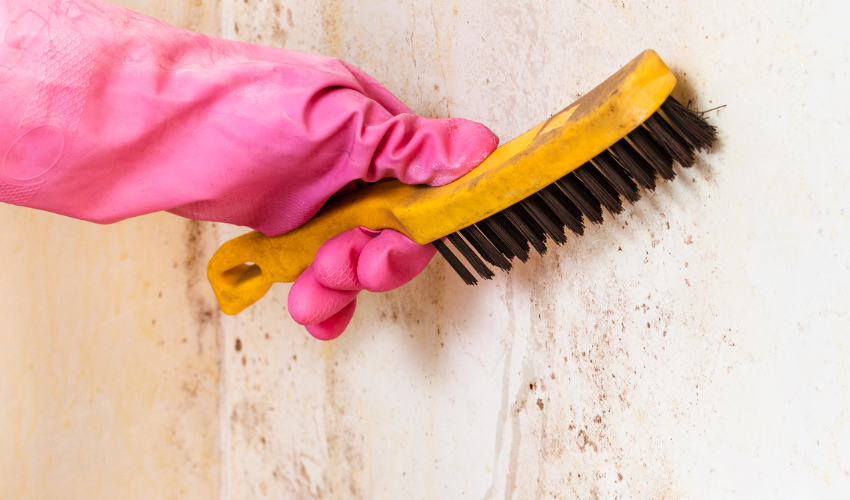
Another tip is to use baking soda to clean the pavers from mold and stains. Mix baking soda in water to make a smooth paste. Apply it on the spot and use a soft brush to scrub it. After just around 15 minutes, wash it away with water.
4) Pressure Washer
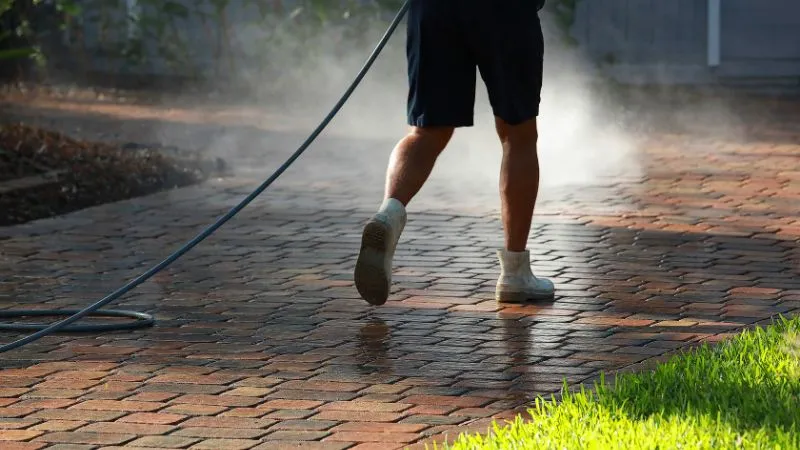
Many people use the pressure cleaning technique because it is less hectic and extremely gratifying. Just use the right nozzle size and maintain a safe distance. Experts suggest dampening the pavers with soapy water to enhance their cleaning effects.
Ashton Staudacher, a DIY home improvement influencer, cleaned her patio stones with a pressure washing technique. Since she does not prefer chemical cleaning methods, she finds power wash paving stones much more satisfying and easy.
5) Using Paver Cleaning Products
There is a constant debate between people who use power washers and the ones who prefer the best paver cleaners that are chemical-based. Realistically speaking, both ways have their own pros and cons.
If you want to clean pavers without damaging their structure, chemical cleaning is the best. These cleaners will surely remove the algae and moss build-up but might not be effective in cleaning them fully.
A DIY expert used 3 different types of cleaners and pressure wash to clean the pavers and pressure washer to see what options were the best. He concluded that the green tinge of moss was cleaned, but the slabs were not as bright as he expected. So, he had to use the pressure washer later on to clean them fully.
6) Electric Patio Cleaner
Electric patio cleaners are used to deep clean the pavers completely. They are eco-friendly, make less noise, and are extremely easy to use.
- Set up the cleaning equipment and connect every part carefully.
- Clear the area and spot the stains.
- Gently sweep the surface of the patio.
Expert Note: Always let the surface air dry before walking on it to avoid any possible hazards.
7) Use Hydrogen Peroxide
If you do not like to use bleach, hydrogen peroxide is a much safer option. However, ensure that the solution you are making has just 3% concentrated hydrogen peroxide. Apply it on the surface and scrub it after a few minutes. Then rinse and let it dry. You might have to repeat the process if you see no difference.
You can see this in action in a case study where hydrogen peroxide is used to remove the stains of rusty metal chiminea from the patio pavers.
8) Use Sealant At The End
According to the Concrete Masonry & Hardscapes Association, it is extremely important to use sealers to protect the pavement from dirt and grime. From day-to-day spills to strong weather conditions, these sealers help prevent your patio from getting damaged again. Because let’s be honest, you won’t like to do the hard work again after a few weeks of cleaning it from top to bottom. For long-lasting results, ensure that your pavers are installed correctly in the first place. This will ease your cleaning efforts.
Just as proper paver installation makes cleaning easier, understanding how to cultivate a beautiful green lawn ensures your entire outdoor area remains pristine with less ongoing effort.
Finally, How Do You Clean Concrete Pavers?
Next time planning your winter cleaning project of your patio, you should keep in mind the following points:
- Use less harsh compounds first. For example, soap water, dilute bleach, or vinegar.
- Sweep loose dirt and grime.
- Use a pressure washer and other electric patio cleaning tools to deep clean the tough stains.