
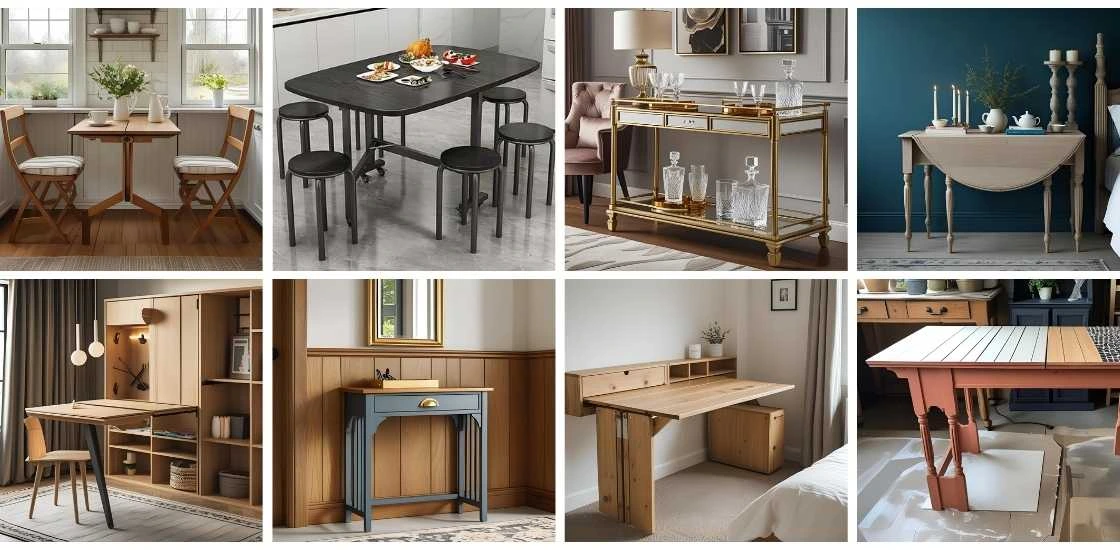
As someone who loves space-saving furniture that still feels warm, pretty, and intentional, I genuinely think gateleg tables deserve more attention than they get.
They are not just “folding tables.” A good gateleg table can be your breakfast nook in the morning, your laptop desk in the afternoon, your craft table on the weekend, and your slim little console when everything needs to feel calm again.
That is exactly why this piece works so beautifully in small homes, apartments, guest rooms, studio layouts, and cozy corners where every inch has to earn its place.
Quick Answer: What Is a Gateleg Table?
A gateleg table is a drop-leaf table with one or two hinged sides, called leaves, supported by swing-out legs. When the leaves are down, the table becomes narrow enough to sit against a wall, behind a sofa, in a hallway, or inside a small kitchen nook. When you need more surface space, the legs swing out like little gates and hold the tabletop open.
The beauty of a gateleg table is flexibility. It can work as a small dining table, home office desk, entryway console, craft table, sewing station, bar setup, or extra serving surface when guests come over.
What Makes Gateleg Tables So Useful?
A gateleg table has a fixed center section and one or two folding leaves. The “gate” part comes from the legs that swing out to support those leaves. Merriam-Webster defines a gateleg table as a table with drop leaves supported by movable paired legs, which is the simplest way to understand the design.
The idea is old, but it feels surprisingly modern. Gateleg tables have been around for centuries, and museum collections still preserve beautiful early examples. The Metropolitan Museum of Art, for example, holds an American gate-leg table dated 1690–1730, made in New York from sweet gum and yellow poplar. That kind of history is part of the charm. This is not a trend that appeared yesterday. It is a practical furniture idea that kept surviving because homes kept needing it.
For small homes, the appeal is obvious. You get a “real” table when you need one, but you are not forced to live around it all day. Fold one side down, fold both sides down, push it near a wall, or open it fully when life suddenly needs more room.
Gateleg Table vs Drop-Leaf Table: What Is the Difference?
Every gateleg table is a type of drop-leaf table, but not every drop-leaf table is a gateleg table.
A drop-leaf table simply has hinged tabletop sections that fold down. Some drop-leaf tables use fixed brackets, hinged supports, or pull-out rails. A gateleg table uses swing-out legs to support the leaves. That one detail makes it feel sturdier and more furniture-like, especially when you want to use it for dining, working, sewing, or hosting.
- Choose a gateleg table if you want more support under the open leaves and a piece that can work as a proper table.
- Choose a simple drop-leaf table if you only need a lighter side table, small breakfast surface, or occasional extra space.
- Choose a gateleg table with drawers if your home needs storage as much as surface area.
This small difference matters a lot in real life. A table used for dinner plates, a laptop, sewing tools, or craft supplies should feel steady. That is where gateleg tables usually make more sense than very lightweight folding options.
10 Gateleg Table Ideas for Small Spaces
Below are the most useful and stylish ways to bring a gateleg table into your home without making the room feel crowded.
1. Use a Gateleg Table in a Soft White Living Room
A white living room can sometimes feel too plain if every piece is clean-lined and flat. A wood gateleg table brings in a softer, more lived-in layer without making the room heavy.
Folded down, it can sit against a wall as a slim sideboard. You can style it with a small lamp, books, a ceramic bowl, or a tray for evening drinks. Fully opened, it becomes a flexible surface for board games, casual dinner, or extra seating when guests stay longer than expected.
This works especially well if your room already leans into a simple white living room style. The table adds warmth without stealing attention from the airy look.
Soft styling tip: choose light oak, warm pine, or a pale painted finish if you want the table to disappear gently into the room. Choose walnut or antique oak if you want it to become the cozy old-soul piece in the corner.
2. Turn a Norden-Style Gateleg Table into a Home Office Desk
If you work from home but do not have a full office, this might be the most practical gateleg table idea of all.
A Norden-style gateleg table gives you a generous desk when opened, then folds back into a narrow piece when the workday is over. Many versions also come with drawers, which means notebooks, chargers, pens, sticky notes, and small office clutter can stay hidden instead of spreading across the room.
I especially like this idea for a bedroom office because it lets the room return to being a bedroom at night. That emotional shift matters. Nobody wants to fall asleep staring at a giant desk that still feels like Monday morning.
For more compact work-zone inspiration, Beloved Nook’s bedroom office ideas guide has several ways to make a workspace feel intentional instead of squeezed in.
Best setup: keep one leaf open for daily laptop work, then open both leaves only when you need to spread out papers, sketches, fabric, or project materials.
3. Style an Antique Gateleg Table as an Entryway Console
An antique gateleg table can be gorgeous in an entryway, especially if your home has wood trim, half-wall paneling, vintage art, or cottage-style details.
When folded, the table works like a slim console. Add a mirror above it, a small tray for keys, and one low bowl or vase. It gives the entryway that “someone thoughtful lives here” feeling without needing built-ins or a wide hallway.
This is also a lovely place to use darker wood. Antique oak, cherry, walnut, or mahogany can bring depth to a pale entryway. If the table feels too formal, soften it with a woven basket underneath or a linen runner on top.
If your doorway already has trim details or you are planning a wall treatment, a gateleg table pairs beautifully with the warmth of dark trim and light walls. The contrast makes the whole corner feel more grounded.
4. Add a Gateleg Table with Storage to a Teen Bedroom
Teen bedrooms need furniture that can change quickly. One day the surface is for homework. The next day it is makeup, gaming gear, journaling, painting, snacks, or a very serious collection of random things that “cannot be moved.”
A gateleg table with drawers can handle that chaos softly. It gives enough space for homework or creative projects, then folds down when the room needs more floor space. The drawers can hold stationery, chargers, craft supplies, hair tools, or small accessories.
The trick is to keep the finish simple. White, light wood, black, or soft gray usually works better than something too childish. It can grow with the room instead of feeling outdated in a year.
For styling around the table, pull color and personality from your teen’s bedding, posters, rug, or lighting. The furniture can stay calm while the room still feels expressive. Beloved Nook’s teen bedroom ideas can help you build that balance between personality and storage.
5. Create a Small Dining Area with a Gateleg Table and Chairs
This is the classic gateleg table use, and honestly, it still works.
If your kitchen or apartment does not have space for a bulky dining table, a gateleg dining table can give you a proper eating area without permanently taking over the room. Keep one leaf open for everyday meals. Open both leaves when you have a friend over, serve breakfast slowly on the weekend, or need a little extra prep space.
For a cleaner look, pair it with slim-profile chairs, small stools, or folding chairs that can be tucked away. Avoid oversized upholstered dining chairs unless the room is larger, because they can make the whole setup feel heavier than the table itself.
As a practical rule, measure the table folded, half-open, and fully open before buying. Also check chair clearance. Better Homes & Gardens notes that in small spaces, every inch matters when measuring for furniture, including height and chair clearance.
Best for: studio apartments, small kitchens, breakfast corners, shared rentals, and homes where the dining area also needs to function as a walkway.
6. Choose a Black Gateleg Table for Monochrome Interiors
A black gateleg table can look surprisingly elegant, especially in a black-and-white room, a moody bedroom, a modern apartment, or a minimalist living space.
Folded down, it reads almost like a sculptural side table. Opened up, it becomes a practical surface for your laptop, coffee, books, or dinner for two. The color gives the piece presence, so you do not have to style it heavily.
If your room already has a black-and-white aesthetic, keep the table lines simple. Let the shape do the work. A matte black finish feels modern, while a slightly distressed black finish leans farmhouse or cottage.
Designer-style note: black furniture needs a little softness around it. Add a warm lamp, a linen runner, light curtains, or a natural woven chair so the corner does not feel too strict.
7. Use a Gateleg Table as a Luxe Living Room Bar or Sideboard
A gateleg table does not always have to be used for dining. In a living room, it can become a very charming little bar, serving station, or sideboard.
Keep it folded against the wall most days with a tray, glassware, coasters, and a small lamp. When guests come over, open one side and use it for snacks, drinks, desserts, or a coffee station.
This idea works beautifully beside a velvet accent chair, under a gallery wall, or near a window where the table can catch warm evening light. It gives the room function without making it feel like you bought “extra furniture.”
For a richer look, style it with crystal, brass, dark wood, or marble-patterned accessories. If your room already leans elevated, the same design thinking used in a luxury room aesthetic can help the table feel like part of the whole mood.
8. Place a Light Wood Gateleg Table in a Deep-Tone Bedroom
Deep blue, navy, charcoal, forest green, and moody gray rooms can feel incredibly cozy, but they need balance. A light wood gateleg table is one of the easiest ways to soften that depth.
Use it as a small desk, reading table, nightstand alternative, vanity, or tea corner. Because the sides fold down, it will not visually crowd the room the way a standard desk or dresser might.
In a dark blue bedroom, pale oak or natural birch can feel fresh and calming. In a navy blue bedroom, a darker antique table can feel more traditional and library-like. Both work. It depends on whether you want contrast or depth.
Small-room tip: keep the chair light, armless, and easy to tuck in. The table saves space, but the chair can still ruin the flow if it is too bulky.
9. Give a Used Gateleg Table a Soft DIY Makeover
Secondhand gateleg tables are often worth a look. Many older pieces have better wood, prettier legs, and more character than brand-new flat-pack furniture. They may need a little love, but that is part of the fun.
A dated table can be refreshed with sanding, paint, stain, new knobs, peel-and-stick wallpaper inside drawer fronts, or a simple oil finish if the wood is still beautiful. You do not have to make it perfect. Sometimes a little age is exactly what gives the piece its charm.
Before buying a used gateleg table, open and close the leaves. Check whether the legs swing smoothly, the hinges feel secure, and the tabletop sits level. A wobbly table can sometimes be fixed, but loose joints, cracked leaves, or badly warped tops may turn into a bigger project than you planned.
Best makeover finishes: soft white for cottage homes, black for modern rooms, sage green for cozy kitchens, warm walnut stain for traditional interiors, and pale oak for Scandinavian-style spaces.
10. Build a Breakfast Nook Around a Gateleg Dining Table
If your kitchen is tight on space but big on cozy potential, a gateleg table can become the sweetest little breakfast nook.
Place it near a window, against a short wall, or beside a narrow bench. Keep one leaf open for daily coffee and breakfast. Fold it down when you need the walkway clear. Open both sides when you want a slower weekend meal or need extra prep space while cooking.
This setup feels especially lovely with a pendant light, linen café curtains, a small plant, and two simple chairs. The whole corner can feel intentional without needing a built-in banquette.
Beloved Nook’s kitchen nook ideas guide has more inspiration for turning tight corners into warm, usable spaces. And if your table sits near a splash-prone wall, easy-to-clean wall protection can help keep the nook pretty without making it precious.
How to Choose the Right Gateleg Table
A gateleg table looks simple, but the wrong size or material can make it frustrating. Before buying one, slow down and think about how the table will actually live in your home.
Measure It Folded, Half-Open, and Fully Open
This is the most important step. A gateleg table can look small online, then feel huge once both leaves are open.
Measure the floor area in three ways:
- Folded: for daily storage against a wall or inside a nook.
- Half-open: for everyday use as a desk, breakfast spot, or side table.
- Fully open: for dining, crafting, hosting, or larger projects.
Also measure the space around the table. You need room for chairs, knees, drawers, and walking paths. A small table only works if the room can still breathe around it.
Pick the Right Shape
Oval and round gateleg tables feel softer and are lovely for dining. Rectangular gateleg tables usually work better as desks, consoles, craft tables, or kitchen prep surfaces.
If the table will sit in a narrow room, choose a rectangular shape. If it will sit in a corner breakfast nook or small dining zone, an oval shape may feel more graceful.
Think About Storage
Some gateleg tables come with drawers, shelves, or a center storage column. This is useful if the table will work as a craft station, sewing table, home office desk, or tiny dining area.
Storage is not always necessary, though. A simpler antique gateleg table may look more elegant in an entryway or living room because it has less visual bulk.
Choose Materials Based on Use
Solid wood is usually the best choice if you want the table to last for years. Oak, maple, walnut, birch, pine, and rubberwood can all work depending on the style and budget.
Engineered wood or veneer can still be useful, especially for lighter budgets, but check the hinges, legs, tabletop edges, and drawer quality carefully. The Spruce also notes that solid wood tends to be more long-lasting, while composite wood may perform well for more immediate needs.
Check the Gate Mechanism
The swing-out legs should move smoothly and hold the leaves securely. The tabletop should not dip, wobble, or feel uneven when opened.
If you are buying in person, gently press near the outer edge of each open leaf. It should feel supported. If it bounces too much, the table may not be ideal for dining, sewing, or work.
Best Rooms for Gateleg Tables
One reason gateleg tables are so valuable is that they move easily between roles. Even if you buy one for your kitchen, it may later become a craft table, desk, entry console, or plant station.
- Kitchen: breakfast nook, prep surface, two-person dining table, or extra counter space.
- Living room: sideboard, game table, bar setup, sofa table, or occasional dining spot.
- Bedroom: desk, vanity, reading table, nightstand alternative, or small tea corner.
- Entryway: folded console table with a mirror, key tray, and lamp.
- Craft room: sewing table, wrapping station, painting surface, or project table.
- Guest room: temporary desk or luggage surface that folds away when not needed.
That flexibility is what makes the gateleg table feel so Beloved Nook. It is not just furniture. It is a way to make a small corner feel cared for.
Are Gateleg Tables Good for Small Apartments?
Yes, gateleg tables are one of the best table styles for small apartments because they do not demand a permanent footprint. You can keep the table closed most of the time, open one leaf for daily use, and open both leaves when you need more surface area.
They are especially useful in studio apartments where one room has to do everything. A gateleg table can support breakfast, remote work, hobbies, and hosting without making the space feel like a furniture showroom.
The only caution is weight. Some gateleg tables, especially storage-heavy styles, can be quite heavy. If you plan to move the table often, check the weight and consider floor-safe sliders.
Are Antique Gateleg Tables Worth Buying?
Antique gateleg tables can absolutely be worth buying if the structure is sound. They often have beautiful wood, turned legs, aged patina, and a sense of history that newer pieces cannot fake.
However, antique does not automatically mean better. Always check stability, hinges, repairs, tabletop level, woodworm signs, and whether the leaves sit evenly when open. If the table is mostly decorative, small flaws may not matter. If you want to eat, work, or sew on it, sturdiness matters more than charm.
A good antique gateleg table can be wonderful in a cottage kitchen, traditional dining nook, entryway, reading corner, or moody bedroom. A painted secondhand one can also look very sweet in a lighter, more casual home.
Common Mistakes to Avoid with Gateleg Tables
- Buying without measuring the fully open size: this is the fastest way to crowd a small room.
- Ignoring chair space: the table may fit, but the chairs may not.
- Choosing a heavy table for a room where it needs to move daily: storage gateleg tables can be practical but not always easy to shift.
- Over-styling the folded table: if you need to open it often, keep the top simple.
- Using weak chairs: slim chairs are good, but they still need to feel comfortable and stable.
- Forgetting the room’s mood: a black gateleg table, antique oak table, and white painted table all tell very different stories.
FAQs About Gateleg Tables
What is a gateleg table used for?
A gateleg table can be used for dining, working, crafting, sewing, serving, studying, or styling as a console table. Its folding leaves make it especially useful in small homes where one piece of furniture needs to serve more than one purpose.
Is a gateleg table the same as a drop-leaf table?
A gateleg table is a type of drop-leaf table, but it has swing-out legs that support the folding leaves. A regular drop-leaf table may use brackets or other supports instead of gate-style legs.
How many people can sit at a gateleg table?
Most small gateleg tables seat two to four people when fully open. Larger antique or dining-size gateleg tables may seat more, but you should always check the fully open dimensions and chair clearance before buying.
Are gateleg tables sturdy?
A well-made gateleg table can be sturdy because the leaves are supported by swing-out legs. However, sturdiness depends on the quality of the hinges, joints, legs, and tabletop. Always test the open leaves if you are buying secondhand.
Where should I place a gateleg table?
The best places for a gateleg table are small kitchens, breakfast nooks, living rooms, entryways, bedrooms, guest rooms, craft rooms, and studio apartments. It works best where you need a table sometimes but open floor space the rest of the time.
Can a gateleg table work as a desk?
Yes, a gateleg table can work very well as a desk, especially in bedrooms, guest rooms, and studio apartments. Open one leaf for laptop work or both leaves for larger projects. A version with drawers is especially useful for office supplies.
Are used gateleg tables a good idea?
Used gateleg tables can be a lovely idea if the structure is strong. Check the hinges, swing-out legs, tabletop level, and overall wobble before buying. A secondhand table can also be painted, stained, or styled to fit your room.
Final Thoughts on Gateleg Tables
A gateleg table is one of those rare pieces that feels both humble and clever. It does not shout for attention, but it quietly makes a home easier to live in.
It can open up for dinner, fold down after breakfast, hold your laptop during a busy workday, become a tiny bar for guests, or sit sweetly in an entryway with a lamp and a bowl for keys. That kind of flexibility is hard to beat, especially when your home is short on space but not short on personality.
So if you have a corner that never quite knows what it wants to be, try imagining a gateleg table there. It might become the little piece that finally makes the whole nook feel useful, charming, and complete.
