
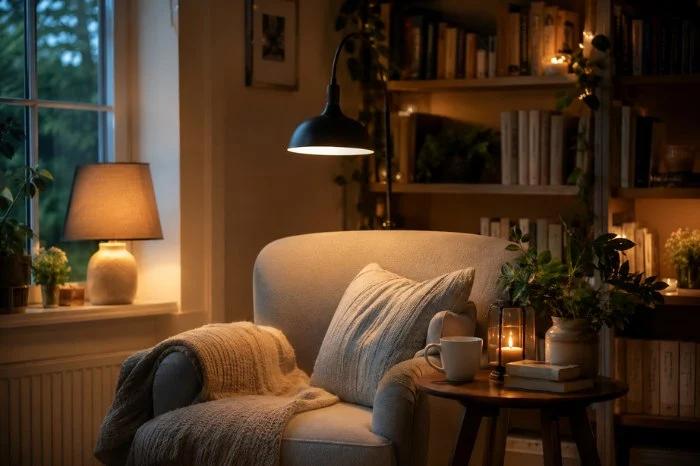
A reading nook can have the softest chair, the prettiest shelves, and the coziest blanket, but if the lighting feels wrong, the whole corner can lose its charm. Too dim, and your eyes start working harder than they should. Too bright, and the space begins to feel more like a study desk than a quiet little escape.
The best reading nook lighting ideas are usually simple. You need one light that helps you read clearly, and one softer glow that makes the corner feel calm, warm, and personal. Once those two things are balanced, even a small unused corner can feel like the most loved spot in the home.
Whether you are styling a window seat, a bedroom corner, a bookcase nook, or a tiny chair beside the sofa, these ideas will help you choose lighting that feels beautiful, useful, and easy to live with.
Quick Answer: What Is the Best Lighting for a Reading Nook?
The best lighting for a reading nook is a layered setup with one focused reading light and one soft ambient light. Use a floor lamp, table lamp, wall sconce, or swing-arm light close to your seat so the light falls onto the book without shining into your eyes. For a cozy feel, choose a warm white bulb around 2700K to 3000K. A dimmable lamp is ideal because you can keep it brighter while reading and softer when you are relaxing.
Before You Pick a Lamp, Notice How the Nook Will Be Used
A reading nook does not need complicated lighting, but it does need the right kind of light for the way you actually read. A window seat used in the morning will feel different from a bedroom nook used at night. A deep built-in bench needs more help than a chair beside a bright window.
Before choosing a fixture, ask yourself a few simple things:
- Do you mostly read during the day, at night, or both?
- Is the nook beside an outlet, or do you need a cordless option?
- Do you want the light to be decorative, hidden, adjustable, or very soft?
- Will one person use the nook, or will it be shared by kids, guests, or family?
Once you know these answers, the lighting choice becomes easier. A small bedroom corner may only need a plug-in wall sconce. A deep bookcase nook may need shelf lighting and a reading lamp. A sunny window seat may need very little during the day, but a warm pendant or sconce for evening.
If you are still shaping the full corner, these reading nook ideas can help you think through the seating, shelves, cushions, and overall mood before you settle on the lighting.
Reading Nook Lighting at a Glance
| Lighting Type | Best For | Why It Works |
|---|---|---|
| Floor Lamp | Living room corners and armchairs | Easy to move, strong enough for reading, no installation needed |
| Wall Sconce | Small spaces, bedrooms, built-ins | Saves floor space and keeps light close to the book |
| Swing-Arm Light | Serious readers and deep seats | Adjusts closer when you need more focused light |
| Table Lamp | Nooks with a side table or shelf | Soft, classic, and easy to style with decor |
| Pendant Light | Window seats and statement corners | Adds height, mood, and a finished look |
| Shelf Lighting | Bookcase nooks and alcoves | Makes books, walls, and built-ins feel warmer |
| Rechargeable Lamp | Rental homes and outlet-free corners | Works without wiring, drilling, or visible cords |
1. Place a Slim Floor Lamp Beside the Chair
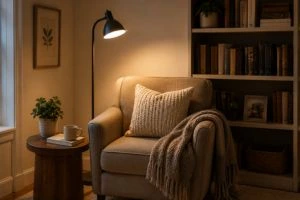
A floor lamp is one of the easiest ways to light a reading nook. It works beautifully beside an armchair, a small sofa, a bedroom chair, or a quiet living room corner. You do not have to drill into the wall, change the ceiling, or plan anything too permanent.
For the best result, place the lamp slightly behind or beside your reading shoulder. The shade should send light down toward your book, not directly across your face. This small detail keeps the nook comfortable instead of glare-filled.
A slim floor lamp is especially helpful in a small corner because it adds height without making the space feel crowded. A linen shade will soften the light, while a metal shade will make the light more focused.
2. Use a Swing-Arm Wall Sconce for Focused Reading
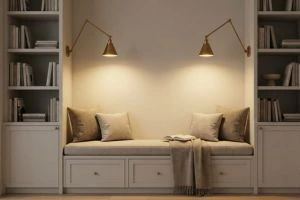
A swing-arm wall sconce is one of the best choices for people who actually read in their nook often. It gives you control. You can pull it closer when the room is dark, then push it back when you only want a soft glow.
This kind of light works well beside a built-in bench, a bedroom nook, a window seat, or a narrow corner where a floor lamp would take up too much space. If you do not want hardwiring, choose a plug-in version and use a simple cord cover to keep everything neat.
As a general rule, place the sconce a little above shoulder height when seated. The light should fall over the page from the side, not shine straight into your eyes.
3. Add a Small Table Lamp Beside the Seat
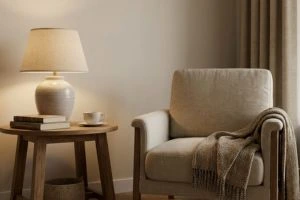
A small table lamp brings a very gentle, lived-in feeling to a reading nook. It feels less built-in than a sconce and softer than many floor lamps. It also gives you a small surface for a cup of tea, glasses, a candle, or the book you keep picking up between busy moments.
The lamp should sit close enough to light the page clearly. If the shade is too low, it may block the light. If it is too high, the bulb may become visible and cause glare. A good starting point is to keep the bottom of the shade near seated eye level.
Ceramic bases, wooden lamps, pleated shades, and linen drum shades all work well in cozy reading corners because they add texture without feeling too sharp.
4. Hang a Pendant Light Over a Window Seat
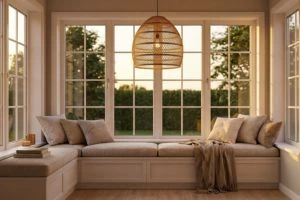
A pendant light can make a window seat feel like its own little room. It gives the nook a clear center and adds a soft glow from above, especially in the evening when the natural light disappears.
The pendant should feel close enough to belong to the nook, but not so low that it gets in the way when you sit, lean back, or move cushions around. For most window seats, a small globe, woven shade, paper shade, or soft fabric pendant works better than a heavy oversized fixture.
If the window gets plenty of daylight, the pendant does not need to do all the work. Let it be the evening light that makes the seat feel warm after sunset.
5. Use Warm LED Strip Lights Under Shelves
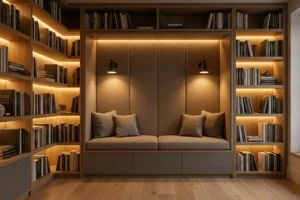
If your reading nook has shelves above or beside it, under-shelf lighting can make the whole corner feel richer. It softly highlights the books, warms up the wall, and gives the nook a more finished look without taking up any extra space.
Choose warm white LED strips instead of cool white ones. Hide the strip behind the front edge of the shelf so the light washes downward rather than shining directly at you.
This idea works especially well for built-in bookcase nooks, alcoves, bedroom corners, and small library-style spaces where the shelves are part of the charm.
6. Try a Rechargeable Lamp Where There Is No Outlet
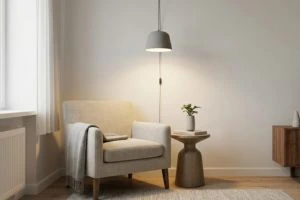
Sometimes the best reading nook is not near a plug. It may be beside a window, under the stairs, inside a dormer, or in a hallway corner that never had lighting planned for it.
A rechargeable lamp solves that problem quietly. You can place it on a shelf, side table, stool, or windowsill without worrying about cords. Many cordless lamps are now dimmable too, which makes them much better for evening reading.
This is one of the most renter-friendly reading nook lighting ideas because it gives you a finished look without hardwiring, drilling, or changing the room permanently.
7. Add Picture Lights Above Bookshelves
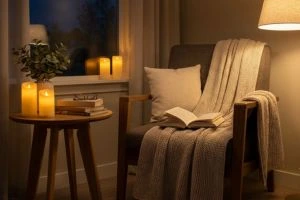
Picture lights are not only for artwork. They can look beautiful above shelves, framed prints, or the back wall of a reading nook. They create a soft library feeling that makes the corner look thoughtful and calm.
If your nook has a built-in bench with shelves above it, a picture light can wash the books and wall with a gentle glow. It will not usually be enough as the only reading light, but it is wonderful as accent lighting.
Pair it with a small table lamp, wall sconce, or floor lamp so the nook feels both useful and atmospheric.
8. Choose a Warm White Bulb Instead of a Harsh Daylight Bulb
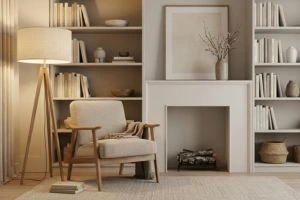
The bulb can change the whole mood of the nook. A beautiful lamp can still feel wrong if the bulb is too cold, too bright, or too exposed.
For most cozy reading nooks, warm white light around 2700K to 3000K works best. It feels soft, calm, and comfortable in bedrooms, living rooms, window seats, and quiet corners. Cooler daylight-style bulbs can be useful in workspaces, but they often feel too sharp for a relaxing nook.
If you want a little more clarity for reading, choose a brighter warm bulb rather than switching to a cold one. A dimmable warm bulb gives you the most flexibility because you can brighten it while reading and soften it later.
For deeper lighting planning, residential lighting guidance based on IES recommendations shows how task-focused areas often need stronger light than general room ambience.
9. Add a Dimmer So the Nook Can Change With the Evening
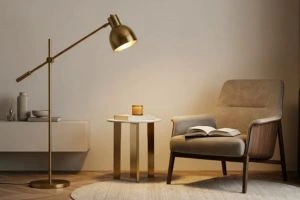
A dimmer makes a reading nook feel much more comfortable. You can keep the light bright enough when you are reading, then lower it when you are resting, journaling, or just sitting quietly.
If your lamp does not already have a dimmer, you can use a dimmable bulb, a plug-in dimmer switch, or a smart bulb. This small change can make a simple lamp feel much more thoughtful.
Dimmers are especially helpful in bedroom reading nooks because the light needs to support reading without making the room feel too awake before sleep.
10. Layer One Task Light With One Mood Light

The coziest reading nooks usually have at least two types of light. The first is task lighting, which helps you read clearly. The second is mood lighting, which makes the corner feel soft and welcoming.
For example, you could use a swing-arm sconce for reading and a small shelf light behind the books. Or a floor lamp beside the chair with a tiny rechargeable lamp on a nearby shelf. Or a table lamp with a soft pendant above the window seat.
This layered approach keeps the nook from feeling flat. It also lets you use the space in different ways throughout the day.
11. Let Natural Light Do the Daytime Work
If your reading nook sits near a window, natural light will do most of the work during the day. It makes the space feel fresh, open, and easy to use, especially in the morning or late afternoon.
Still, direct sunlight can be too harsh. If the window gets strong sun, use sheer curtains, linen blinds, or a soft Roman shade. This filters the light so the nook stays bright without glare.
This same idea also works in semi-outdoor corners, porch nooks, and garden-facing seats. If you like that softer indoor-outdoor feeling, these outdoor reading nook ideas may help you shape the mood around natural light, shade, and seasonal comfort.
12. Use Fairy Lights as Atmosphere, Not the Main Light
Fairy lights can make a reading nook feel magical, especially around shelves, canopy fabric, a window frame, or a kids’ corner. But they should not be the only light you rely on for reading.
Use them as a soft background glow. Keep them warm white and gentle, not flashing or overly bright. If the wire is too visible, tuck it behind trim, shelves, fabric, or greenery so the effect feels softer.
For adult reading nooks, fairy lights usually look best when they are subtle. For kids’ reading corners, they can be a sweet way to make the space feel special and inviting.
13. Clip a Small Reading Light to a Shelf or Headboard
A clip-on light is perfect for a nook that is tiny, temporary, or shared with another purpose. You can clip it to a shelf, headboard, bookcase, small desk, or the side of a built-in bench.
Look for one with an adjustable neck and a warm light setting. Some clip-on lights are very bright and cold, so a dimmable option is usually better for a cozy corner.
This idea is especially useful for dorm rooms, rental bedrooms, kids’ reading spaces, and small apartments where every inch matters.
14. Use a Wall-Mounted Reading Light in a Bedroom Nook
Bedroom reading nooks need lighting that feels calm but still works well. A wall-mounted reading light keeps the floor clear and gives the corner a neat, finished look.
Place it slightly above seated shoulder height so the light falls toward the book. If the nook is near the bed, match the finish with nearby hardware, curtain rods, or bedside lamps so the space feels connected.
If you are working with an unused bedroom corner, these bedroom nook ideas can help you decide whether your light should feel decorative, hidden, or more built-in.
15. Bring in a Lantern-Style Lamp for Cottage Warmth
A lantern-style lamp can give a reading nook a relaxed, cottage-like feeling. It works beautifully with woven baskets, old books, wood shelves, layered cushions, and soft rugs.
For everyday use, choose an electric lantern or rechargeable LED lantern rather than real candles. You will get the same warm feeling without worrying about open flames near blankets, curtains, or books.
This style is especially lovely in rustic, farmhouse, coastal, vintage, and cottage-inspired corners.
16. Light the Bookcase Around the Nook
If your nook sits beside or inside a bookcase, lighting the shelves can make the whole area feel more like a tiny library. You can use puck lights, slim shelf bars, cabinet lights, or hidden LED strips.
The goal is not to make the shelves look like a shop display. The goal is to give the books and wall a gentle glow so the nook feels deeper and warmer.
Keep the light hidden or diffused where possible. If the bulb or strip shines directly into your eyes, it will become distracting instead of cozy.
17. Use a Plug-In Pendant for Rental-Friendly Style
A plug-in pendant is a smart choice when you want the look of a ceiling light without hardwiring. You can hang it from a ceiling hook, swag it toward the nook, and plug it into a nearby outlet.
This works beautifully above a small chair, a window seat, a cushion bench, or even a floor pillow reading corner. A paper, linen, rattan, or frosted glass shade will give softer light. A metal shade will give more focused downward light.
Keep the cord neat so it feels intentional. A visible cord is not always a problem, but a tangled or loose one can make the nook feel unfinished.
18. Add Candle-Style Glow Without Using Real Candles
Candlelight can make a reading nook feel intimate, but real candles are not always practical near books, throws, and curtains. Flameless candles, small LED candle lamps, or low-glow accent lamps are safer for everyday use.
Place them on a shelf, window ledge, or side table to create a soft evening mood. Then use a real task light for the actual reading.
This gives you the romance of candlelight without making your eyes work too hard.
19. Use a Fabric Shade to Soften the Light
A fabric shade can make a reading nook feel warmer almost instantly. Linen, cotton, pleated fabric, and woven shades spread the light more gently than exposed bulbs or shiny metal fixtures.
This is a good choice if the nook is in a bedroom, living room, nursery, or quiet corner where you want the light to feel soft around the edges.
If you still need stronger reading light, choose a fabric shade with a clear downward opening so enough light reaches the page.
20. Choose a Directional Shade for Serious Reading
If you read for long stretches, a directional shade may be better than a purely decorative lamp. Metal shades, cone shades, and adjustable heads can aim the light exactly where you need it.
This does not mean the nook has to look cold or industrial. A brass cone shade, matte cream task lamp, or soft black swing-arm fixture can still feel warm if the bulb color is right.
The important thing is control. The more you can direct the light, the easier it is to avoid glare and shadows.
21. Match the Fixture to the Mood of the Nook
The best reading nook lighting does not feel random. It feels like it belongs to the chair, the shelves, the cushions, and the quiet feeling you wanted in the first place.
A rattan pendant can make a sunny window seat feel relaxed and natural. A brass sconce can make a built-in nook feel classic. A slim black floor lamp can suit a clean modern corner. A pleated table lamp can make the space feel soft and a little nostalgic.
Think of the light as part of the nook’s personality, not just a practical object. When the fixture matches the mood, the whole corner feels more settled.
Best Bulb Settings for a Reading Nook
You do not need to become a lighting expert to choose a good bulb. These simple settings work well for most reading corners:
| Feature | Best Choice | Why It Helps |
|---|---|---|
| Color Temperature | 2700K to 3000K | Creates a warm, cozy feel without looking too yellow or too cold |
| Brightness | Bright enough to read without squinting | Keeps your eyes comfortable while avoiding harsh room-wide brightness |
| Dimming | Dimmable if possible | Lets the nook shift from reading mode to soft evening glow |
| Shade Style | Fabric for softness, metal for focus | Controls whether the light spreads gently or points directly |
| Placement | Slightly behind or beside your shoulder | Helps reduce glare and keeps the page clearly lit |
Where Should a Reading Nook Light Be Placed?
The best place for a reading nook light is slightly behind or beside your shoulder, angled toward the page. This helps the light land on the book instead of shining into your eyes.
For a floor lamp, place it close enough that the shade sits near the side of your chair. For a table lamp, keep the shade around seated eye level. For a wall sconce, mount it a little above shoulder height when seated. For a pendant, keep it high enough that it does not interfere with sitting, leaning, or moving cushions.
If you notice glare, shadows, or the need to lean toward the light, the fixture is probably too far away, too high, too low, or too exposed.
Small Reading Nook Lighting Ideas
Small reading nooks need lighting that works hard without taking over the space. Wall sconces, clip-on lamps, slim floor lamps, rechargeable lamps, and plug-in pendants are usually better than bulky fixtures.
If your nook is narrow, mount the light on the wall. If it is under the stairs, use a small sconce or hidden shelf light. If it is beside a window, let daylight help during the day and add one warm lamp for evening.
The best small nook lighting feels useful but almost invisible. It should make the corner easier to use without making it feel crowded.
Reading Nook Lighting Ideas by Location
Bedroom Reading Nook
Use a warm wall sconce, a dimmable table lamp, or a small floor lamp. Keep the light gentle enough for nighttime but focused enough that you do not strain while reading.
Living Room Reading Nook
A floor lamp or table lamp works beautifully beside an accent chair. Try to match the finish or shade tone with other lights in the room so the nook feels connected.
Window Seat Reading Nook
Use natural light during the day, then add a pendant, wall sconce, or shelf light for evening. Sheer curtains can soften strong sun and reduce glare.
Bookcase Reading Nook
Use shelf lighting or picture lights to warm the books and wall. Add one focused reading lamp near the seat so the nook still functions well.
Kids’ Reading Nook
Choose safe, soft, low-heat lighting. Battery-operated sconces, warm fairy lights, and cordless lamps are often better than hot bulbs or loose cords.
Outdoor or Porch Reading Nook
Use covered outdoor-rated lights, lantern-style lamps, or warm string lights. Keep the main reading light close to the seat, especially if the space gets dark after sunset.
Common Reading Nook Lighting Mistakes
Using Only Overhead Lighting
Ceiling lights can brighten the room, but they rarely make a reading nook feel cozy. They can also cast shadows when your head or body blocks the light. Add a lower light source near the seat.
Choosing a Bulb That Feels Too Cold
Cool daylight bulbs can make a relaxing corner feel sharp. For most reading nooks, warm white bulbs create a softer and more comfortable mood.
Placing the Lamp Too Far Away
If the lamp is across the room, it becomes general lighting, not reading lighting. Keep your main light close enough to clearly brighten the page.
Letting the Bulb Shine Directly Into Your Eyes
An exposed bulb can cause glare and make the nook uncomfortable. Use a shade, diffuser, or adjustable fixture so the light is directed toward the book.
Forgetting About Outlets
Before buying a lamp, check where the nearest outlet is. If there is no easy plug nearby, use a rechargeable lamp, plug-in pendant, battery-operated sconce, or clip-on light.
How to Make a Reading Nook Feel Warmer at Night
Nighttime is when reading nook lighting matters most. During the day, natural light can make almost any corner look lovely. At night, every bulb, shadow, and reflection becomes more noticeable.
To make the nook feel warmer, turn off harsh ceiling lights and use lamps closer to the seat. Choose warm bulbs, add a dimmer if possible, and let one soft accent light glow in the background.
Texture also helps. Light feels softer when it touches linen curtains, woven baskets, wood shelves, cushions, throws, and rugs. That is why a reading nook should never be only about the lamp. The materials around the lamp change how the light feels.
Eye Comfort Tips for Reading Nook Lighting
A cozy nook should still be easy on the eyes. If you find yourself squinting, moving the book closer, tilting the page, or feeling tired quickly, the lighting may be too dim or poorly placed.
Reading in dim light is usually more about temporary discomfort than permanent damage, but it can make reading feel harder than it needs to be. Eye-care guidance commonly recommends increasing light when you notice squinting or eye strain. ReFocus Eye Health notes that comfortable reading light should let you read easily without being overly aware of the lighting itself.
The best test is simple: sit in the nook at the time you normally read, open a book, and notice whether the page feels clear without effort. If not, bring the light closer, warm up the bulb, reduce glare, or add a second softer light nearby.
Final Thoughts
A good reading nook does not need dramatic lighting. It needs thoughtful lighting. One warm, focused lamp can make a forgotten corner useful. A second soft glow can make it feel personal. A dimmer can help the whole space shift from daytime reading to evening calm.
Start with the way you read, then choose the fixture around that habit. If your eyes feel comfortable, the page is clear, and the corner makes you want to stay a little longer, the lighting is doing its job.
That is the quiet beauty of a reading nook. It does not have to be grand. It only has to feel like the one place in the home that gently belongs to you.
FAQs About Reading Nook Lighting
The best light for a reading nook is a focused task light, such as a floor lamp, table lamp, wall sconce, or swing-arm lamp. It should sit close to the seat and direct light onto the book without shining into your eyes.
Warm white light around 2700K to 3000K is usually best for a cozy reading nook. It feels softer and more relaxing than cool daylight bulbs, especially in bedrooms and evening reading corners.
Fairy lights are not usually enough for reading. They are better for atmosphere. Pair them with a real reading lamp, sconce, or floor lamp so the nook looks cozy and still works properly.
A reading nook lamp should be bright enough that you can read without squinting or leaning toward the page. A dimmable lamp is ideal because you can make it brighter while reading and softer when relaxing.
Place the reading lamp slightly behind or beside your shoulder, angled down toward the book. This helps reduce glare and keeps your head from casting a shadow over the page.
Yes. Use a plug-in wall sconce, plug-in pendant, rechargeable lamp, battery-operated sconce, or clip-on lamp. These options work well for rentals, small apartments, and corners without nearby outlets.
For a small reading nook, use lighting that saves space, such as a wall sconce, clip-on lamp, slim floor lamp, rechargeable lamp, or plug-in pendant. Keep the light close to the seat so the nook stays useful without feeling crowded.
A reading nook should usually have warm light. Warm white bulbs make the space feel softer and more comfortable, while cool light can feel too sharp for a cozy corner.
