
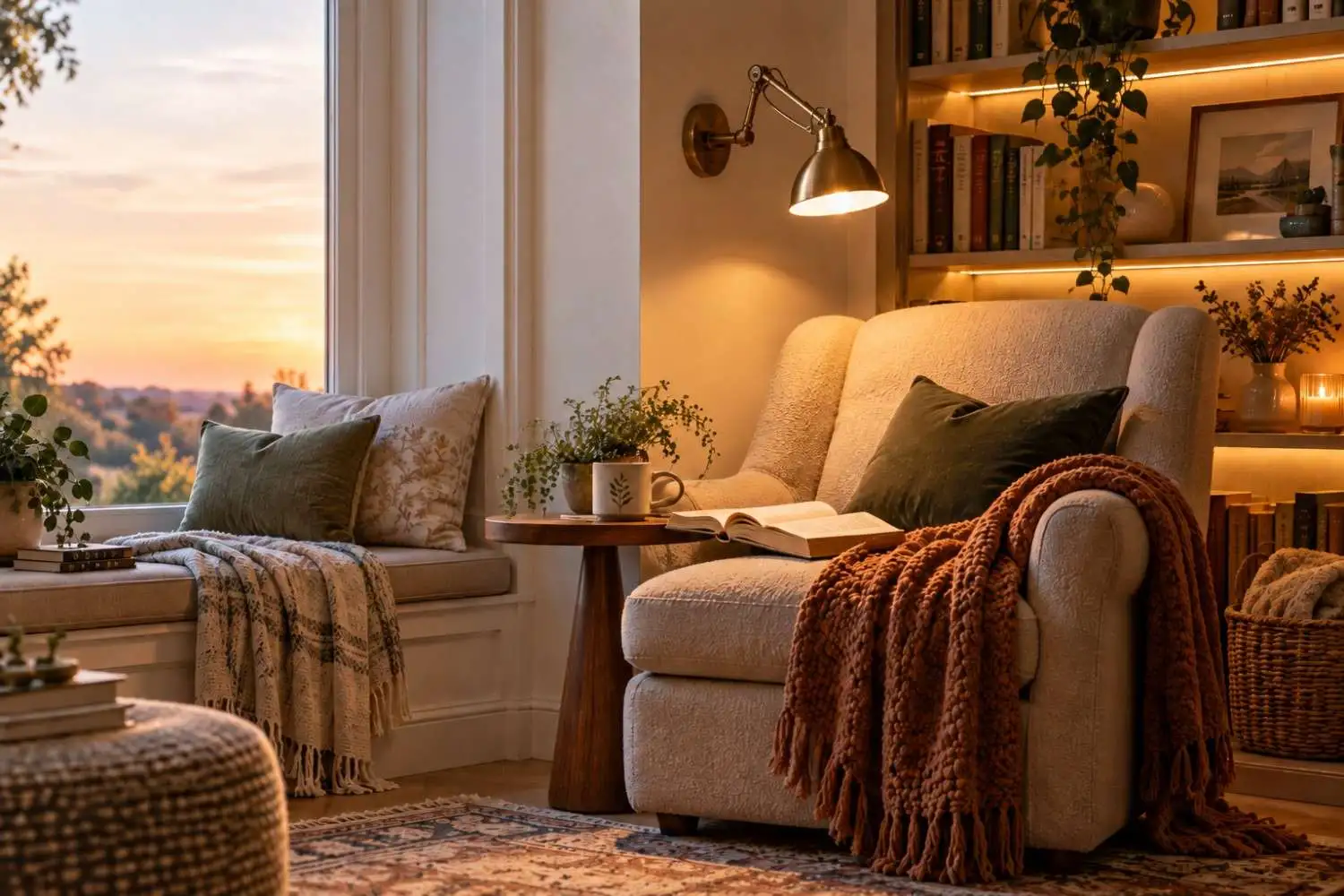
The best reading nook lighting combines a focused, adjustable task light with softer light around the seat. Aim the task lamp at the book without exposing the bulb to your eyes, then add ambient light so the page does not float in a dark room. Fairy lights, shelf LEDs and flameless candles can make the nook feel inviting, but they should support, not replace, the light you actually read by.
If you are still choosing the chair, shelves or layout, start with these reading nook ideas before fine-tuning the lighting.
The Best Reading Nook Lighting Setup in One Minute
Start with the page, not the Pinterest photo. A useful reading nook normally has three lighting layers:
- Task light: An adjustable lamp or sconce directs light onto the book.
- Ambient light: A shaded lamp, wall wash or dimmed room light softens the contrast around the seat.
- Accent light: Shelf LEDs, fairy lights or a small decorative lamp add atmosphere.
The task light does the reading work. Ambient light helps the corner feel comfortable. Accent light makes it beautiful. One fixture can contribute to more than one layer, but decorative glow alone rarely provides controlled, even light across the page.
Reading Nook Lighting at a Glance
| Nook situation | Best task light | Supporting light | Main reason |
|---|---|---|---|
| Tiny corner | Plug-in sconce or slim pharmacy lamp | Soft room light | Preserves floor and table space |
| Window seat | Adjustable sconce or plug-in pendant | Daylight with a blind or sheer | Works after sunset and controls glare |
| Built-in bookshelf nook | Integrated directional light or sconce | Under-shelf accent light | Keeps page light separate from display light |
| Bedroom nook | Swing-arm sconce or table lamp | Warm, dimmable ambient light | Keeps controls close and the room restful |
| Living room nook | Adjustable floor lamp | Existing layered room lighting | Connects the nook to the wider room |
| Rental | Plug-in sconce, floor lamp or clip light | Rechargeable accent lamp | Avoids hardwiring |
| No nearby outlet | Rechargeable task lamp | Battery accent light | Provides real page light without a cord run |
| Dark or moody nook | Focused shaded task lamp | Concealed shelf glow or wall wash | Preserves drama without losing visibility |
Start With the Light on the Page
Sit in the chair with the book you actually read, then position the lamp. Put the task source beside the seat and adjust it slightly forward or behind the shoulder until the beam reaches both pages. Keep the bulb outside your direct eye line and check that your head does not block the light.
If you write or highlight, place the task light opposite your writing hand when practical: left of a right-handed reader or right of a left-handed reader. Treat this as a starting point because chair angle, shade shape and beam direction still matter.
Watch for an exposed bulb, reflections on glossy pages or tablets, window glare and a bright page surrounded by a completely dark room. A shade, diffuser, adjustable head, blind or secondary ambient lamp can solve most of these problems.
Good light can make reading easier and help eyes tire less quickly, but dim-light reading is not generally described by the American Academy of Ophthalmology as causing permanent eye damage.
Lumens, Lux, Kelvin and CRI: What Actually Matters?
Lumens Measure Light Output
Lumens describe how much light a lamp or bulb produces. Compare lumens, not watts, when judging output; wattage describes energy use.
Lux Measures Light Reaching the Page
Lux describes illuminance on a surface. The same bulb can produce very different page light depending on distance, shade, beam angle and direction, so a universal lumen rule cannot guarantee a well-lit book.
Choose an adjustable source with enough output, sit down with a book and tune the position and dimming level until the page looks even and clear. The Illuminating Engineering Society also treats lighting needs as dependent on the task and the people using the space rather than one number for every reader.
Kelvin Describes Warm or Cool Appearance
Lower Kelvin values look warmer; higher values look cooler. A 2700K to 3000K ambient light often suits an evening nook, but some readers prefer a 3000K to 4000K task source. Kelvin does not measure brightness, and warm light does not automatically prevent eye strain.
CRI Describes Color Appearance
Color Rendering Index estimates how naturally a source renders colors. It can improve the appearance of book covers, wood and textiles, but it does not show whether the page is bright enough. ENERGY STAR’s lighting criteria explain lumens, color temperature and CRI.
15 Reading Nook Lighting Ideas
1. Mount an Adjustable Wall Sconce
A swing-arm sconce directs light onto the page without using floor or table space. It suits built-ins, window seats and narrow bedroom corners. Choose a hardwired model during a renovation or a plug-in version for a simpler setup. Use suitable wall support, route the cord along the wall and leave permanent wiring to a qualified professional.
2. Use a Slim Pharmacy Floor Lamp
A pharmacy lamp has a small base and focused adjustable shade, making it useful beside an armchair in a tight corner. It is easy to move and needs no wall installation. Check that the base remains stable when the head is extended.
3. Reach Over the Chair With an Arc Lamp
An arc lamp brings light over the seat when no side table is available and can anchor an open living room. Measure the base, overhead clearance and walkway first. Keep the shade controlled and the bulb out of sight. In a narrow nook, the long arm and large base may be more obstruction than solution.
4. Pair the Chair With a Shaded Table Lamp
A table lamp works when the nook has a stable side table at a useful height. Choose a shade that hides the bulb at seated eye level while directing light down. For two seats, separate adjustable lamps usually give each reader better control than one decorative central lamp.
5. Hang a Plug-In Pendant or Swag Light
A plug-in pendant frees the floor and table, so it works well above a window seat or shallow alcove. Use a shade or diffuser, keep the beam on the book and hang it where nobody will bump it. “Plug-in” avoids hardwiring, but the ceiling hook still needs proper support.
6. Plan Directional Built-In Lighting
Integrated lighting can make a custom window seat or bookcase alcove feel architectural. Use an adjustable downlight for the page and concealed linear light for the wall or shelves. Plan beam direction, dimming and controls before construction; a fixed light directly above the head may cast a shadow across the book.
7. Light the Bookshelves Separately
Under-shelf strips, puck lights and picture lights can illuminate spines and objects. They do not automatically light the book in your lap. Keep a dedicated task source for the page, then use shelf lighting as accent or gentle ambient support.
8. Use Fairy Lights for Background Glow
Fairy lights can outline a window, shelf or back wall and are often easy to arrange in a rental. They should not carry the reading job. Switch off the task lamp: if the print becomes difficult to see, the fairy lights are accent lighting. Follow the product instructions and keep connections and cords in good condition.
9. Add a Rechargeable Cordless Task Lamp
A rechargeable lamp is the most direct solution when no outlet is nearby. Look for an adjustable head, stable base, useful brightness control and a beam that reaches the book. Check runtime at the brightness you expect to use and keep the charging point convenient. Some small cordless lamps provide mood light rather than true task light.
10. Clip On a Reading Light
A clip light suits shelves, headboards, built-ins and temporary nooks. Confirm the clip grips securely without damaging the surface, aim the bulb away from the eyes and keep the cord clear. Do not attach a heavy lamp to a thin or unstable panel.
11. Use Daylight, Then Plan for Sunset
Turn the chair across the window so daylight reaches the page from the side, then use a sheer, blind or curtain to control glare. Daylight changes, so add an electric task source for cloudy weather and evening. Avoid leaving valuable books in strong direct sun for long periods.
12. Add a Dimmer or Smart Control
Dimming lets the nook shift from active reading to a softer setting, while smart controls can place scenes within reach. Check LED and dimmer compatibility first. The U.S. Department of Energy notes that performance depends on the driver and control; mismatched products can flicker, buzz or fail to dim smoothly.
13. Soften the Corner With Indirect Light
A shaded lamp, uplight or concealed shelf glow reduces the contrast between a bright book and a dark room. Keep this ambient layer lower than the task source so it supports visibility without flattening the mood.
14. Use a Picture Light as an Accent
A picture light can emphasize art, the upper bookcase or the wall behind the chair. Treat it as accent light unless its beam genuinely reaches the page. Lighting the backdrop while leaving the book in shadow is a common styling-first mistake.
15. Add Flameless Candlelight for Atmosphere
Flameless candles add a warm flicker near books and textiles without an open flame. They are accent lights only. If a real candle appears elsewhere, keep it visible, stable and away from anything that can burn. The U.S. Consumer Product Safety Commission recommends flameless candles as the safer choice.
Where Should a Reading Lamp Be Placed?
- Sit in your normal reading position with an open book.
- Put the lamp beside the chair and move it slightly forward or behind the shoulder until both pages are evenly lit.
- Aim the beam toward the center fold and lower pages.
- Confirm that you cannot see the bare bulb or a strong reflection.
- Turn pages and write a note to check for head and hand shadows.
A source above seated shoulder level often works, but the correct height depends on the chair, reader, shade and beam. Test the actual setup rather than copying a universal measurement.
What Color Light Is Best for a Reading Nook?
A warm 2700K to 3000K light usually creates a relaxed evening atmosphere, while a neutral 3000K to 4000K task source may make print and contrast feel clearer to some readers. Neither range is universally correct. Choose a color appearance that feels comfortable, then judge the page under the real fixture.
Try to avoid a jarring mix, such as a very warm decorative lamp beside a stark cool task light, unless you intend the contrast. A dim-to-warm source can keep the nook brighter for reading and warmer at a lower setting, but it still needs good placement and glare control.
How Bright Should a Reading Nook Be?Best Lighting for Small Reading Nooks
The page should look evenly illuminated, the print should remain easy to distinguish and the reader should not need to lean toward the beam. Because fixture distance and distribution change the light reaching the page, a single lumen number cannot answer this for every nook.
Choose an adjustable, dimmable task source with sufficient output, then tune it in the chair. Readers with lower visual acuity, smaller-print books or darker pages may prefer more illumination. This is another reason an adjustable lamp works better than one fixed “perfect” brightness.
Best Lighting for Small Reading Nooks
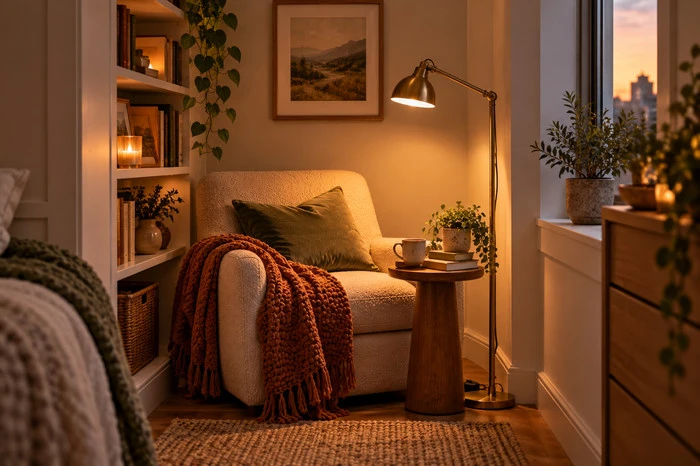
In a small nook, use the wall, shelf or ceiling before sacrificing the remaining floor area. A plug-in sconce, slim pharmacy lamp, clip light, compact pendant or rechargeable lamp usually fits better than an oversized arc lamp.
Keep the fixture visually proportional to the chair and leave a clear route into the seat. For more ways to make a tight corner feel intentional, see our guide to decorating a small room. If the fixture feels too large or visually disconnected, revisit the wider nook design ideas around scale, storage and purpose.
Best Lighting for a Window-Seat Reading Nook
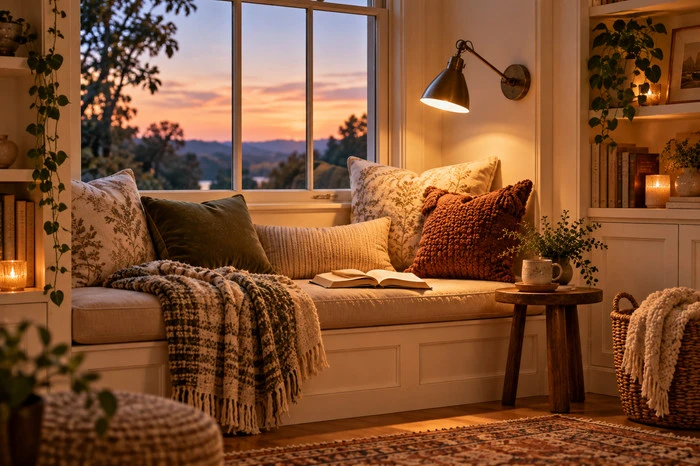
Use the window as the daytime source, then install a directional sconce, integrated light or plug-in pendant for evening. A sheer or blind can soften glare without removing the view, and an adjustable fixture lets you respond as daylight shifts.
Keep shelf LEDs or fairy lights as the background layer. The reading beam still needs to reach the book when the window turns dark. In a built-in, place the switch or control where the seated reader can reach it without climbing over cushions.
Best Lighting for Bedroom and Living Room Nooks
Bedroom Reading Nook
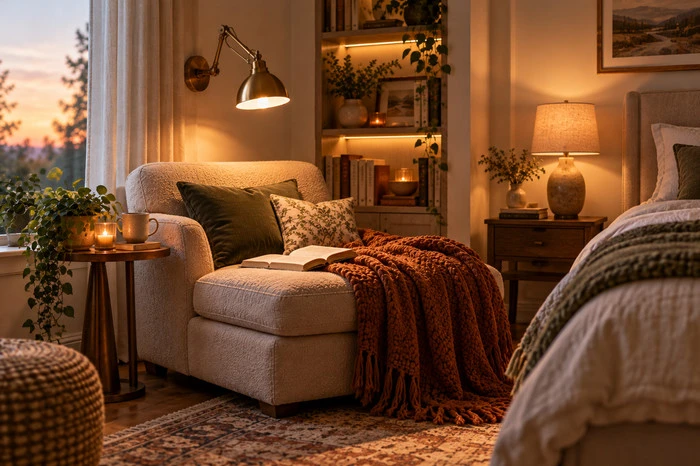
Use a local task light so the whole bedroom does not need to be bright. A swing-arm sconce, shaded table lamp or slim floor lamp works well, especially with a dimmer or reachable switch. Keep the ambient light softer and let the task source do the detailed work.
Use these bedroom nook ideas to coordinate the seat, storage and surrounding decor with the lighting plan.
Living Room Reading Nook
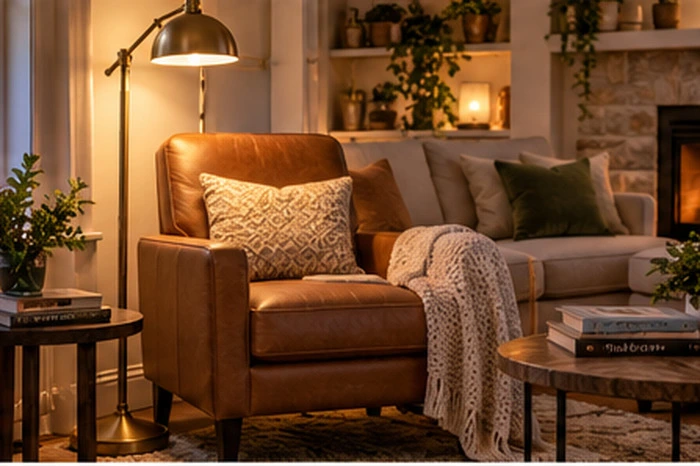
Treat the nook as part of the wider room. The task lamp should illuminate the book, while other lamps prevent an isolated bright spot in an otherwise dark living room. Check television reflections, traffic routes and whether the lamp blocks conversation or views.
Our living room nook ideas can help you place the reading corner within the wider seating layout.
How to Light a Dark or Moody Reading Nook
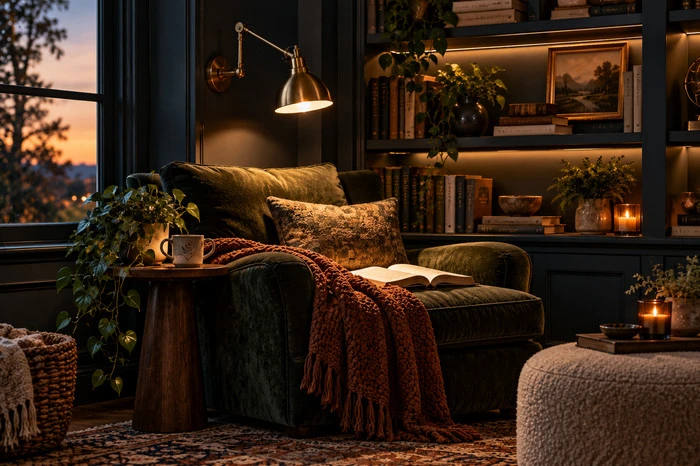
Dark paint, deep wood and black or brass fixtures can make a reading corner feel rich, but dark surfaces absorb more light. Counter that with a focused task source, a shaded ambient lamp and a small concealed accent behind shelving.
Keep the beam controlled so the page is clear without washing the whole corner in bright light. The same balance applies to our dark and moody bedroom ideas: keep the palette deep, but give the page clear, controlled light.
Reading Nook Lighting for Renters and No-Outlet Corners
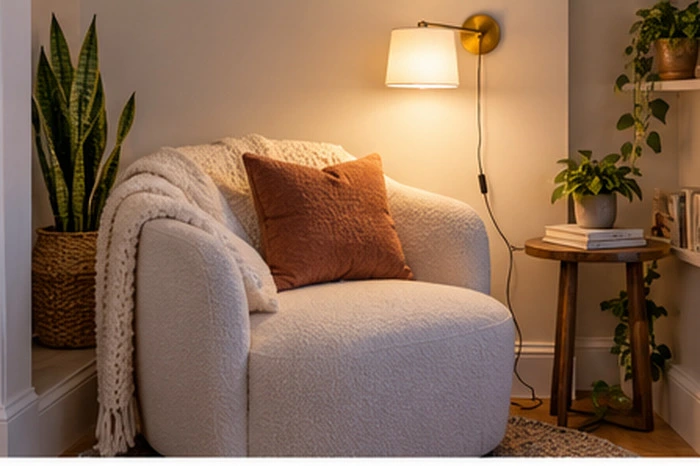
For a rental, start with a floor lamp, plug-in sconce, clip light or rechargeable task lamp. Removable cable channels can tidy a lightweight cord, but adhesive strips are not suitable support for every wall fixture. Follow the weight and mounting instructions.
For a no-outlet corner, choose a rechargeable task lamp first and add battery-powered accent lights only after the page is adequately lit. Do not route a permanent extension cord under a rug, through a doorway or across a walkway. The U.S. Consumer Product Safety Commission advises against covering cords with rugs because trapped heat and damage can create a fire risk.
Kids, Teen and Outdoor Reading Nooks
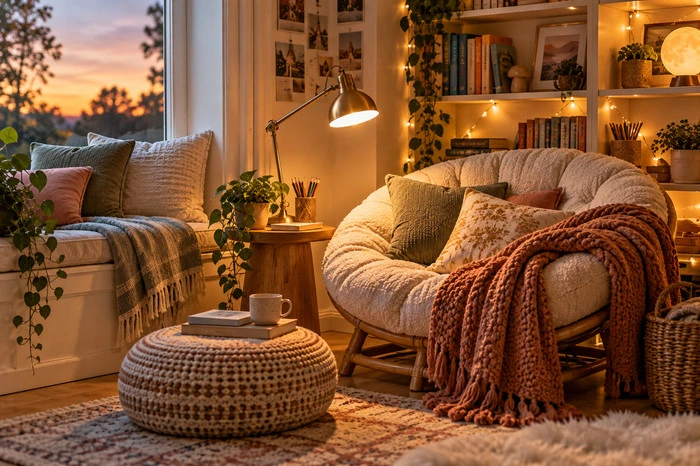
For children, choose a stable fixture, a cool-running LED source, secure mounting and cords that cannot become a trip or pulling hazard. Keep controls reachable without placing an exposed bulb near the face. For a teen space where decorative LEDs matter as much as reading, pair the task source with the accents in these teen bedroom ideas.
Outdoor nooks need fixtures, plugs and connections rated for the actual location. Indoor lamps and string lights do not automatically become safe outdoors under a covered patio. For weather-resistant layout inspiration, explore these outdoor reading nook ideas, then confirm every fixture and connection is rated for the location.
Common Reading Nook Lighting Mistakes
- Relying only on the ceiling light: It often creates head and shoulder shadows.
- Using fairy lights as the only source: They provide atmosphere, not controlled page light.
- Leaving the bulb in the eye line: Use a shade, diffuser or adjustable head.
- Making the corner too dim for mood: Keep the palette dramatic, not the print unreadable.
- Choosing brightness by watts: Compare lumens, then judge delivery at the page.
- Treating lumens and lux as synonyms: Source output is not page illuminance.
- Ignoring hand and head shadows: Test the fixture while seated and writing.
- Assuming every LED works with every dimmer: Check compatibility.
- Running cords under rugs or through traffic paths: Reposition the nook or use a rechargeable lamp.
- Lighting shelves better than the book: Separate display light from task light.
- Using indoor fixtures outside: Match the rating to the location.
Quick Lighting Checklist Before You Buy Anything
- What provides the dedicated task light?
- Can you aim the beam across both pages?
- Will the shade hide the bulb at seated eye level?
- Does the fixture fit without blocking the walkway?
- Is its output adjustable or dimmable?
- Does the color appearance suit the room and task?
- Is the LED compatible with the dimmer or smart control?
- Can you reach the switch from the chair?
- Can the cord run safely along a wall?
- Is the mounting surface suitable?
- Is the fixture rated for the location?
- Does accent light support rather than replace task light?
The Bottom Line
A beautiful reading nook starts with light on the page. Choose an adjustable task source, place it where your head and hand will not block the beam, and control glare before adding decorative effects. Then soften the surrounding corner with ambient light and use fairy lights, shelf LEDs or flameless candles for atmosphere. The right solution may be a wall sconce, slim floor lamp, pendant or rechargeable lamp; what matters most is how well the fixture serves the reader, the chair and the actual book.
Frequently Asked Questions
Combine an adjustable task light with softer ambient light. Use a sconce, floor lamp, table lamp or pendant for the book, then add a dimmed room lamp, wall wash or shelf glow around the seat.
Usually not. Fairy lights work best as accents around a window or shelf. Use a directional lamp for the page; if the print becomes hard to see when that lamp is off, the fairy lights are not sufficient.
Place it beside the chair and adjust it slightly forward or behind the shoulder. Avoid a source directly behind the head, where the reader may block the beam and shadow the book.
No single Kelvin value suits everyone. Warm 2700K to 3000K often creates evening ambience, while some readers prefer a 3000K to 4000K task source. Placement, glare and brightness still matter.
The print should look clear and evenly lit without leaning toward the lamp or seeing glare. Since fixture distance and beam distribution change page light, choose adjustable output instead of relying on one lumen number.
A sconce saves the most floor space; a slim floor lamp is easier to move and requires no wall installation. Choose according to permanence, wall support and rental restrictions.
Use a rechargeable directional task lamp, then add battery accent lights if desired. Check runtime at the intended brightness and avoid making an extension cord under a rug or across a walkway permanent.
Yes, but most strips work better on shelves or back walls than as the primary reading source. Diffuse visible points, avoid screen glare and pair the strip with a dedicated task light.
