
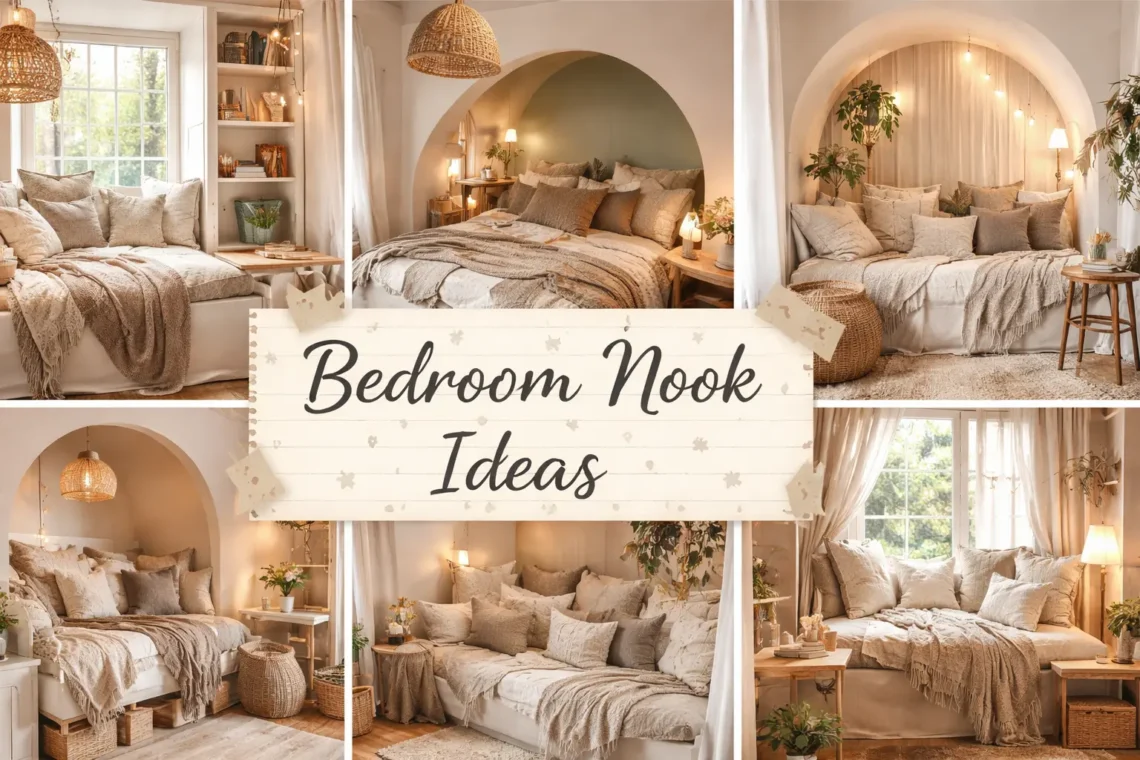
In my 15 years of designing nooks, the biggest mistake I see is treating that unused corner of a bedroom as dead space. Why leave it empty and boring when, with some effort, you can make it your cozy and dreamy room within a room?
The ideas below cover every budget, room size, and style. Each one is something I have designed and installed in the homes of my clients.
1. The Classic Reading Nook Tucked into a Bedroom Corner
A built-in reading nook is the most requested project in my studio, and for good reason. It transforms the awkward 90-degree corner of a bedroom into a personal retreat that feels like it’s been there forever.
- Use L-shaped shelving to frame the seat on both sides
- Add a wall-mounted swing arm lamp. It will save the table space.
- Choose a seat cushion at least 4 inches thick for long reading sessions
- Install a small outlet inside the nook for phone charging
Pro Tip:
Paint the interior walls of the nook 1-2 shades darker than the room. This depth trick makes the alcove feel intentionally designed.
2. Window Seat Bedroom Nooks
A window seat nook is my go-to recommendation when someone has a deep bay or bump-out window they’re not using.
I recently designed one with a 16-inch deep storage base. It was perfect for extra bedding, seasonal throws, and books.
Pro Tip: Pair window seat nooks with dark wall colors behind the seat. Navy or deep green walls make the bedroom nook feel like a jewel box.
3. A Canopy Bed Nook for Some Drama
It’s one of the most sophisticated bedroom nook ideas for adults I’ve executed. The idea is to create a “room within a room” by building a canopy frame around the bed. Then you can add layering curtains that can be drawn for full enclosure.
Pro Tip:Pair the canopy with a moody color palette on the back wall, and you get a retreat that feels genuinely luxurious.
4. Create a Built-In Bookshelf
A built-in bookshelf nook in a bedroom does something shelving alone can’t: it creates a sense of enclosure that makes the space feel curated. I always design these with the shelves flanking a central focal point. It can be a chair, a bench, or even the headboard itself.
Pro Tip:The key measurement I use: keep shelves 10–12 inches deep for standard books, but bump one shelf to 14 inches to accommodate art books and display objects. That variation in depth makes the whole unit look more thoughtful. For more layered ideas, you can browse my different nook design approaches that go beyond the obvious.
5. Home Office in a Bedroom Nook
A bedroom office nook is one of the most practical projects I get hired for, especially in studio apartments and smaller homes. The goal is always the same: create a workspace that functions fully during the day and visually disappears in the evening.
My go-to approach is a floating desk built into a shallow alcove. I’d suggest going for 22–24 inches deep. It is the sweet spot for a monitor and keyboard without the desk dominating the room.
Pro Tip: You can decorate this office nook with the shelves, small indoor plants, table lamps, and pedboards.
6. Under-Stair Bedroom Nook
Under-stair bedroom nooks use triangular dead space that most homeowners ignore entirely. I always advise my readers to turn that space into a small reading pod, a workspace, a secret teen bedroom for your kids. It will give you a kind of Harry Potter vibe, and believe me, you will love it.
Pro Tip:
Use shelves that follow the stair pitch. It will make the slope look integrated. Position the headboard at the tallest end and feet towards the slope for maximum utilization of space.
7. A “Zen” Nook
Place the large mirror and hang fairy lights in the corner. The mirror doubles the perceived space and bounces the warm glow of the candles and salt lamps throughout the corner, which looks stunning.
This feels less like a reading spot and more like a space for meditation, journaling, or winding down before bed.
Pro Tip:
I’d suggest placing a rough, natural jute rug underneath a soft, shaggy faux-fur or wool rug. The contrast between “rough” and “soft” creates a sensory depth that makes a nook feel high-end.
8. Install an aerial furniture in the Corner
You can use a macramé hanging chair as your focal point. Hang pathos and other low-maintenance plants around it from the ceiling or sit on high shelves.
Pro Tip:
Position your hanging chair in front of a tall, structural plant. It creates a “green wall” effect and adds more character to the room.
9. Couples’ Bedroom Nooks: Designing for Two
One of the most rewarding projects I take on is designing bedrooms for couples, especially when two people have genuinely different needs from their space. One wants a reading seat, the other wants a vanity. My solution in most cases: one nook per person, positioned on opposite sides of the room.
Pro Tip:
Use the same wood tone or upholstery color in both nooks to tie them together visually, even if the function is completely different.
10. The Floating Nook DesigN
Let’s say you have an extremely small nook area where you can’t really put any sofa or mirror. What would you do then?
I have a solution for that. Place a small chair and install floating shelves in the corner. Make sure to mount the corner unit slightly off the floor. It will not look “heavy” like the traditional furniture.
Pro Tip:
Use matte finish and a sophisticated color palette of sage green, light oak, and cream to give it a more open and airy vibe.
Closing Thought
The thing about a well-designed nook is that it changes how you inhabit your whole room. You start going to bed earlier because you actually want to be in your bedroom.
You read more, breathe a little easier, and eventually get a relaxing sleep at the end of the day.
You Might Also Like:


Leave a Reply